
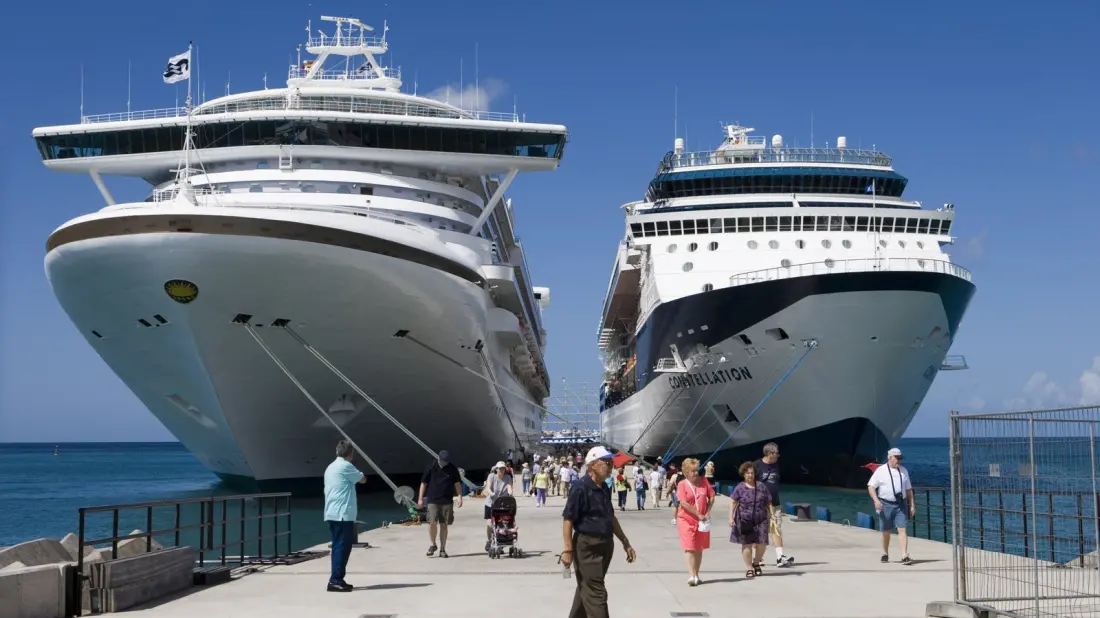
Six passengers aboard MSC Divina are learning the hard way that cruise ship pranks have consequences. In the early hours of July 30, the group reportedly sneaked into the ship's intercom room at around 6:30 a.m. and broadcast a fake emergency to guests sailing from Marmaris, Turkey, to Naples, Italy: the captain had supposedly lost control of the vessel and the ship was adrift. Luckily, the announcement only carried to a couple of common areas rather than every cabin, but it still could have triggered serious panic. When the ship docked in Italy, Italian authorities arrested all six.
It wasn't an isolated stunt. Just months earlier, in March 2026, teenagers on Royal Caribbean's Oasis of the Seas shouted a fake "man overboard" call, sending the crew into a scramble and prompting the US Coast Guard to be alerted before it was revealed to be a prank. One cruise veteran on TikTok documented the chaos, noting she'd never heard that announcement in all her years at sea.
So why do these jokes cross a legal line? False alarms at sea burn through expensive, limited resources. A fake distress call can mobilise the ship's entire crew, the Coast Guard, and local police at the nearest port — all while a real emergency, like an actual person in the water, might be going unattended. Passengers' safety isn't the only thing on the line either: in the US, the Coast Guard says penalties for false distress calls can hit $250,000, plus possible jail time. And even if authorities go easy on you, expect the cruise line itself to hand down a lifetime ban. There's a formal code of conduct on every sailing, and hijacking the ship's PA system or faking an emergency breaches it in the most dramatic way possible.
For the vast majority of cruisers, this is less a warning than a reassurance — the odds of ending up next to someone who breaks into the bridge intercom are slim. But it's a useful reminder of how seriously maritime law treats anything resembling a false emergency, and of how one idiot at 6:30 a.m. can disrupt a holiday for thousands of people. If you hear an announcement that doesn't sound right, the best move is to stay calm, follow crew instructions, and let the professionals figure it out.
Story via Explore.com.