
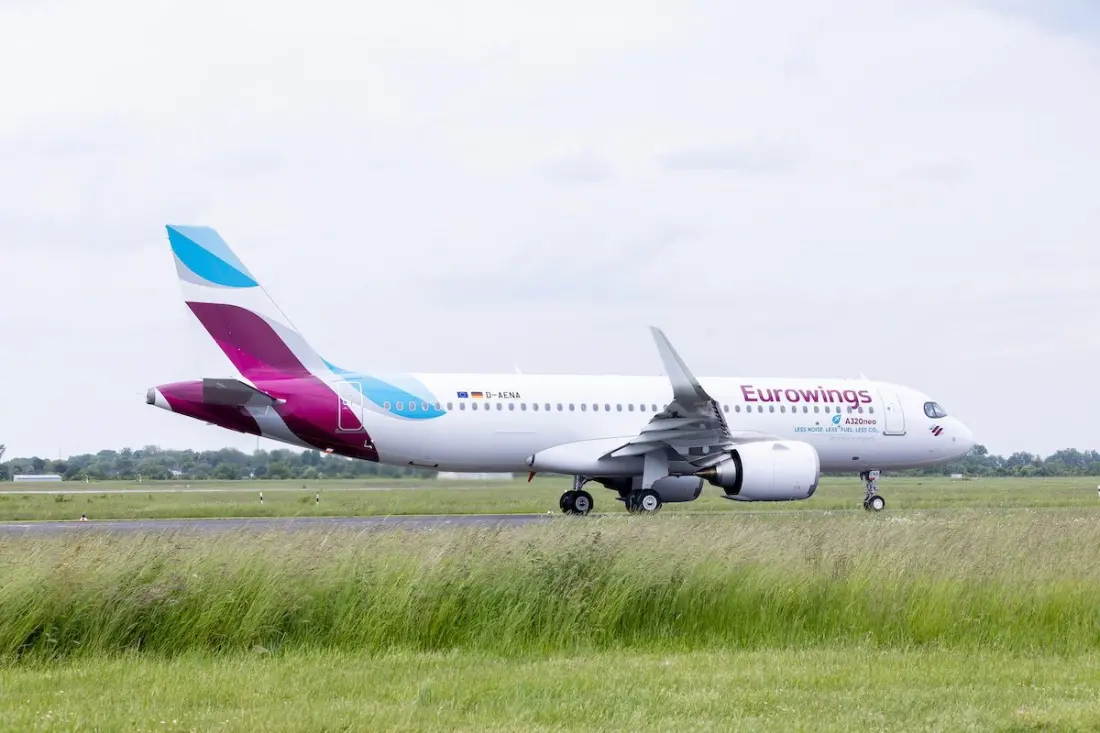
A single misloaded suitcase turned a routine hop from Ibiza to Dusseldorf into a double diversion that left passengers landing closer to dawn than to their scheduled arrival time.
The trouble started on Eurowings flight EW9503, an Airbus A320 that was meant to leave Ibiza at 6:10PM and reach Dusseldorf by 8:35PM. It actually got airborne at 7:35PM, already running late. Shortly after takeoff, the crew learned that a piece of checked luggage in the hold didn't belong to anyone on the plane. Lufthansa Group, Eurowings' parent, called it a loading error — no hint of anything sinister, just a ground-handling mistake.
Still, the rules leave no wiggle room. Since the 1988 Pan Am Lockerbie bombing, airlines have had to match every bag to a passenger on board, and EU regulations explicitly treat checked baggage as unaccompanied if its owner isn't on the aircraft. Unaccompanied bags can't fly, and once one is discovered mid-flight, a diversion to the nearest practical airport is the only option. That meant Toulouse, where the plane touched down just over an hour after leaving Ibiza.
What followed was a lengthy security inspection of the aircraft — nearly three hours on the ground before it could continue north. By then another constraint kicked in: Dusseldorf airport has a nighttime curfew, and the flight had missed its window. So the A320 diverted a second time, landing at Cologne, which operates around the clock, at 12:53AM. Eurowings then put all 156 passengers on buses for the final leg to Dusseldorf, with arrivals somewhere in the small hours — well over six hours after the original schedule.
It's easy to scoff at the whole exercise. The bag was almost certainly harmless, the plane was already over France, and dumping everyone in Toulouse created far more disruption than the suitcase ever could. But positive bag matching exists for a sobering reason, and crews don't get to make judgment calls on it. Once the discrepancy surfaced, the diversion was automatic.
For travellers, the useful takeaway is how quickly small delays cascade. An evening flight that slips an hour or two can lose its landing slot entirely if your destination airport has a curfew — Dusseldorf, like several major German airports, restricts overnight operations. That's the difference between arriving late and arriving somewhere else entirely. It's also a reminder that ground handling errors, while rare, do happen, and the bag-match rule means they can ground or reroute a full flight. If you're booking summer evening flights into curfew-bound airports, an earlier departure gives you more buffer against this kind of domino effect. And if a diversion does happen, airlines are on the hook for getting you to your destination — in this case, a fleet of coaches in the middle of the night.
Nobody's holiday was ruined, but 156 people traded a short evening flight for a very long Wednesday night. Credit to the crew for executing two unscheduled landings without drama.