
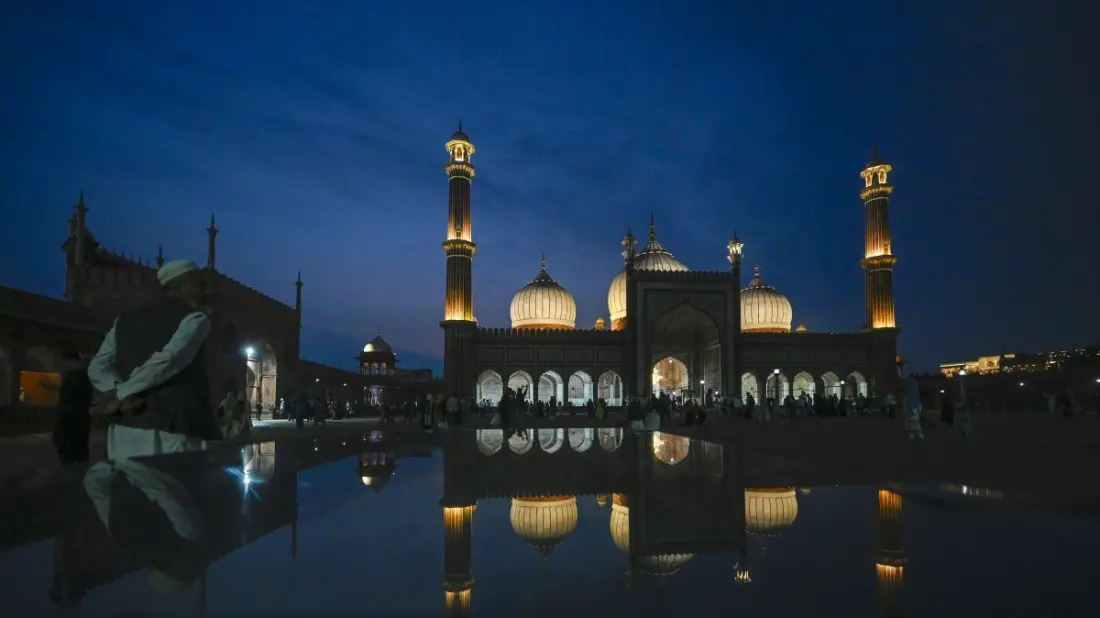
A thought-provoking essay in Daily Sabah argues that India isn't erasing its Muslims so much as erasing Muslimness — the thousand years of language, architecture, poetry and history that Muslim communities contributed to Indian civilisation. For anyone who travels to India for the Taj Mahal, Old Delhi's lanes or a qawwali performance, it's a reminder that the heritage on display is being quietly reframed back home.
The piece, by writer Firdous Syed, responds to remarks by RSS chief Mohan Bhagwat, who told an audience in New York in August that any Hindu wanting Muslims gone from India 'will not remain Hindu.' Syed's argument is that such assurances miss the point: India's 200-plus million Muslims — over 14% of the population — can remain as people while their cultural inheritance is stripped from the national identity.
The numbers he cites are stark. Muslims hold just 24 of 543 seats in the Lok Sabha, none from the governing alliance, and there has been no Muslim Union minister since 2022. State assembly seats have dropped from roughly 339 to about 255 in a decade. A 2006 government inquiry, the Sachar Committee, already found Muslims hugely underrepresented in the civil service, police and security forces.
The cultural erosion is subtler. Urdu — the language of Ghalib's poetry and a slogan of India's own freedom struggle — survives in Bollywood songs and mushairas even as its script vanishes from street signs; Syed recalls noticing prayer times at Delhi's Jama Masjid written in Devanagari, in Ghalib's own neighbourhood. School textbooks have trimmed material on the Delhi Sultanate and the Mughals, recasting that era as one of invaders rather than as part of India's formation. Syed points out the contradiction: nationalists celebrate pre-colonial India as a wealthy 'golden bird,' yet much of that prosperity belonged to the very sultanate and Mughal centuries now treated as foreign.
Why should travellers care? Because the sites, foods and sounds that make a trip to India extraordinary — Mughal forts, Awadhi cuisine, Dargah festivals, the Urdu couplets on old shopfronts — are products of this shared history. Understanding the debate over how India remembers its past adds depth to a visit to Delhi, Agra, Lucknow or Hyderabad, and explains why local guides, curators and historians sometimes frame the same monuments very differently. It's also a story with wider relevance: an Ahmedabad school recently faced pressure for teaching 'I Am Malala' and Anne Frank's diary, a sign, Syed argues, that narrowing identity eventually narrows thought for everyone.