
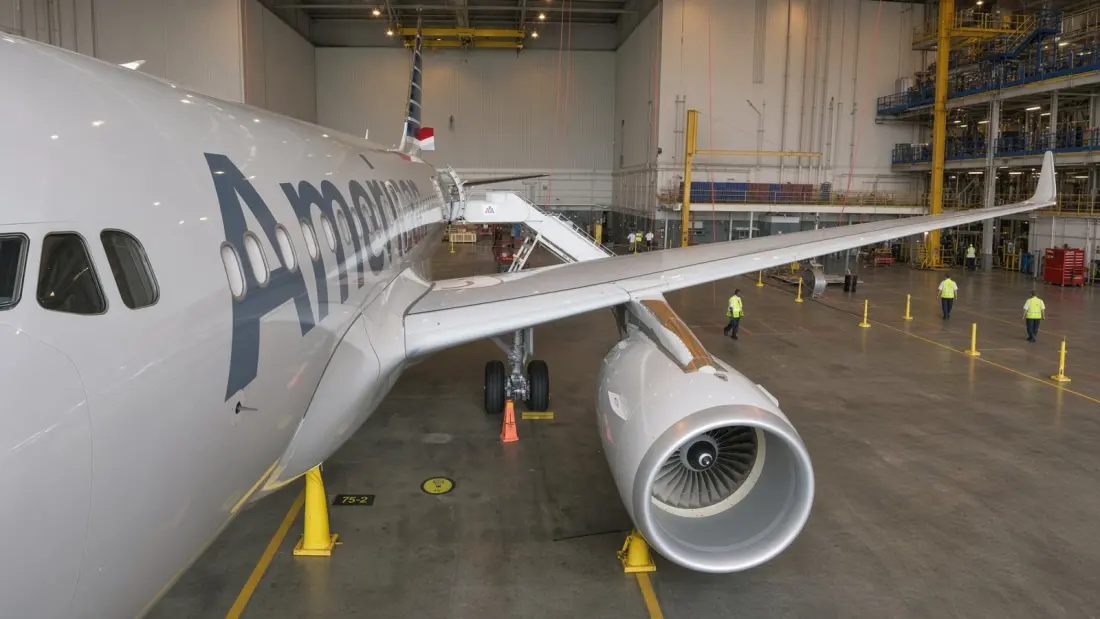
A routine departure at Atlanta turned into an on-air standoff between an American Airlines flight crew and the control tower, and the recording is a rare window into who really decides when a plane is safe to go.
It happened on Sunday, September 13, aboard American flight 1428, an Airbus A319 lined up on runway 27 Right and cleared for takeoff to Philadelphia. Directly ahead of it was a Boeing 757, and with calm winds the American crew asked for a bit more time before rolling so the 757's wake would dissipate. The controller cancelled the takeoff clearance and sent them off the runway — then the bickering started.
The controller scolded the crew for not requesting extra spacing before entering the runway, and when the pilot pushed back — pointing out that clearing an A319 behind a 757 in calm winds felt too tight, and telling the tower to "let us fly the airplane" while controllers "do your job" — the controller hit back with a "possible pilot deviation" notice and a phone number to call. That's the aviation equivalent of being reported for a suspected rule violation. The tower then doubled down on the frequency, telling a complimentary Frontier crew that after 26 years he didn't need pilots lecturing him.
On the technical question, the controller arguably had the better case. A 757 and an A319 fall into wake turbulence categories that don't trigger a mandatory extra spacing interval, and standard rules generally allow the second aircraft to start its roll once the first is airborne and at least 6,000 feet ahead. But that misses the point. Minimum separation is a floor, not an order — a pilot is always entitled to decline a clearance they believe is unsafe, and no deviation occurs simply for asking for more room. The source analysis calls the deviation warning vindictive, arriving as it did seconds after the pilot's jab. The crew's own sloppiness — not clearly acknowledging the cancelled clearance — was the only genuine operational wobble in the exchange.
Wake turbulence is genuinely dangerous: it's the rotating air spilling off a wing generating lift, and it can roll a following aircraft with little room to recover near the ground. Calm conditions are exactly when it lingers, which is why experienced crews treat 757s and heavy jets ahead of them with extra caution even when the rulebook doesn't require it.
Why should travellers care? Because this is the system working, mostly, the way it should. You want pilots who will refuse a takeoff they're not comfortable with rather than defer to a timetable or a controller's tone — and this crew did that without drama, an emergency call, or delay beyond a few minutes. The follow-up spat was ego; the refusal itself was professionalism. Incidents like this are worth knowing about the next time your flight waits a beat longer at the runway threshold.
View from the Wing