
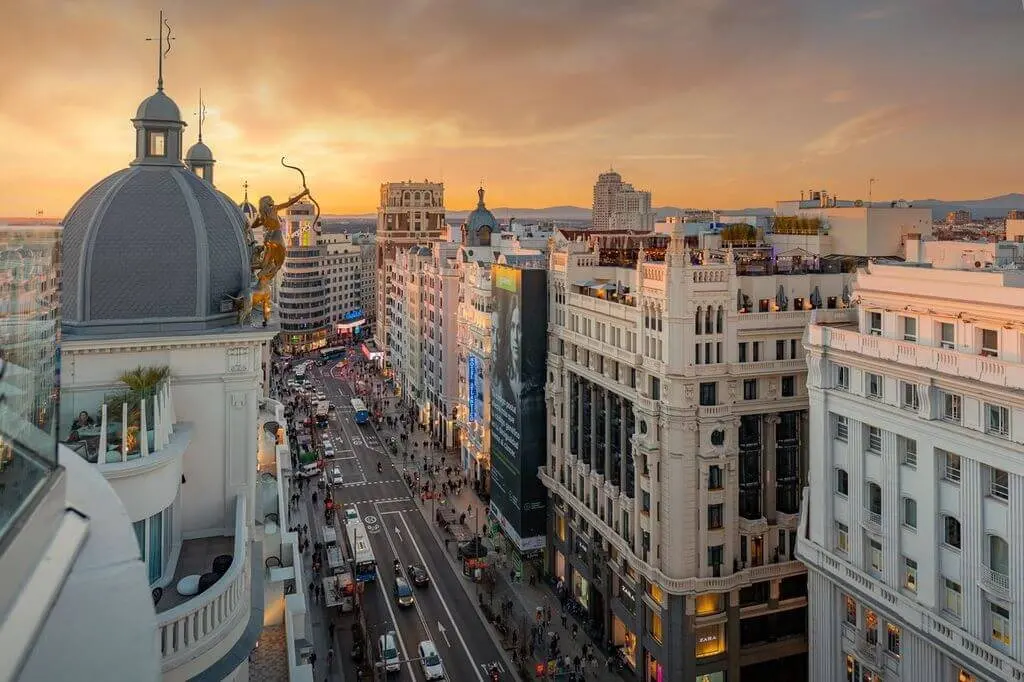
Madrid gets overshadowed by Barcelona, but Spain's capital packs more art, food and late-night energy into a compact centre than almost anywhere in Europe. Home to 3.5 million people and over 10 million annual visitors, the city rewards travellers who embrace its late rhythm — dinner at 10, bars well past midnight — and a recent five-day itinerary from Nomadic Matt makes a strong case for slowing down and doing it properly.
Day one belongs to art. The Paseo del Prado corridor, a UNESCO World Heritage site since 2021, strings together three heavyweights: the Prado (El Greco, Velázquez, Goya, plus Rubens and Caravaggio), the Thyssen-Bornemisza with its Renaissance-to-Pop-Art span, and the Reina Sofía, where Picasso's Guernica hangs. If museums wear you out, the smaller 'house museums' offer a breather — the Sorolla Museum, the sun-filled former home of the 'painter of light', reopens in 2026 after a major renovation.
Day two covers Habsburg Madrid: the Kilometre Zero plaque at Puerta del Sol (the official centre of Spain's road and rail network), the Bear and Strawberry Tree statue, and Plaza Mayor — once the site of bullfights and executions, now a people-watching hub. Grab a calamari sandwich in the side streets, then tour the Royal Palace, the largest in Western Europe with over 3,400 rooms, built on a 9th-century Muslim fort. Finish at Almudena Cathedral, only consecrated in 1993, and ride up to the dome for city views.
Food gets its own day, and rightly so. The glass-walled Mercado de San Miguel is the famous one, but locals point you to Mercado de San Antón in Chueca and Mercado de Vallehermoso for a more authentic spread. Dinner at Sobrino de Botín — Guinness-certified as the world's oldest restaurant and a Hemingway favourite — is the classic splurge; otherwise crawl the tapas bars of La Latina or Barrio de las Letras. End with cocktails at a Gran Vía rooftop like Picalagartos or the RIU 360º sky bar. Vegans take note: Malasaña has become one of Europe's better plant-based neighbourhoods.
Day four ventures out. El Escorial, Philip II's austere 16th-century complex of monastery, palace and royal tomb, is an hour away; so is Aranjuez, a royal spring residence with gardens that give Versailles a run for its money. Closer still is Alcalá de Henares, Cervantes' birthplace and a preserved slice of the Spanish Golden Age, 45 minutes by car.
The final day stays local. The Monastery of Las Descalzas Reales, founded in 1559, became an art trove because aristocratic women arriving as nuns brought their treasures with them. Nearby La Encarnación, a working convent from 1611, claims a vial of Saint Januarius's blood among its relics. Wind down in Casa de Campo, a 17-square-kilometre park with lakeside terraces looking back at the Royal Palace — a fitting last stop.
Who's this for? Anyone with five free days and a decent pair of walking shoes. Madrid is affordable by Western European standards, easy to navigate on foot and metro, and far less rushed than its Catalan rival — provided you're happy eating late.