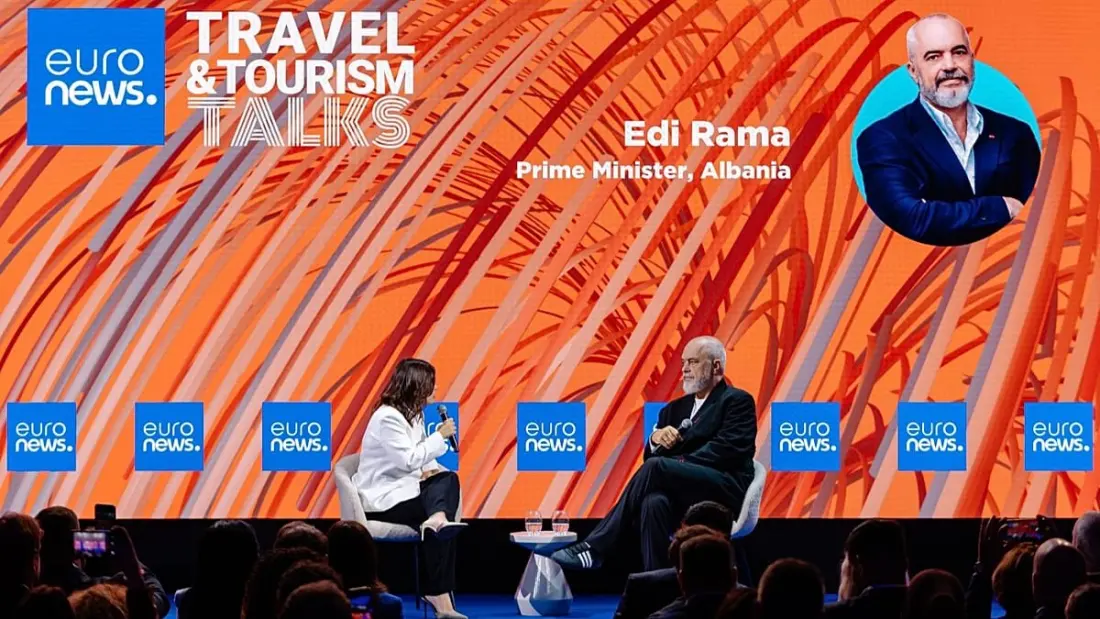
Brussels played host to the Euronews Travel & Tourism Summit 2026 on 29 September, pulling together politicians, ambassadors and tourism chiefs for a one-day session on where travel is heading. The agenda swung from Albania's glow-up to heatwaves, rail gaps and faster US border entry. Here's the short version.
Albania's prime minister Edi Rama had the boldest line of the day, describing how his country has gone from what he called the "North Korea of Europe" to one of the continent's fastest-rising destinations. Croatia and its neighbours had a head start on tourism development, he said, but now it's Albania's turn. The next phase is chasing higher-spending visitors: Waldorf Astoria and Aman are both planning hotels there, and Dubai's Atlantis will open its first property on the European continent in the country. Rama also addressed the protests around the Sazan Island and Zvërnec resort project backed by Jared Kushner, saying Albania would publish documents on the deal in the coming weeks.
Climate came up as the industry's top worry. Eduardo Santander, CEO of the European Travel Commission, called climate change "the biggest threat to tourism right now, by far", pointing to a summer of heatwaves that stopped trains running on buckled rails and left cruise ships stranded on rivers too dry to sail. His warning for travellers' wallets: expect trips to keep getting more expensive as the climate costs bite.
Central Europe, meanwhile, wants to sell itself as one destination. Olivér Csendes, president of the Hungarian Tourism Agency, pitched cross-border marketing that ignores national lines — an easy sell in a region where two or three capitals can sit within 100 kilometres of each other. It plays neatly into the multi-country "trip-maxxing" trend, where travellers pack several countries into one trip.
There was concrete news for Belgians heading stateside: US Ambassador Bill White confirmed that Global Entry — the scheme letting pre-approved, low-risk travellers skip long queues at American immigration — will open to Belgian citizens by the end of 2026 or early 2027. Foreign minister Maxime Prévot is personally shepherding the paperwork. On the infrastructure front, MEP Daniel Attard argued Europe needs to put real money into rail, airports and aviation links to the lesser-known places that would genuinely benefit from spreading tourist numbers around.
Why does this matter if you're not a policymaker? Because these threads shape your next trip. Albania is entering its luxury-hotel era — go now if you want beaches without five-star prices, or wait a couple of years for the Aman crowd. Central Europe's capitals are ideal for a single multi-stop trip. And if you're Belgian and regularly visit the US, Global Entry membership will save you serious airport time. The climate warning is the one to plan around: shoulder-season trips and rail-friendly routes are getting more attractive by the year.