
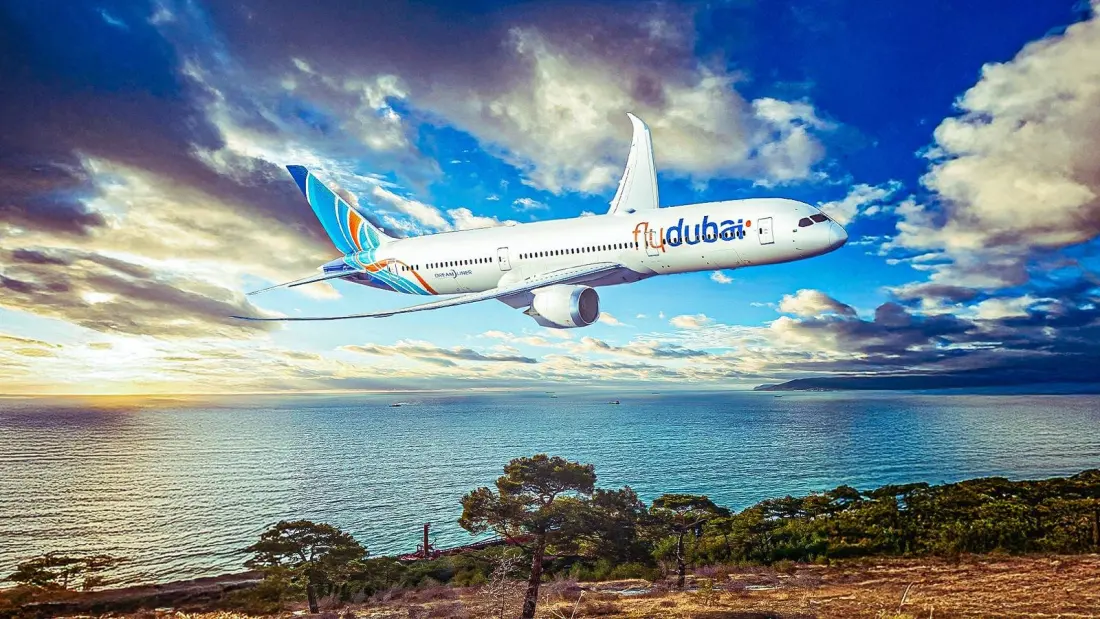
flydubai, Emirates' Dubai-based sister airline, is adding 11 more Boeing 737 MAX jets, pushing its fleet past the 100-aircraft mark for the first time. The batch splits into seven of the larger MAX 9s and four MAX 8s, all configured with two cabins. The MAX 9s seat 16 business and 156 economy passengers; the MAX 8s carry ten in business class. Management framed the milestone as proof of a fleet strategy built around a young, fuel-efficient operation.
The aircraft are only half the story. flydubai is also spending the next 12 months retrofitting 21 existing 737 MAXs that still have recliner-style business class seats, converting them to the lie-flat product the airline introduced in 2017. Economy passengers get a win too: Boeing's bigger 'Space Bins' are being fitted, holding six bags each instead of the standard four. This follows an earlier multimillion-dollar overhaul of its 29-strong Boeing 737-800 fleet, which began in 2024 and brought lie-flat seats and in-flight entertainment to that older fleet.
The bigger picture is interesting. flydubai has been all-Boeing since launch, but at the Dubai Airshow in November 2025 it signed a memorandum of understanding with Airbus for 150 A321neos, with options on 100 more — a deal worth $24 billion at list prices, before typical discounts. Deliveries would run to 2031, so Boeing jets will keep arriving in the meantime, but the era of a purely Boeing fleet is clearly numbered.
Why does any of this matter if you're not an aviation nerd? flydubai is a workhorse carrier for the region, flying budget-friendly routes across the Middle East, Central Asia, Africa and Eastern Europe, and it feeds heavily into Emirates' long-haul network via Dubai. If you're booking a hop from Dubai to places like Tbilisi, Baku or Zanzibar, chances are it's on one of these 737s. The lie-flat retrofit means business class product will be consistent across the fleet, and the bigger overhead bins should end the gate-check scramble on full flights.
There's also a civic angle: flydubai is state-owned, and its expansion is explicitly tied to Dubai's D33 agenda — a plan to double the emirate's economy by 2033 and rank it among the world's top three financial cities. More planes, more routes, and presumably more competition on fares out of Dubai. Frequent flyers in the region should expect the airline's network to keep growing through the decade.