
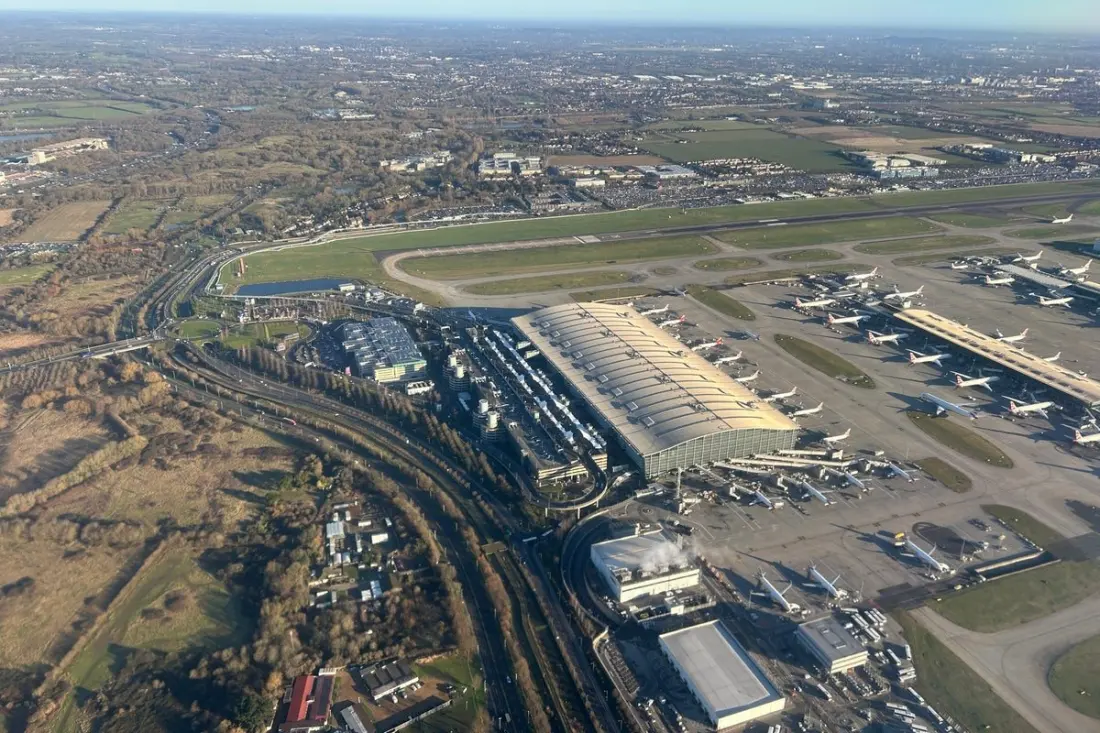
Heathrow's long-trailed third runway is back on the table, but a new report from the UK's Climate Change Committee (CCC) says approval should come with strings attached: airlines must commit to cutting carbon emissions, or the expansion doesn't get built.
The CCC, the independent watchdog set up under the 2008 Climate Change Act, argues the expansion is only compatible with the UK's net zero targets if the aviation industry foots the bill for decarbonising itself. Its proposed toolkit includes sustainable aviation fuel (SAF), government-mandated payments from the industry, and engineered carbon removal — machines that pull CO2 out of the atmosphere and store it permanently.
Here's the catch for passengers: those costs would almost certainly land on ticket prices. The report estimates that by 2050, a return trip to Alicante could cost around £150 more and a return to New York roughly £400 more — the equivalent of six to nine pence per mile, comparable to today's fuel duty on cars.
The wider picture isn't pretty either. Aviation emissions have more than doubled since 1990, while the rest of the UK economy has roughly halved its output. Heathrow alone accounts for about half of Britain's aviation emissions, and the CCC forecasts that the expanded airport would eat up 6.9% of the country's remaining carbon budget by 2050. Even without a third runway, it warns, current policies would see aviation emissions flatline rather than fall through 2050. There's also real uncertainty about whether SAF and carbon removal can actually scale fast enough to matter.
Heathrow has pushed back, insisting growth and net zero "must deliver both" and pointing to carbon taxes passengers already pay. The Department for Transport says it's putting £219 million into SAF production and £43 million into cleaner technologies, while framing expansion as worth around £40 billion to the economy and up to 60,000 local jobs. The Chancellor, meanwhile, has suggested the government has effectively given the go-ahead.
For holidaymakers, this is worth watching on two fronts. First, whether the runway — and the extra flights and competition it brings — materialises at all. Second, the clear signal that greener flying will cost more over time, whether through SAF levies, carbon pricing or removal schemes. If you've been putting off that long-haul trip, the economics of flying aren't getting cheaper in the decades ahead.