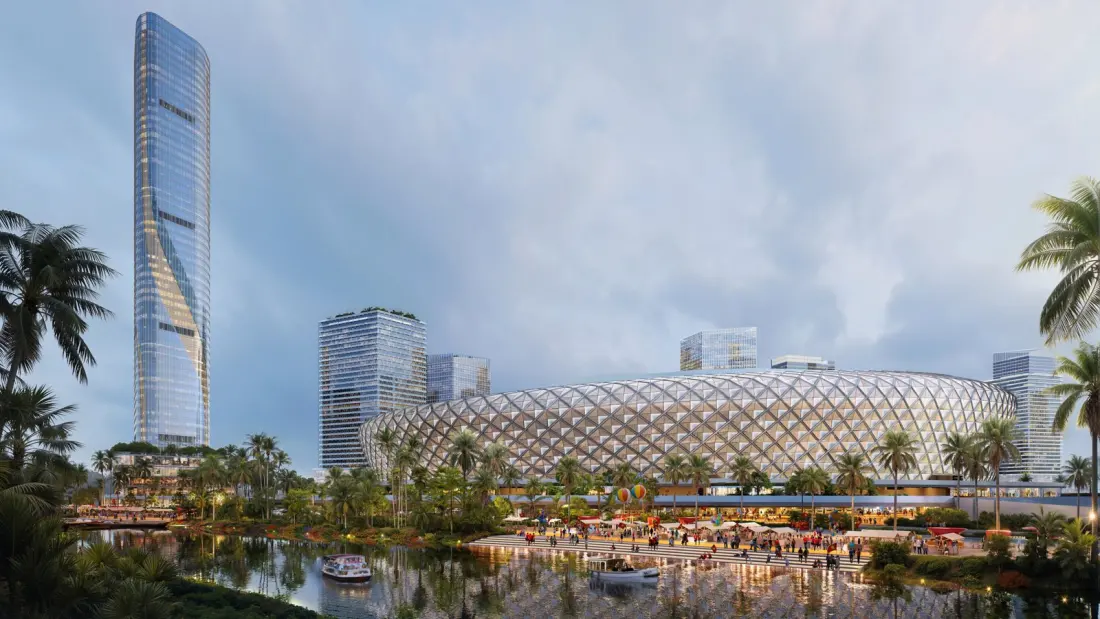
A vast new sports complex is taking shape on the eastern edge of Ho Chi Minh City, and its centrepiece borrows its look from the nipa palms that line Vietnam's waterways. Architecture firm Populous has unveiled designs for Rach Chiec Stadium, a 70,000-seat venue with a diamond-patterned facade inspired by how those palms shelter riverbanks while leaving shaded space underneath for markets and gatherings. The same thinking shapes the stadium itself: sheltered walkways will let spectators move around protected from the weather while staying connected to the city around them.
The stadium is only part of the story. Developer Sun Group has hired Populous to design an 18,000-seat arena alongside it, both sitting within the Rach Chiec National Sports Complex, which spans just under 187 hectares. The masterplan is ambitious — the architects say it could accommodate around 90% of Olympic sports across the wider site. Facilities will include an aquatic centre, training halls, sports medicine services, a central park and waterfront areas, with the Southeast Asian Games and the AFC Asian Cup named as target competitions. Longer term, the project is tied to hopes of hosting an Olympic and Paralympic Games, though nothing has been awarded yet.
The stadium's spec reads like a modern multi-purpose arena checklist. A fully retractable roof will let organisers manage conditions for matches and concerts, while zoned air-conditioning can cool different seating areas independently. Sound insulation is planned to keep concert noise away from nearby homes, a nod to the residential neighbourhoods on the complex's doorstep.
Construction officially began with a groundbreaking ceremony on 15 January 2026. Sun Group's contract allows eight years for delivery, but the city and investor want to speed things up, targeting completion of the wider complex in roughly five years. Populous still lists the stadium's completion date as to be confirmed, so treat any opening timeline with caution.
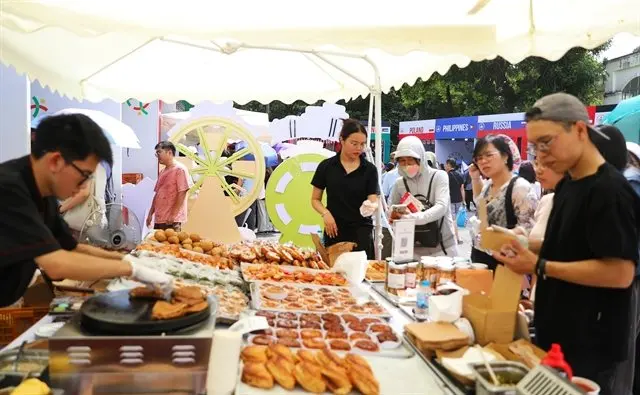
For travellers, the interesting part is what happens between the big events. The plans include waterfront dining, shopping, outdoor festivals and a conference centre for exhibitions and international meetings — the kind of year-round activity that turns a stadium district into an actual destination rather than a place you visit once for a match. Expect the area to develop into a new neighbourhood on HCMC's map, adding to the city's already fast-changing eastern districts. If the accelerated timeline holds, the first visitors could be walking through within the decade.