Palau celebrated its 32nd Independence Day this month with more swagger than a nation of roughly 17,600 people might be expected to have. In September, the island nation hosted the 55th Pacific Islands Forum Leaders Meeting in Koror, welcoming hundreds of delegates from across the region while its president, Surangel Whipps Jr., chaired proceedings.
The story making waves is Palau's stance on the world stage. It is one of only three Pacific countries that still recognises Taiwan diplomatically, and it has absorbed the consequences — China has blacklisted Palau as a destination for Chinese tourists, a heavy blow for a nation whose $347 million economy leans heavily on travel. Whipps has held the line anyway, telling forum delegates that outside partners are welcome to "sail with us" but do not get to choose the destination. Palau also sits under a Compact of Free Association with the United States, which covers security arrangements, even as Beijing, Canberra, Tokyo and Wellington all jostle for influence across Micronesia.
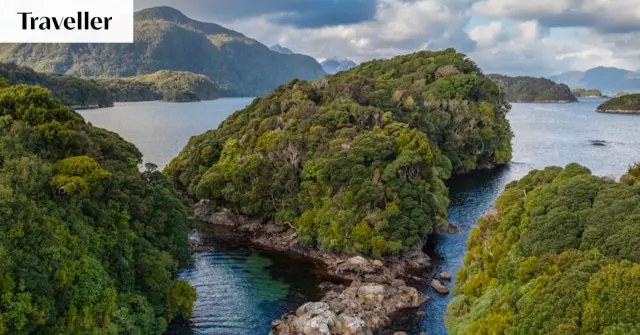
For visitors, the takeaway is a place that knows exactly what it is. Palau's resistance to pressure is rooted in a very local idea: the ocean is not blue space on a military map but a living connection between islands, carrying culture, history and generations of knowledge. That same ocean is what draws travellers — the Rock Islands, Jellyfish Lake and some of the world's best diving and snorkelling are all part of a country that has made conservation and self-determination part of its identity. The Palau Pledge, which every visitor signs on arrival to promise care for the environment, sums up the national attitude.
Whipps himself cuts an unusually relatable figure for a head of state: a former businessman from the family's Surangel & Sons company, two-term senator, president since 2020, frequently photographed fishing with his wife Valerie. His emphasis on resilience and community mirrors how Palauans talk about their own home — not a strategic location, but a place where people fish, travel and live.
Why should a traveller care? Because Palau offers something rare: a destination that has deliberately chosen quality and sovereignty over volume. The absence of Chinese group tourism since the blacklist has thinned crowds, and the country's leadership sees tourism through a stewardship lens rather than a growth-at-all-costs one. For divers, paddlers and travellers who want their money to support a community protecting its own waters, Palau is a compelling case study in small-scale, high-value travel — proof that the smallest nations can set their own terms, both diplomatically and on the reef.
The nation remains open for business and welcoming, with Koror as the hub for accommodation and tours. If the idea of visiting a country that has just asserted itself on the regional stage appeals, Palau is having its moment — and the reefs have never needed careful, respectful visitors more.
Original reporting: Pacific Island Times