
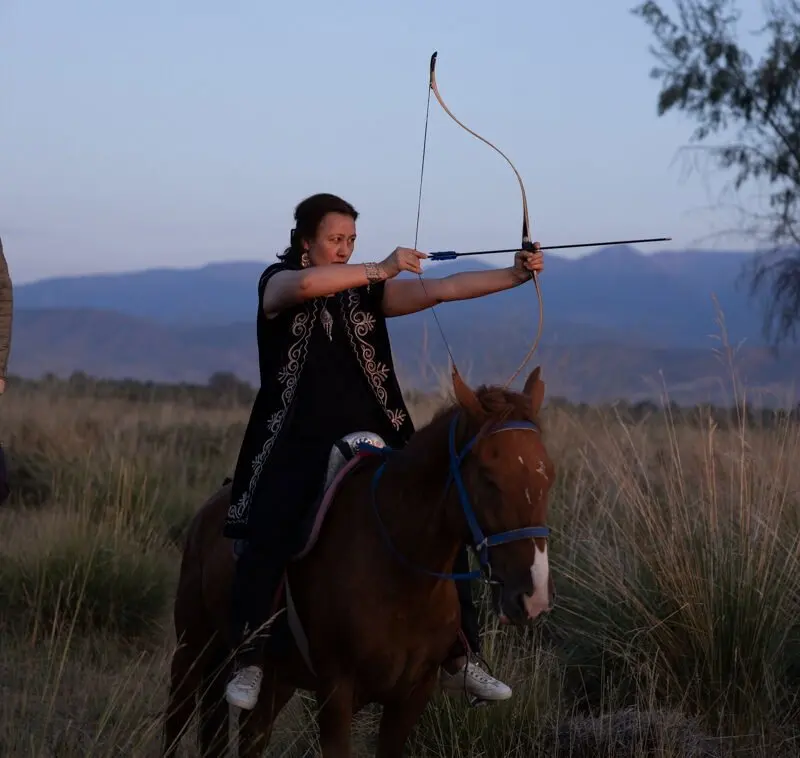
Horsemeat is the paradox at the heart of Kazakh food. The animal is the country's national symbol — painted on flags, celebrated in poetry, central to nomadic identity — and it also happens to be the main event on the plate. Few places illustrate the contradiction better than the steppe around Almaty, where eating horse is not a curiosity for tourists but everyday cooking.
A recent Roads & Kingdoms piece follows that story out of the city. The writer rides the A3 highway from Almaty with Kanat and Zhanar, a former civil-servant couple who left Astana behind to run Taldy farm about an hour from the city. The drive passes rolling steppe hills and Chinese-built construction sites, the radio murmuring in Russian — a small portrait of a country layered with nomadic, Soviet and modern influences.
The Soviet legacy is key to understanding the food. The couple describe how, in that era, being Kazakh itself carried a sense of shame, and the old traditions — language, dress, and yes, horse cuisine — were pushed aside in favour of a Soviet script and worldview. Horses were part of that suppressed heritage. Since independence, they've moved back to the centre of national pride, and with them the dishes that made the horse so useful to nomads: not just meat, but the whole animal, valued for milk, hair and hide as much as for the table.
For visitors, this is one of Central Asia's most distinctive food cultures. Classic preparations include kazy, a horse-meat sausage served at celebrations, alongside cuts like zhaya and zhal (cured fat from the hip and neck), all traditionally laid over beshbarmak, the national dish of boiled noodles and meat. Kumis — fermented mare's milk — is the drink that goes with it, tangy and faintly fizzy and very much an acquired taste.
Why should a traveller care? Because Kazakhstan is opening up as a destination — visa-free for many nationalities, and increasingly easy to reach — yet its food story is barely known outside the region. A meal at a farm like Taldy, an hour from Almaty, isn't a gimmick dinner; it's a direct line to how people actually lived on this steppe for centuries, before borders and ideologies redrew it. Coming home with an understanding of why Kazakhs eat their national symbol is a better souvenir than any fridge magnet.