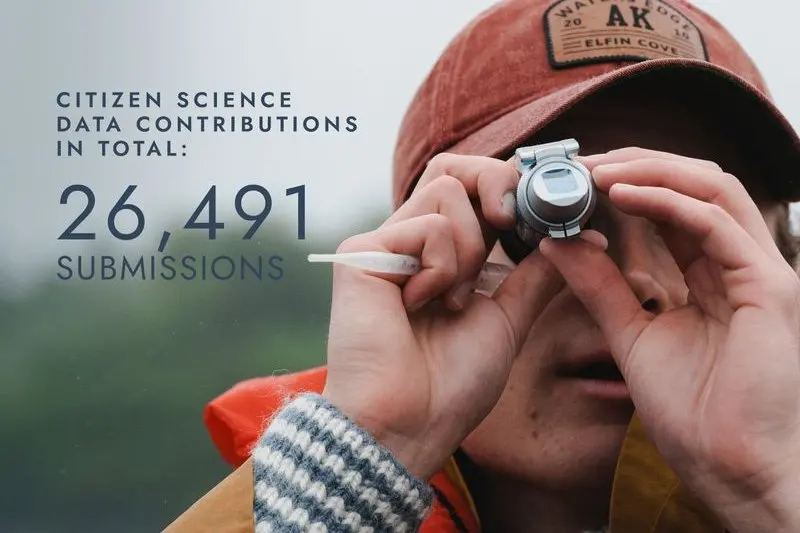
Expedition line HX just closed out an Arctic season that doubled as a serious research operation. Across 31 sailings in its 130th-anniversary year, guests and crew logged 26,491 citizen science submissions for nine research programs, ran 363 science boat sessions out on the water, and pulled 44 kg of rubbish off Arctic beaches. Booking-wise, the line also reported its highest-ever number of suite sales, a signal that premium expedition travel keeps growing.
The headline science story is a world first. Working with Heriot-Watt University and marine monitoring firm Seiche, HX trialled the AI WAVE (Whales and Arctic Vessels) project aboard the Fram: thermal cameras, high-definition imagery and machine learning combined to spot whale blows and surface activity in real time. It is the first Arctic deployment of this kind of system, and the data gathered will help train future automated species ID and alert tools. The practical aim is simple — giving bridge crews earlier warning of whales like narwhal, beluga and bowhead, cutting both disturbance and collision risk in polar waters.
For guests, the science is not a sideline; it is baked into the trip. HX runs at least two citizen science projects on every voyage, so travellers contribute observations from places researchers can rarely reach themselves, while getting a far closer read on the environment around them. The line has also expanded its pre-trip learning: a free Svalbard course, built with the University of Tasmania, covers the archipelago's wildlife, ecosystems, history and responsible-travel basics before you even pack. It joins existing Alaska and Antarctica courses, with programs for Arctic Canada, Greenland, Iceland and the Northwest Passage planned for 2027.
There is also a booking-relevant update: the HX Greenland Promise has been extended through the end of the 2028 season. If a Greenland expedition does not go ahead as planned, guests can transfer to another HX trip with an extra 20% Future Cruise Credit or take a full refund — a notable reassurance given how weather-dependent high-latency itineraries can be.
Why does this matter to travellers? Because expedition cruising is increasingly a two-way deal: you get expert-led access to some of the planet's most remote seascapes, and your presence generates genuinely useful data. If you want a holiday where spotting a whale actually contributes to whale science — and where a cancelled itinerary will not leave you out of pocket — HX's model is worth a look.