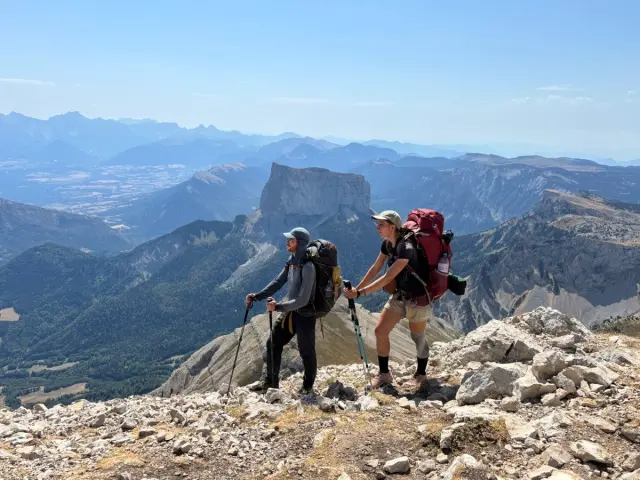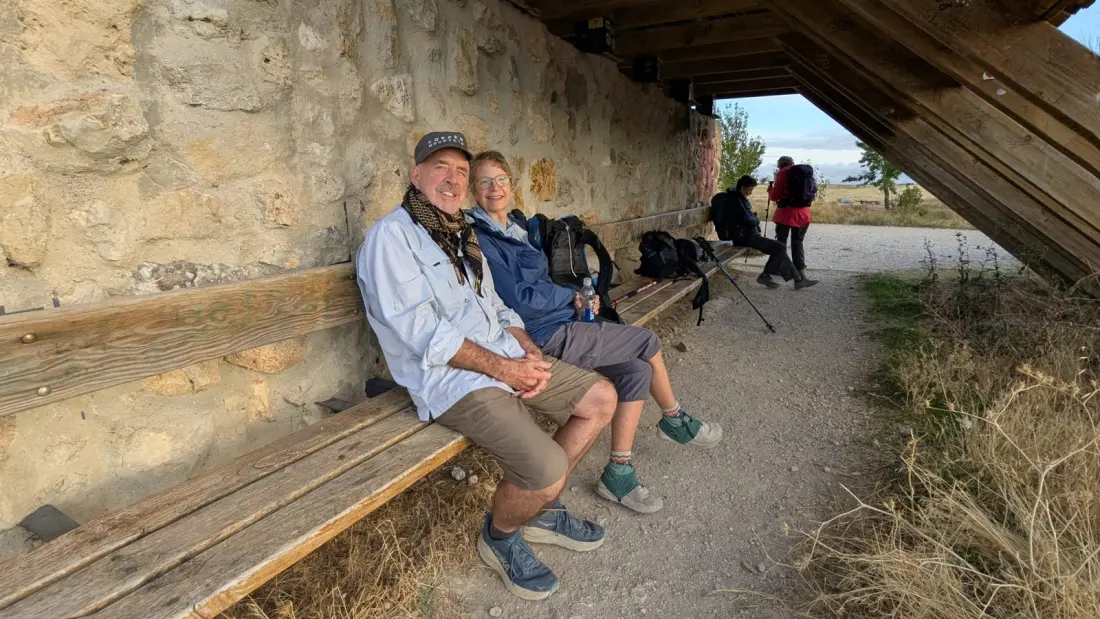
Two days out of Castrojeriz, the Camino de Santiago enters its most stripped-back stretch: the Meseta, a vast tableland of harvested wheat stubble, ploughed stone-strewn fields and long double-track farm roads where the only company is the line of pilgrims ahead of you, marching like ants towards the horizon.
The route passes the Hostel of San Nicolás, a 12th-century pilgrim hospital that still welcomes walkers with a candlelit communal dinner and foot-washing ceremony — the writers stopped by at 9 a.m., used the toilets and left a donation before pushing on. The walk into Frómista, roughly 16 miles from Castrojeriz, rolls along quiet roads lined with sunflowers and an unusual number of rest spots. Frómista itself was fully booked, but small unlisted albergues like El Chiringuito del Camino still had beds, and served a hearty pilgrim dinner (ribs for one, a vegetarian plate for the other) just doors from a Michelin-rated restaurant.
That night was spent at Espíritu Santo, a convent run by nuns with firm house rules — no alcohol, and everyone separated by gender into dorm rooms, older couples tucked together in their own. The evening followed a rhythm familiar to any pilgrim: a 6 p.m. blessing featuring a Korean pilgrim playing a long wooden flute, then a Pilgrims Mass that ended with veneration of Mary. The writer, a United Methodist with a bad back, joined in anyway, offering a slightly cheeky prayer for healing.
What makes this stretch memorable is less the scenery than the social chemistry. The writer describes the Camino at this stage as feeling like summer church camp: couples forming, friend groups bonding, and a buzz among younger pilgrims. That energy has a comic side too — the kitchen was taken over by a crowd of twenty-somethings cooking dinner for 26, washing it down with plenty of wine despite the nuns' clear instructions. Everyone younger than 50 apparently registers older pilgrims only when they start talking, like an apparition.
For anyone considering the Camino Francés, this is a useful window into the Meseta stage, often dismissed as boring but clearly rich in atmosphere: historic hospitals-turned-refuges, donativo stops, communal meals and the small-town logistics (bookings fill up fast in Frómista, so look beyond the apps). It's also a reminder that the walk is as much a social experience as a physical one — expect deep conversations, shared kitchens and the fourth-question ritual of pilgrim small talk: where are you from, where did you start, is this your first Camino, and ultimately, why?
One rule of the road worth keeping from the story: a pilgrim does not judge other pilgrims, even the ones ignoring the convent's alcohol policy.