
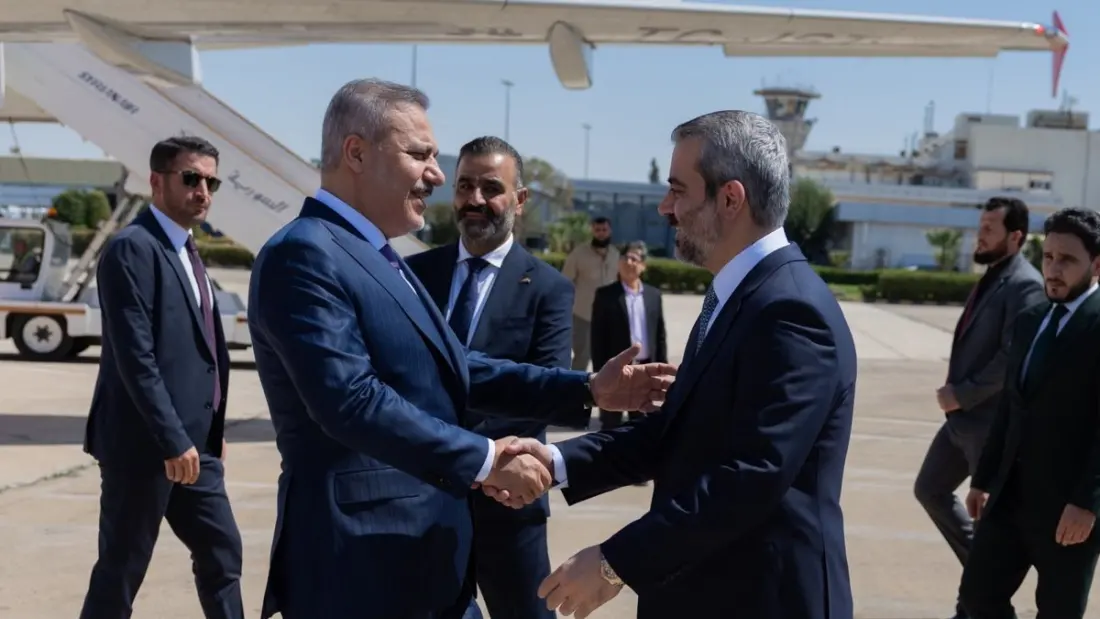
Syria's post-Assad transformation took another significant step this week, with Turkish Foreign Minister Hakan Fidan visiting Damascus to meet his Syrian counterpart Asaad al-Shaibani and map out plans for President Erdoğan's first visit to the country since the Baathist regime fell.
The headline item was the SDF's dissolution, announced in August. The group — the Syrian wing of the PKK, which Ankara has fought for decades — agreed to disband and integrate into Syria's security forces, with its leader Ferhat Abdi Şahin becoming an adviser to President Ahmed al-Sharaa. Fidan called it a precious step, arguing Syrian Kurds will gain prosperity and freedom within a unified state rather than through armed autonomy.
The Türkiye-Syria relationship is moving fast. Forty agreements and memorandums have been signed since the Dec. 8, 2024 liberation, and an institutional network now links 22 Syrian ministries with Turkish counterparts. Concrete results include a May 2025 energy deal, electricity delivered across the border to northern Syria, sister-city ties between Aleppo and Gaziantep, and 24-hour road transit restored at the Bab al-Hawa and Salama crossings.
Sanctions relief has been equally dramatic. After 20 months of diplomacy, the U.S. Caesar Act sanctions ended and Syria was removed from the state sponsors of terrorism list. The knock-on effect: roughly 1.6 million Syrians have returned home from abroad, with another 2 million internally displaced people going back to their home regions.
Not everything is smooth. Fidan and al-Shaibani both addressed Israel's incursions into southern Syria, including an Aug. 18 strike on the Abu Al-Duhur base that Tel Aviv claimed hosted Turkish forces. Syria is demanding an Israeli withdrawal to pre-December 2024 lines and compliance with the 1974 disengagement agreement, while insisting the attacks will not derail its warming ties with Ankara. Al-Shaibani described relations as being at their best period ever.
For travellers, the significance is gradual but real. A stabilising Syria means reopened border crossings, functioning supply routes and the first signs of a country re-entering regional travel networks — Gaziantep, already a superb food destination, now has an official sister-city link with Aleppo that could eventually underpin cross-border cultural travel. That said, most Western governments still advise against all travel to Syria, and security in the north and south remains fragile. Watch this space rather than book flights: the foundations for a future reopening are being laid, but the practical reality for leisure travellers hasn't changed yet. Anyone flying to southeastern Türkiye, however, should note that border towns once targeted by cross-border attacks are seeing renewed normalcy, and overland corridors like Bab al-Hawa are operating around the clock for the first time in years.
Daily Sabah Travel