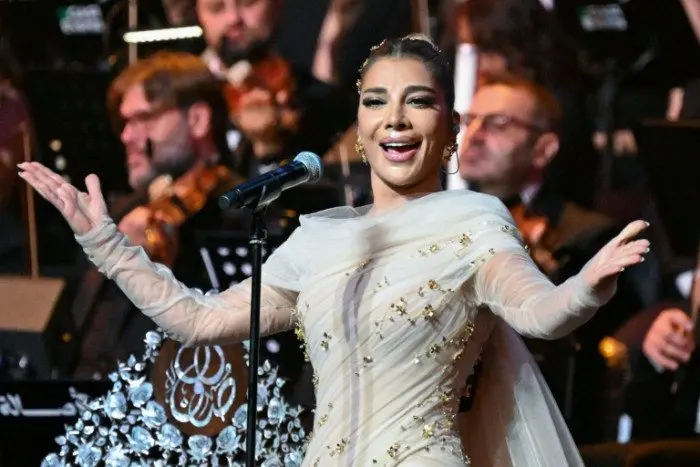
For 15 years, Syrian singer Assala Nasri could not go home. Last week, the 57-year-old star finally did — and played a sold-out concert in Damascus in front of thousands of fans who wept, waved Syrian flags and sang along to every word.
Assala left Syria after backing the anti-government protests of 2011. She refused to perform at pro-Assad events, was expelled from the Syrian artists' union and targeted in media campaigns, eventually settling in Cairo. After Bashar al-Assad was overthrown in 2024, she was welcomed back by Syria's new authorities — Culture Minister Mohammed Yassine Saleh calls her "the daughter of Damascus" and joined her on stage at the show.
The homecoming came with complications. Conservative preachers, including Egyptian-born Hani Dahab and Salafi cleric Abdul Razzaq al-Mahdi, ran campaigns demanding the concert be cancelled, and there was a heavy security presence on the night. Assala pressed on anyway, donating half the proceeds to charity and telling the crowd that "recovery will only happen with art and music".
Her new record, The Syrian Album, is a love letter to the whole country: folk songs from all 14 of Syria's provinces, including tributes to coastal communities still grieving last year's sectarian killings of Alawites, and to Druze-majority Sweida, which saw its own violence. At the concert she mixed new material with crowd-pleasers like Samehtak and Sandooq. In a touching personal moment, a Damascus antiques dealer returned the oud that once belonged to her father, himself a celebrated musician.
Why should travellers care? Syria has been largely off the map for over a decade, but the country has seen a genuine cultural revival since 2025 — concerts, poetry and public life returning to Damascus even as conservative religious movements grow in influence. Assala's show is the clearest sign yet that the capital is reopening its doors, and for anyone following the region, it hints at a future where Damascus is once again a liveable, visitable city rather than a news headline. Freedom of expression there is still contested, so expect the cultural scene to keep evolving — but the dam, so to speak, has broken.
For now, most governments still advise against travel to Syria, so this is a story to watch rather than a trip to book tomorrow. But for the diaspora, journalists and the adventurous few for whom the country becomes accessible, the return of world-class Arab music to Damascus theatres is exactly the kind of signal worth tracking.