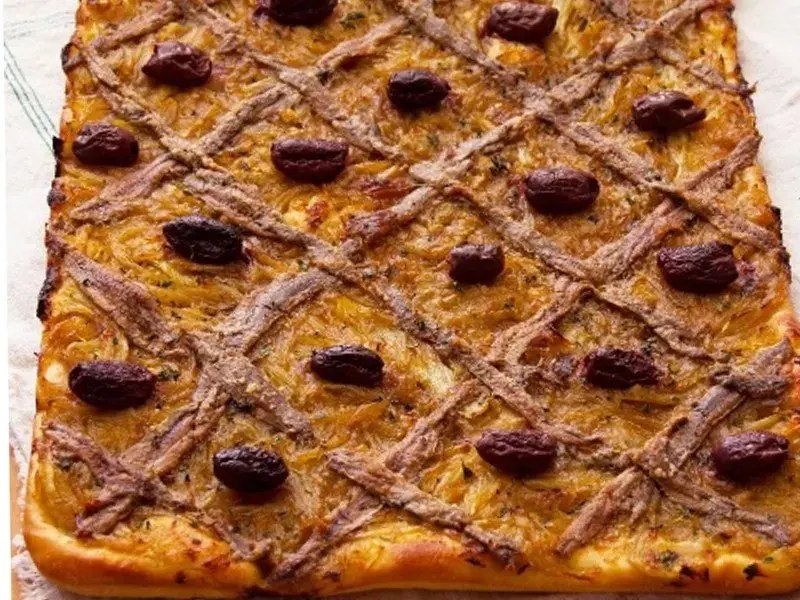
Long before Nice became a jet-set Riviera hotspot, locals were baking pissaladière — a thick, golden flatbread smothered in slow-cooked onions, studded with anchovies and olives. It's one of the oldest dishes in southern French cooking, and you'll find it in bakeries and markets across Nice sold by the slice. Think of it as pizza's French cousin, but with no tomato in sight: the sweetness comes entirely from onions cooked down in olive oil with garlic, herbs and a few chopped anchovies that melt into the base.
A recipe published by The Good Life France, extracted from a forthcoming cookbook by FERRANDI Paris — one of France's top culinary schools — breaks down how to make the classic version at home. The dough is a simple yeast bread: flour, salt, fresh yeast, water and olive oil, left to rise for an hour. The real work is the onion compote. Half a kilo of onions gets sliced thin and cooked low and slow in 100ml of olive oil with garlic, thyme, chopped anchovies and rosemary that's been briefly singed over a flame to bring out its aroma. Expect the whole thing to take around 30 minutes of hands-on time, an hour of rising, and an hour of cooking.
Assembly is where it gets pretty. The dough is rolled into a 30cm disk, spread with the onion compote, and baked at 200°C for 15 minutes. Then it comes out for the signature decoration: anchovy fillets, Taggiasca olives and rosemary leaves arranged in staggered rows across the top — the lattice pattern you'll recognise from every bakery window in Old Nice. Five more minutes in the oven and it's done. It keeps for up to three days.
Traditionally it's not a main event. In Provence you'd eat it as a snack with an apéritif, cut in small squares, or as a starter. It also works as a light lunch with a green salad. If you're travelling in the south of France, it's one of the essential cheap eats of Niçoise cuisine alongside socca and salade niçoise — look for it at Nice's Cours Saleya market in the morning.
The recipe calls for salt-packed anchovies rather than tinned fillets in oil; they have a firmer texture and cleaner flavour. Taggiasca olives, a small Ligurian-Provencal variety, are the traditional choice, but any good black olive will do in a pinch. And don't skip the rosemary singe — it sounds fussy, but it's a one-second move with a kitchen torch or gas burner that makes a noticeable difference.