A short hop between Singapore and Kuala Lumpur turned into a 45-minute delay on September 30 after a passenger refused to give up a cardboard box she had carried on board.
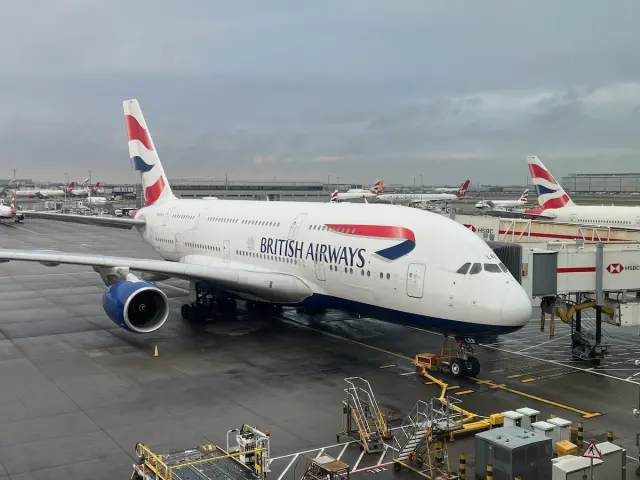
The incident unfolded on Batik Air flight OD804, which was scheduled to depart Singapore at 12.30pm. According to a fellow traveller quoted by Shin Min Daily News, the box was too large for the overhead locker, and the woman — reportedly in her 20s — was told she couldn't hold it on her lap or keep it on her person during the flight. Cabin crew offered a compromise: they'd stow the box and hand it back after landing. She said no.
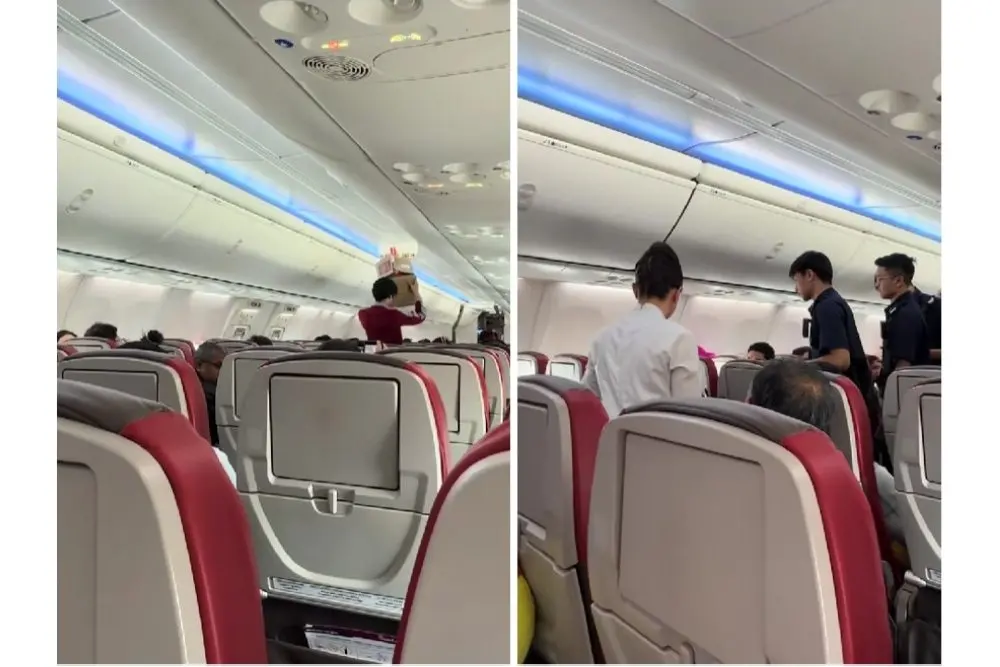
Things escalated from there. Crew then suggested placing the box on an empty seat, which she also declined, and she refused to fasten her seatbelt. A TikTok user who witnessed the scene, posting as minimanimo, shared video of a flight attendant carrying the box toward the front of the aircraft, followed by footage of around five uniformed officers standing in the aisle. The woman was eventually escorted off the plane, and the flight departed roughly 45 minutes behind schedule. The TikToker's verdict: the airline and Singapore authorities had handled it professionally.
It's a minor story with a very familiar shape. Carry-on disputes are among the most common causes of pre-departure friction, and they almost always end one of two ways: the passenger complies, or the passenger leaves. On budget carriers like Batik Air, which runs frequent low-cost shuttles between Singapore and Malaysia, baggage rules tend to be enforced more strictly than on full-service airlines — partly because overhead space is tighter and boarding is faster.
For travellers, the takeaway is practical rather than dramatic. If your hand luggage doesn't fit the sizer or the overhead bin, crew have final say on where it goes, and arguing mid-boarding rarely improves your options. Unusual items — boxes, garment bags, duty-free stacked on top of a roller — are worth thinking about before you fly: check dimensions, be ready to gate-check, or accept the crew's solution. Airlines can and do offload passengers who refuse to follow safety instructions, and refusing to fasten a seatbelt is about as clear-cut a trigger as it gets.
Anyone who has ever watched a boarding queue stall will also recognise the other side of this: one stubborn bag can hold up a whole flight, and the crew's job is to get moving. In this case, they tried two workarounds before calling in authorities, which is why online reaction to the video has largely sided with the airline.
For the rest of the cabin, the consolation prize was a slightly late arrival into Kuala Lumpur rather than anything worse — and a reminder that the fastest way off a plane you've just boarded is to refuse a seatbelt.