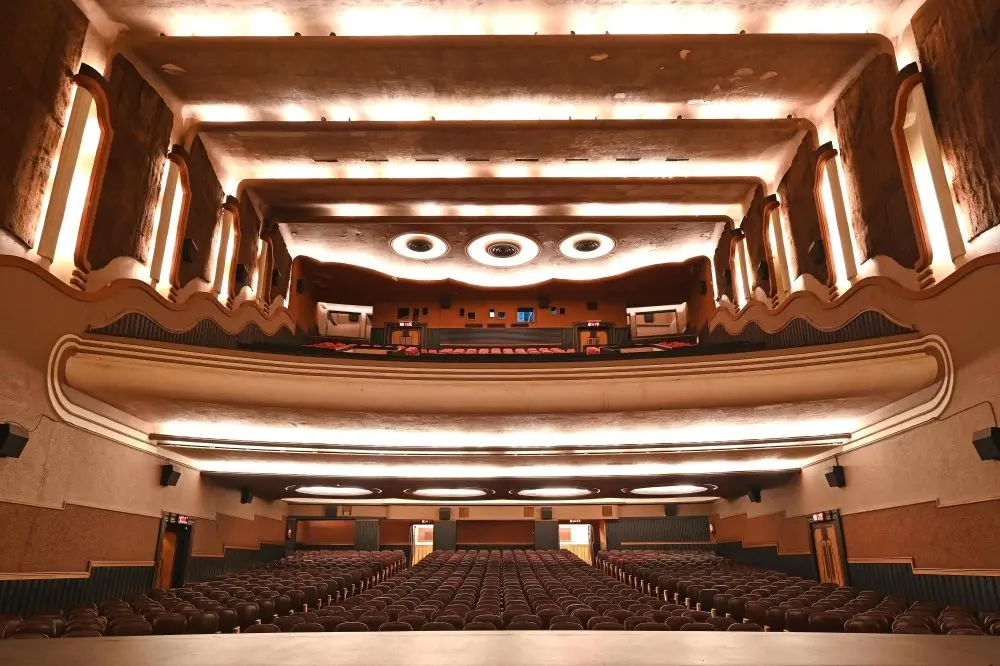
Bengaluru's Urvashi Cinema, a 1,200-seat movie palace that opened in the 1970s, is being torn down. Seats ripped out, facade peeling, the hall joins a long list of Indian single-screen theatres that once packed in a thousand fans a show and now stand demolished, converted into multiplexes, or simply left to rot.
The scale of the decline is stark. Researchers estimate India had around 14,000 single-screen cinemas in the 1980s. Today barely 2,000 survive. Photographer and former Bollywood cinematographer Hemant Chaturvedi has spent seven years documenting what's left, shooting 1,350 cinemas across 1,000 towns. His pictures record ornate facades, faded signage and cavernous auditoriums — the physical remains of a very particular way of watching movies.
Because that's the thing about these halls: going to the cinema here was never a passive experience. Fans whistled at the hero's entrance, threw money at the screen, jumped on seats and shouted at plot twists. Shopkeepers built entire businesses around the pre-show rush. As Chaturvedi puts it, that old ecosystem is fading — replaced by air conditioning, reclining seats and food delivered to your armrest. Efficient, sure. But generic.
The survivors prove the demand hasn't fully gone. In Bengaluru, Mukunda Cinemas — 50 years old and run by the third generation of the same family — still draws hundreds to 6am shows, with fireworks going off outside before screenings of Kannada star Yash's latest release. Owner Veerain Reddy admits inflation and competition make it a grind, but says passionate audiences keep these theatres alive as places to celebrate cinema rather than just consume it.
Mumbai has its own icon in the Regal Cinema, an Art Deco hall opened in 1933 that still screens films. Younger moviegoers like 23-year-old Vanshika say she finds the new multiplexes artificial and blingy — the old halls remind her of the city's older, characterful self.
Why should a traveller care? Because a show at a surviving single-screen is one of the most memorable cultural experiences India offers — cheap, loud, communal and completely unlike a multiplex back home. Catch a morning-first-day crowd in Bengaluru or a classic at the Regal in Mumbai and you're not just watching a film, you're stepping into a tradition that's vanishing in real time. Some of these theatres are also architectural landmarks worth seeing on their own. If you're visiting India's big film cities, skip the mall multiplex for one night and buy a ticket where the whistling happens. The window to do it is closing.
— AFP via Malay Mail Life