
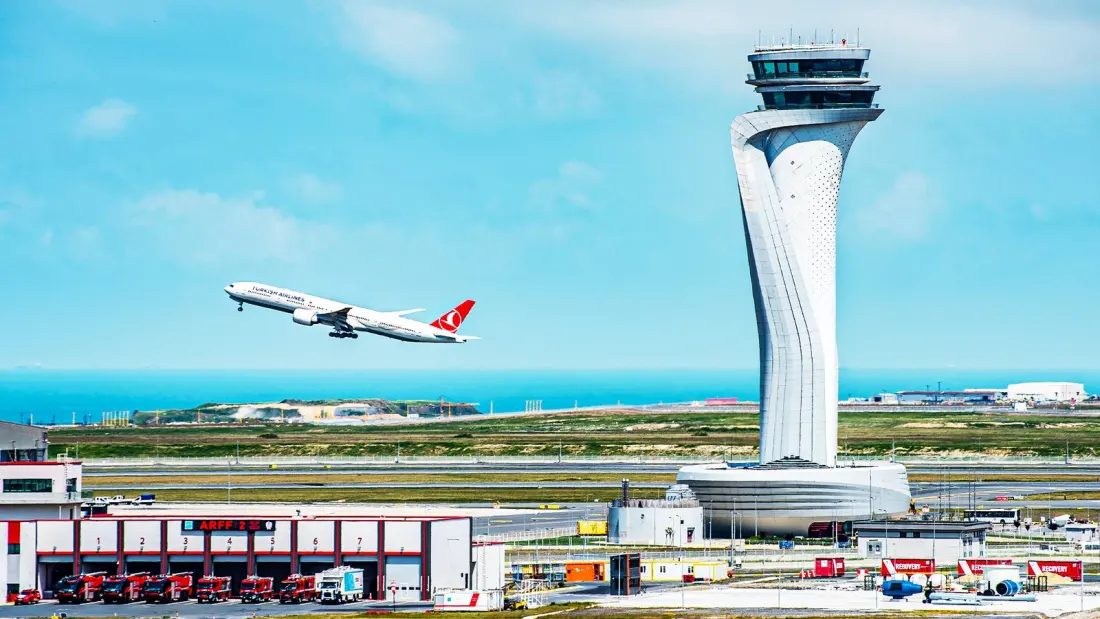
For most of the past 30 years, London Heathrow has topped the European passenger rankings. That changed in July 2026, when Istanbul Airport handled 8.15 million passengers against Heathrow's 7.9 million, according to Airports Council International — a gap of nearly 300,000 travellers in a single month.
The race has been tightening for a while. Istanbul finished 2025 just 40,000 passengers behind Heathrow, briefly led in January, then fell behind again by margins as tiny as 3,012 passengers in May. At the end of June, Heathrow was ahead by roughly 160,000. A month later, the Turkish hub had moved in front. Whether it holds the lead through the full year remains an open question.
Heathrow's dip owes a lot to geopolitics. Its July traffic was down 1.5% year-on-year, with Middle East routes falling 20.2% as the Iran-US conflict reshaped demand. Istanbul, meanwhile, grew 2.3%. The Turkish airport has been on a steep upward path since opening in 2019, when all traffic moved from Atatürk Airport. It ranked just 28th in the world that year; by 2025 it was eighth. It now serves over 330 destinations in more than 120 countries and was named the world's most connected airport in ACI's 2025 report — fitting, since much of its traffic is connecting passengers. On 27 July 2025 it set a European daily record with over 272,000 passengers.
Turkish Airlines is the engine behind all this. The carrier flew about 92.6 million passengers last year, up 8.8%, and carried a further 54 million in the first seven months of 2026. It has ordered heavily too: 355 Airbus aircraft committed in 2023, up to 75 Boeing 787s and up to 150 737 MAX jets. If growth continues at its centennial-plan pace, Istanbul could handle 150-160 million passengers a year by 2036.
The capacity race is equally telling. Istanbul is weeks away from switching on a fourth runway — a 2,820-metre east-west strip expected to enter service in late 2026 — lifting capacity from 90 million to 120 million passengers annually, with a long-term master plan targeting 200 million. Heathrow, running at near capacity on two runways, wants a third that could eventually lift its ceiling to around 150 million, but completion isn't expected until at least 2035. Its chief executive Thomas Woldbye has argued expansion would help the UK keep Europe's leading hub, and new carriers including ITA Airways, Alaska Airlines and Riyadh Air have launched there this year.
For travellers, the shift matters in practical ways. Istanbul's rise means more connections between Europe, Asia, Africa and the Middle East via Turkish Airlines, often at competitive fares, and a hub that's still adding runway and terminal capacity rather than squeezing flights in. Heathrow remains a giant — around 83.6 million passengers are expected in 2026 — but with flat traffic and expansion years away, expect Turkish Airlines to keep pitching connecting itineraries through Istanbul as the smoother alternative. One month's figures don't end the contest, but the momentum is clearly eastward, to the Bosphorus.