
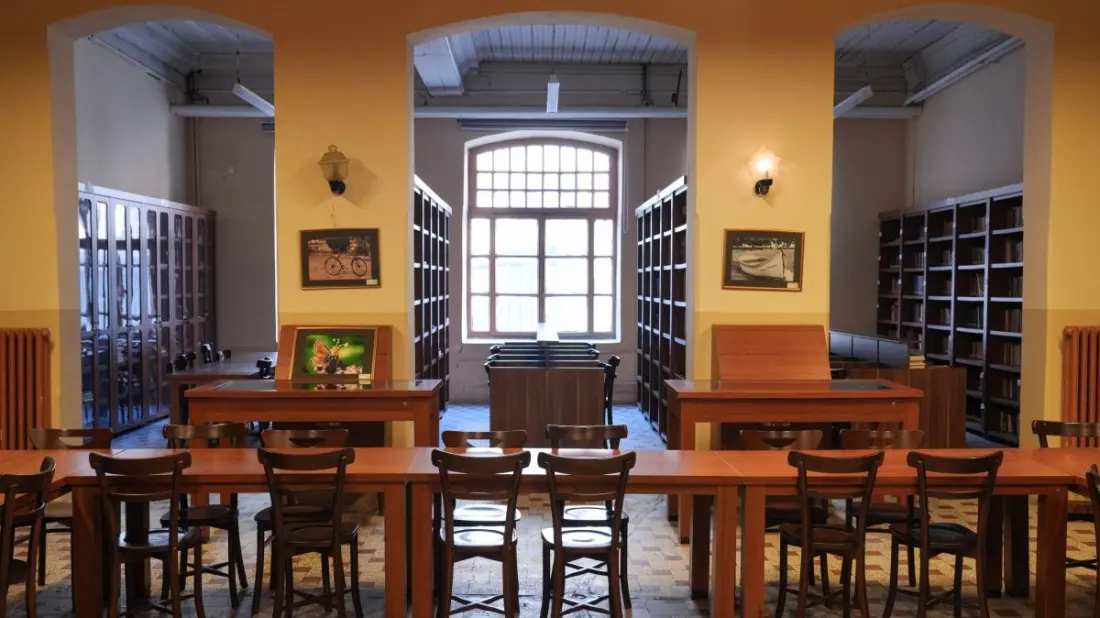
A school building a few steps from Sultan Mahmud II's tomb in Istanbul's Cağaloğlu district has been in near-continuous use as a place of learning since 1850 — an unusually long run by any standard. Today it operates as Cağaloğlu Anatolian High School, with around 740 students and roughly 60 teachers, but its walls carry the story of the Ottoman Empire's push to modernise education.
The institution opened on March 21, 1850, under Sultan Abdülmecid, during the Tanzimat reform era. It was commissioned by his mother, Bezmialem Valide Sultan, on a site where a traditional madrassa had been planned. Instead, she funded a modern masonry school built to a European design — a deliberate break from classical Islamic education. The curriculum reflected that ambition: arithmetic, geometry, philosophy, astronomy and geography sat alongside the original mission of training civil servants for a changing state.
The royal connection ran deep. The first roll counted about 250 to 260 students, and among them were the sultan's own children, including the future Sultan Murad V and Fatma Sultan — Abdülmecid personally delivered them on opening day so they would study alongside ordinary pupils. Bezmialem also financed the school through her foundation revenues, set up a lithographic press to print textbooks, and donated 546 valuable volumes from her personal library, now held at the Beyazıt State Library. In 1851 the building even hosted the launch of the Encümen-i Daniş, the empire's first modern scientific council.
Its identity kept shifting with the times. Secondary classes arrived in 1873, and parts of the building later housed the Mekteb-i Mülkiye and the imperial university under Abdülhamid II. From 1911 it became a centre of girls' education under names like Inas Idadisi and Bezmialem Sultanisi, continuing as Istanbul Girls' High School into the Republican era. The biggest modern change came in 1983-84, when it went coeducational and adopted its current name with German-language instruction. That German link survives: students can earn an additional diploma recognised in Germany under a Türkiye-Germany education agreement.
Why does this matter to a visitor? Cağaloğlu is one of Istanbul's most historic neighbourhoods — squeezed between the Hagia Sophia, the Grand Bazaar and the famous Cağaloğlu Hamam — and most travellers walk past its old school buildings without a glance. Knowing that this particular one educated Ottoman princes, pioneering female students and generations of civil servants adds a layer to a stroll through the old city. It's a reminder that Istanbul's heritage isn't only mosques and palaces; it's also living institutions that have adapted across empires and republics for 176 years and are still doing their original job.