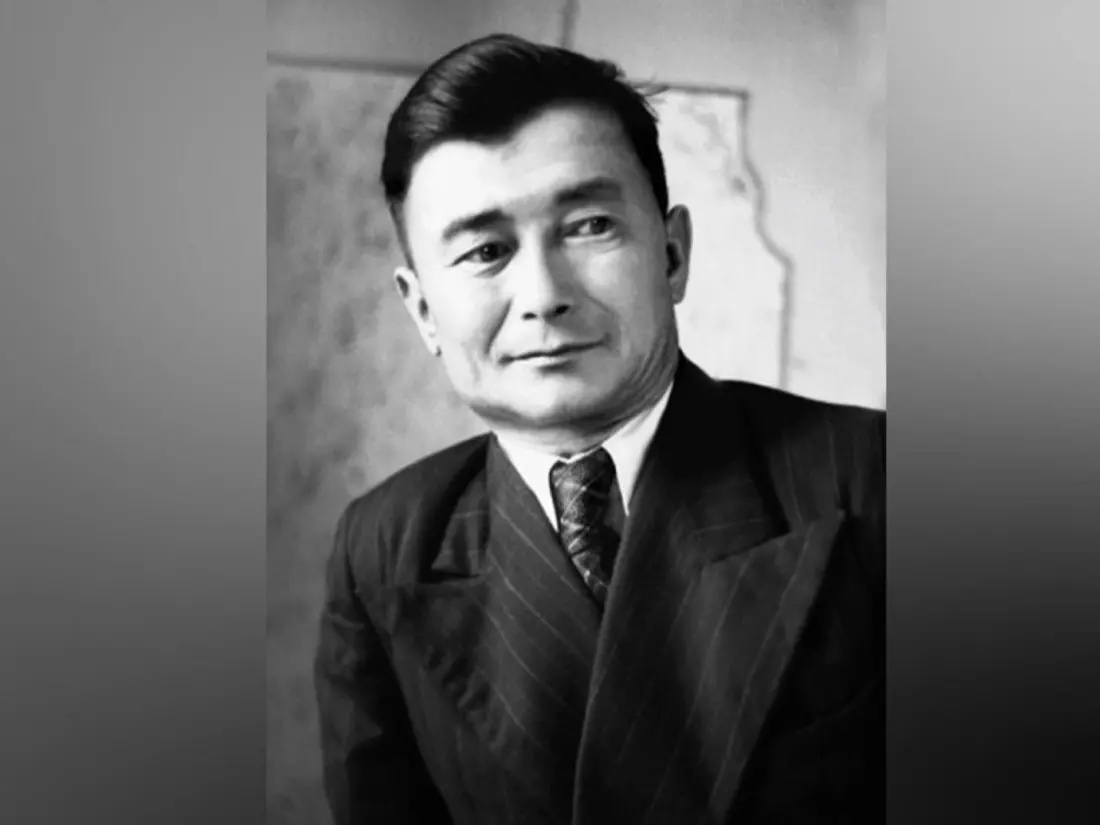
Kazakhstan marked a literary milestone on Oct. 10: 115 years since the birth of Kassym Amanzholov, a poet whose wartime verses and innovations helped shape modern Kazakh literature. The commemoration is a good prompt to look closer at a cultural figure most visitors to the country have never heard of — and at the places that formed him.
Amanzholov was born in 1911 in what is now the Karkaraly district of the Karaganda Region in central Kazakhstan, orphaned young and raised by his older brother. His schooling took him to Semipalatinsk (today's Semey), where he began writing, and a stint at a forestry institute in Leningrad ended when poor health and waning interest pulled him home. It was in Uralsk — now Oral, in western Kazakhstan — that he found his voice, writing his first love poems, founding a theatre troupe, and composing songs on the dombyra that Kazakhs still know, including "Dariga" and "Tugan El" (Native Land).
His first collection, "Omir Syry" (The Secret of Life), appeared in 1938. He was also a prolific translator, rendering Pushkin, Lermontov, Shevchenko, Byron and Mayakovsky into Kazakh — his Mayakovsky collection "Bar Dauyspen" (In Full Voice) came out in 1941. Critics credit him with expanding what Kazakh verse could do, notably through a 10-syllable line that let poetry carry the rhythm of everyday speech.
War defined his reputation. Though eligible for exemption, Amanzholov volunteered for the front in 1941. As his train crossed Kazakhstan towards the fighting, he wrote a cycle of poems addressing the Ural River as a symbol of the homeland he was leaving. His most famous work, "Akyn Oliimi Turaly Anyz" (The Legend of the Poet's Death), written in 1943, mourned his friend, the young poet Abdulla Zhumagaliyev, killed in battle. Writer Sabit Dosanov later called Amanzholov a "golden bridge" between the generation of Kazakh poets repressed under Stalin — figures like Magzhan Zhumabayev and Saken Seifullin — and the writers who came after. His war poetry stood out for showing not just heroism but homesickness, grief and the longing for ordinary life.
Chronic illness shadowed his final years, but he kept writing until his death in January 1955 at just 43. A four-volume edition of his surviving work was published between 1977 and 1980.
For travellers, the anniversary is a reason to build a literary detour into a Kazakhstan trip. Karkaraly, his birthplace, is a national park town of pine forests and lakes in the Karaganda Region — a rare green escape on the otherwise steppe-dominated route between Astana and the mining heartland. Semey in the east, where he went to school, is already on the literary map as the hometown of Abai, Kazakhstan's greatest poet, while Oral in the west anchors any visit to the Ural River landscapes he immortalised.
Story reported by The Astana Times.