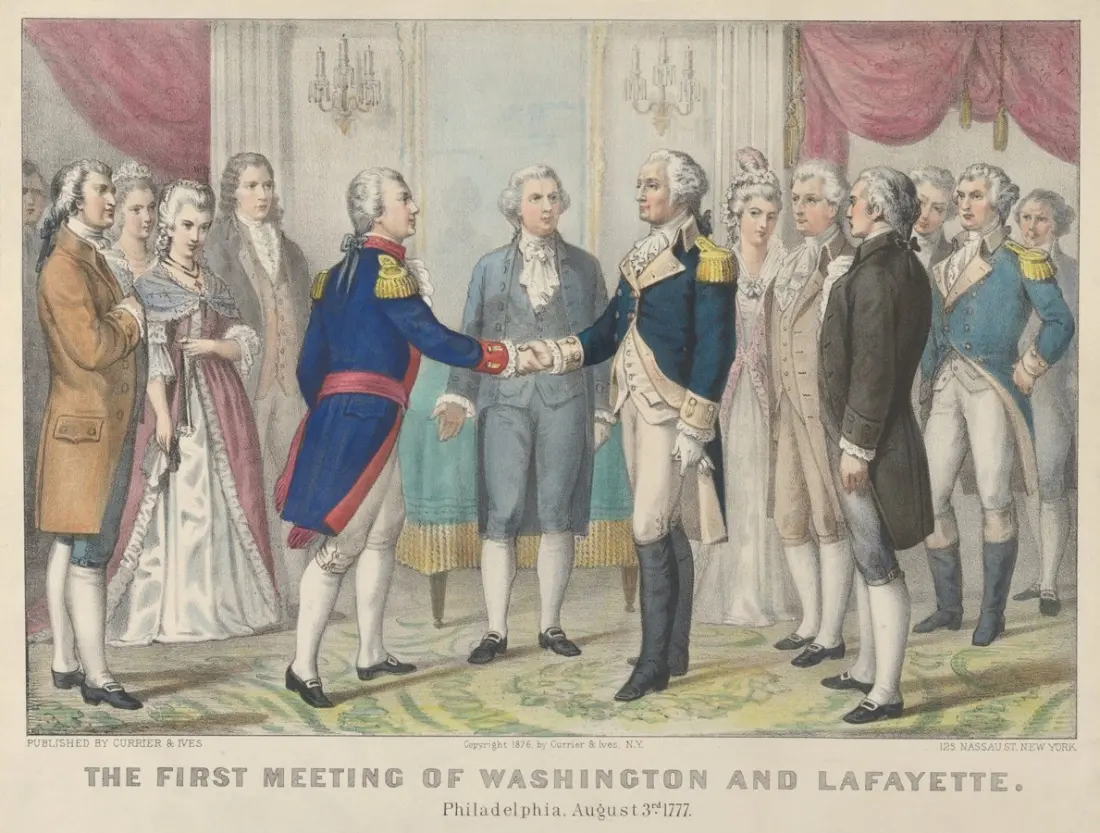
The Marquis de Lafayette sailed to America at 19 to fight the British, helped talk the French king into sending troops and ships, and commanded forces at Yorktown. But his real story — one most travellers have never heard — is about human rights. He pushed George Washington to embrace emancipation, bought plantations in French Guiana to free enslaved people, helped draft the French Declaration of the Rights of Man with Thomas Jefferson, and championed religious freedom and women's equality.
A recent exhibition at the Archives Nationales in Paris, Lafayette: Between France and America, History and Legend, brought that full arc together and drew big crowds before closing on 13 July. Co-curator Olga Anna Duhl of Lafayette College argues he was a lifelong advocate for liberty — 'everywhere and nowhere' in modern memory, cited in US schoolbooks for the war but erased for his abolitionism, remembered in France, if at all, as a spoiled aristocrat or a traitor.
For travellers, his name is hiding in plain sight. The US counts 17 counties, 76 cities and towns, 39 streets and nine schools or universities named for him, plus a full-length portrait hanging beside George Washington's in the House Chamber since 1825. Paris, by contrast, offers just Rue La Fayette in the 9th and 10th arrondissements and the Galeries Lafayette department store — a odd symmetry for a man who shaped both nations.
There's also a live commemoration to catch: the American Friends of Lafayette are marking the bicentennial of his triumphant 1824-25 Farewell Tour, with final events in Washington, DC from 5-7 September. And if the Paris exhibition travels to the US, as curators hope, it's worth planning a visit around.
Lafayette's life was anything but smooth — he fled France in 1792 after the Revolution's radical turn and spent years in Prussian and Austrian prisons, and his French Guiana emancipation scheme collapsed when his properties were confiscated. France didn't abolish slavery across all its territories until 1848. New books like Mike Duncan's Hero of Two Worlds and Jean Pierre Bois's biography are reviving his reputation on both sides of the Atlantic.
For history-minded travellers, this is a fresh thread to pull through a Franco-American trip: walk from his Paris street to the Archives Nationales, then chase his name across American small towns where bicentennial crowds once gathered.
Story via France Today.