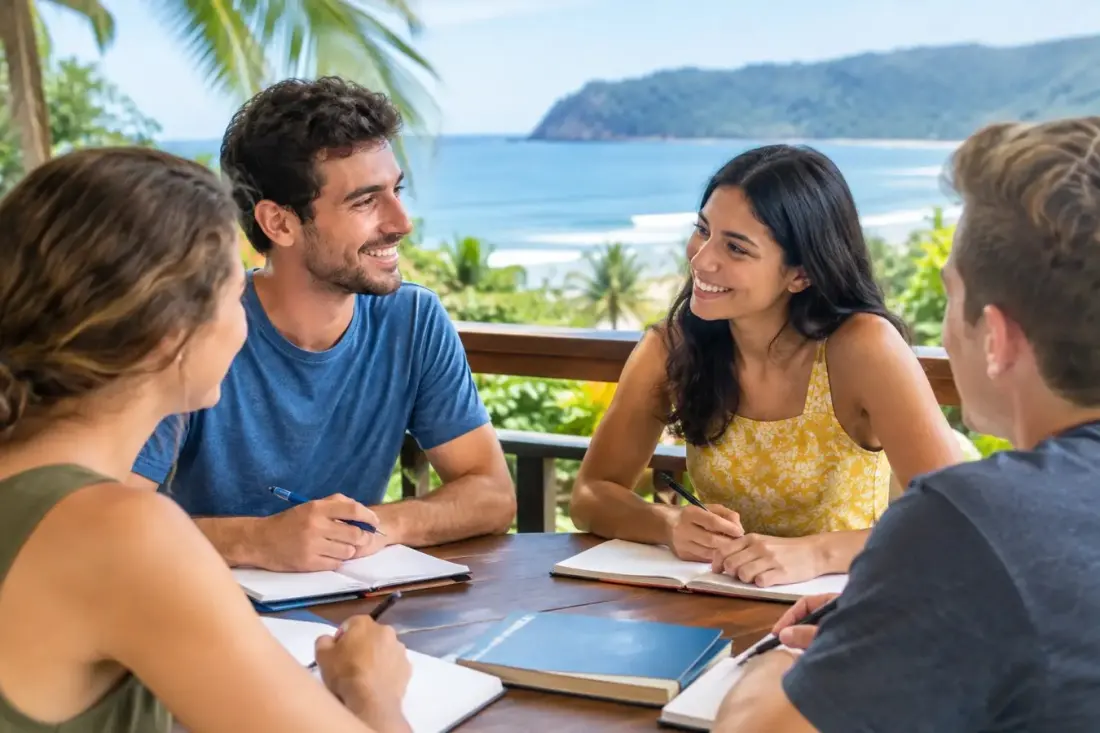
Costa Rica has quietly become one of the easiest places in Latin America to learn Spanish, and the reason has less to do with grammar charts than with daily life. The country is politically stable, well set up for visitors, and full of patient conversation partners who appreciate effort over perfection. The Spanish spoken there tends to be clear and measured, a gentler starting point than the fast-paced dialects of bigger regional cities. You will also pick up the local vocabulary fast: pura vida works as hello, goodbye, thank you, or a general verdict that life is good, and a soda is a small family-run restaurant rather than a fizzy drink.
Schools across the country build programmes around small group classes, private lessons, or a mix of both. Groups bring social energy; private tuition suits professionals, retirees, or families with specific goals. And the goals vary widely. A two-week holidaymaker might want survival Spanish for ordering food and handling transport. A remote worker in Nosara or Santa Teresa may need everyday conversation and local business phrases. Someone buying property or managing a renovation will want lessons covering contracts, measurements and dealing with tradespeople.
Where you study shapes everything after class. The Central Valley — San José, Heredia, Escazú — offers city services, museums and universities, plus a realistic taste of where most Costa Ricans actually live. Beach towns like Tamarindo, Jacó, Manuel Antonio, Nosara and the Southern Zone trade that for surf, wellness and adventure, though heavily international areas make it tempting to slide back into English. Smaller inland communities offer the deepest immersion at the cost of quieter surroundings and more logistics to plan.
The strongest programmes reach past the whiteboard with homestays, cooking classes, dance lessons, volunteering and conversation exchanges — the moments where vocabulary becomes muscle memory. Intensive courses of several hours a day deliver a fast start but can leave your brain full by Thursday, especially if you are also hiking volcanoes and wrestling with ser versus estar. Slower schedules of two or three classes a week suit anyone staying months rather than weeks, leaving room to practise in between.
Before enrolling, it pays to ask pointed questions: how are students level-tested, and can you switch classes if the fit is wrong? Do teachers hold training in Spanish as a second language? Does tuition cover materials, activities, airport transfers or homestay coordination? What are the cancellation policies, and are there family-friendly schedules if you are travelling with children? A good school is transparent and honest about what a week, a month or a season can realistically achieve.
There is also a note of respect worth taking seriously. Language learning should connect you to a place, not entitle you to it — locals are conversation partners, not props. Spanish also opens a window onto the country's real debates: conservation, housing costs, water access and the pressures tourism itself creates.
The practical advice for making progress is refreshingly modest. Order lunch in Spanish, keep a phone note of new phrases, try one conversation starter a day, and aim to handle one more situation independently than you could last week. The reward is not a certificate in your suitcase — it is a country that starts talking back in fuller colour.