Deep in the Colombian Amazon, where Colombia, Peru and Brazil meet at the tip of Leticia, evidence of human life going back 13,000 years is finally getting studied on its own turf. The National University of Colombia (UNAL) has opened the first archaeology laboratory in Leticia, the capital of the department of Amazonas, so researchers can analyse the region's ancient past without shipping materials off to facilities far from the jungle.
Professor Jeison Lenis Chaparro Cardenas, the anthropologist leading the project, calls it the first laboratory for this region within the region. Until now, research on the northwestern Amazon has depended on infrastructure installed elsewhere. That meant artefacts were studied away from the places they came from, and away from the indigenous communities who hold generations of knowledge and memory about those sites.
The lab's reach covers a territory that was historically and culturally connected long before national borders divided it. Researchers will use it to investigate how the first human groups arrived and settled, how they moved through the forest and along the rivers, what trade networks they built and how Amazonian societies reshaped their surroundings over millennia. For the first time, questions about settlement, mobility and exchange can be tackled from a genuinely regional, cross-border perspective.
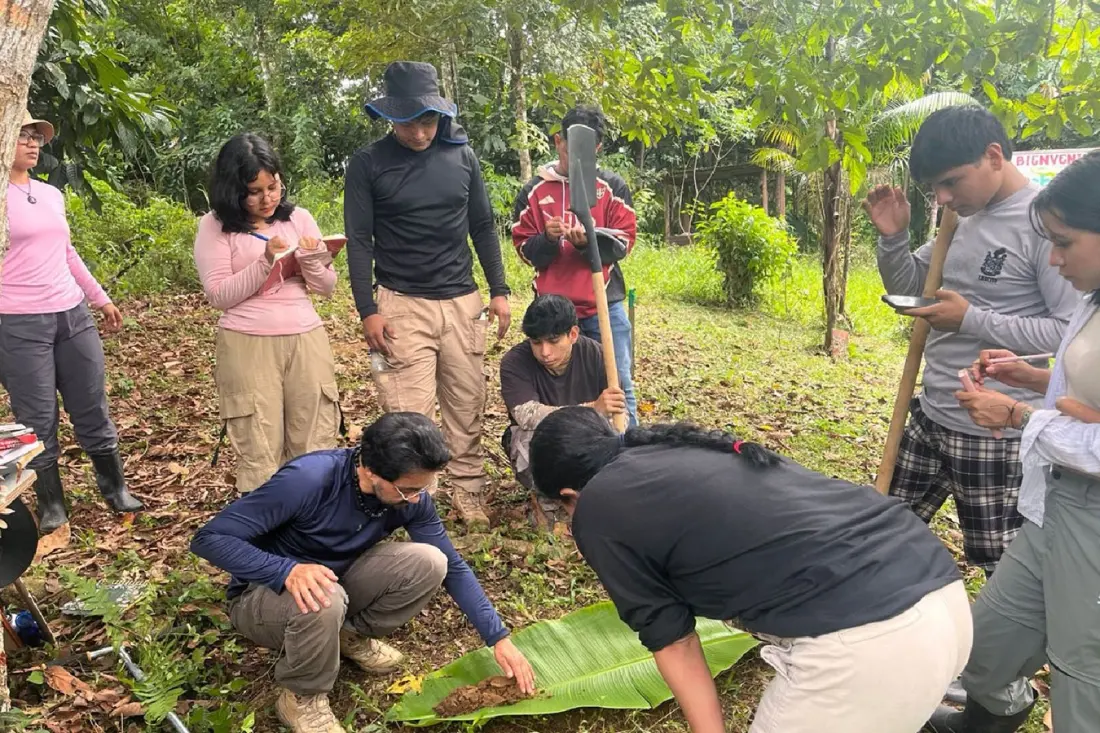
What makes the project stand out is its social archaeology approach. Chaparro stresses that this is not just about polished academic projects: the lab aims to support local initiatives, from strengthening community memory processes to formally recognising sacred sites. Many archaeological sites in the Amazon carry deep cultural and spiritual meaning for the people who live there, so the lab is designed to respond to questions raised from the territory itself, not only from the university. Students in the Anthropology programme will also train on site, doing lab and field work in the same context as the material they study.
Work is already reaching beyond campus. The team is developing its first archaeological intervention project with the community of Mocagua, working alongside Abel Santos, a professor and indigenous leader at the Amazonia Campus. There are also talks with the Colombian Institute of Anthropology and History (ICANH) about custody of reference pieces, plus plans for collaboration networks with institutions in other countries. The long-term goal is a full research centre in Leticia linking artefacts, training, communities and scientific questions about the Amazonian past.
For travellers, this adds another layer to a corner of the Amazon many only skim. Leticia is the jumping-off point for river trips into the Amacayacu National Natural Park and the Anavilhanas-style flooded forests shared with Peru's Isla Santa Rosa and Brazil's Leticia-adjacent river towns. As community-led archaeology grows around Mocagua and nearby Ticuna villages, expect more chances to explore the region's deep human history with the people who have kept its stories alive for millennia.