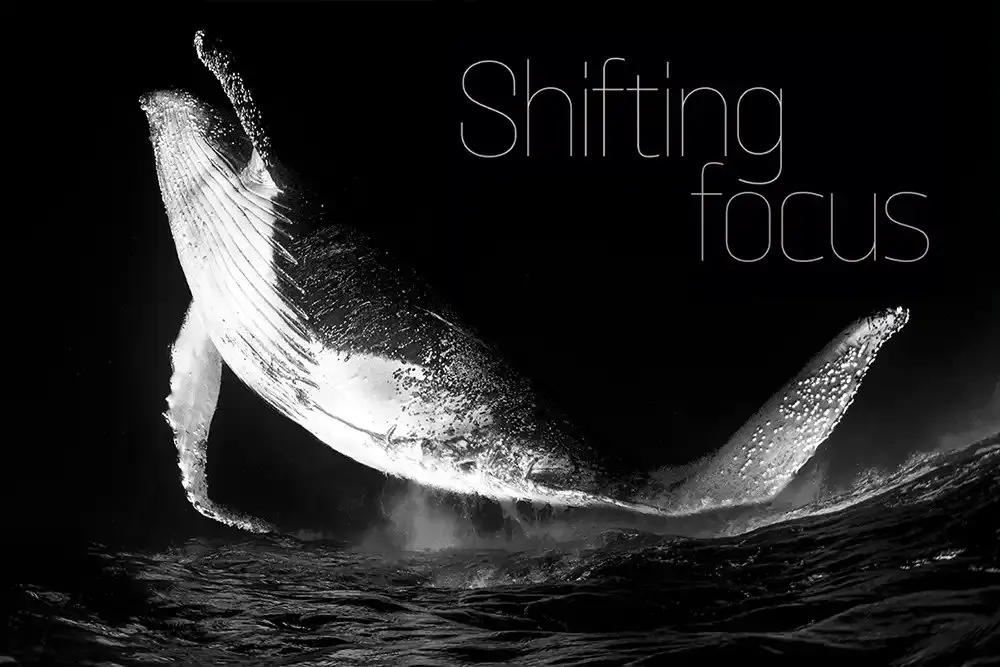
Fabi Fregonesi was 13 when a snorkelling guide in Hawaii dumped fish food over her head, triggering a feeding frenzy of fish that left her terrified of the ocean for more than a decade. Today she's one of the most decorated underwater photographers to emerge from Brazil, voted DIVE readers' Biggest Shot of 2025 after multiple placings in the magazine's Big Shot competition and a third place in the Underwater Photographer of the Year contest — with her very first entry.
The turnaround began in 2009 on a trip to Fernando de Noronha, Brazil's most famous dive island. A friend suggested a diving course, and Fregonesi — then 24 and living in São Paulo — agreed without thinking too hard about what diving actually involves. Her first ocean dive, ten metres down and surrounded by fish, started with a full-blown panic attack. Skilled instructors helped her through it, and that dive rewired her relationship with the sea. Photography came later, as a way to show non-divers what the underwater world looks like, starting on a Canon G12 compact before moving up to a Canon 5D.
The bigger pivot came in 2023. After 18 years at Google and more than two decades in corporate marketing, she was hospitalised four times in a single year — the worst episode striking during the Sardine Run in South Africa, where she spent 11 days in hospital with diverticulitis, an intestinal perforation and sepsis. Doctors told her she could die. She recovered, had planned surgery back in Brazil, and asked herself a blunt question: how do I want to spend the rest of my life? Mid-2024, she left Google to shoot underwater full time.
Her advice to would-be underwater photographers is refreshingly unmaterialistic: master buoyancy and diving skills first, invest in technique over gear (she's seen superb photographers outshoot expensive rigs with compacts), and study widely — she recommends Alex Mustard's courses and books, along with Martin Broen and Alex Dawson. Just as firmly, she rejects staging shots: no moving nudibranchs, no manufactured scenes. For her, the goal is behaviour and storytelling — like her award-recognised image of sea lions playing with a sea star.
Her favourite dive destinations read like a bucket list: Galápagos tops the list for wild encounters with sharks, sea lions and marine iguanas (though in strong currents she happily dives camera-free), with Lembeh in Indonesia her pick for macro and Raja Ampat for reefs. She also loves French Polynesia, the Maldives and the Bahamas for shark photography. This September she joins a Mustard workshop in Lembeh, and with her husband — also an underwater photographer — she's launching an underwater panorama project shot at Fernando de Noronha, capturing the island's dramatic rock formations.
Her story matters to travellers because it's proof that a late start means nothing: she picked up a camera in her 30s and was winning international awards within months. The ocean, it turns out, is patient with those willing to come back.