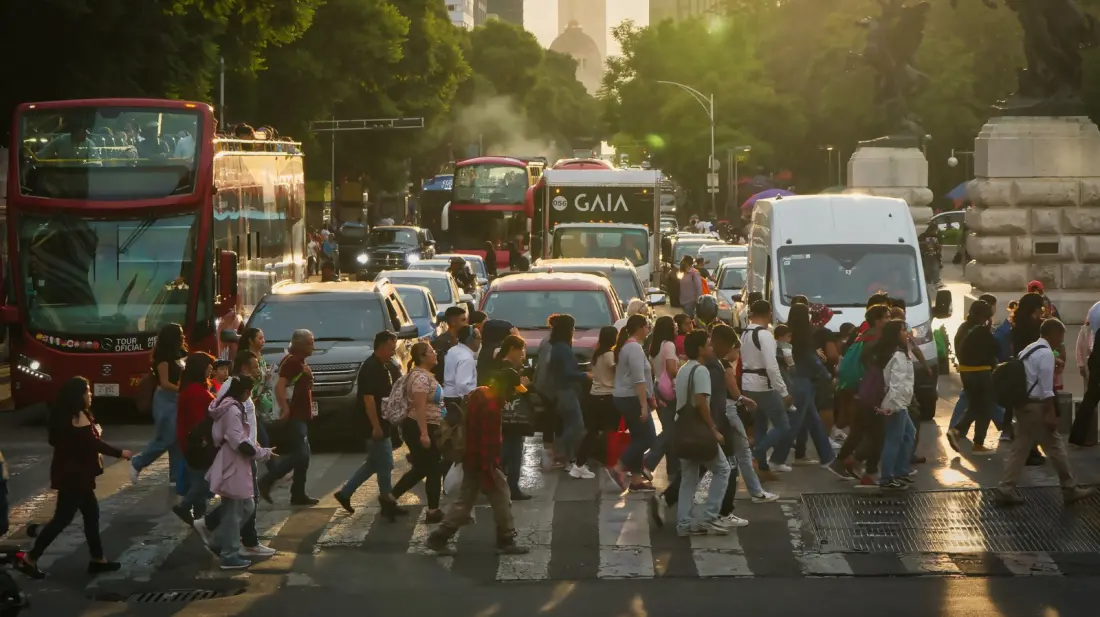
Los Angeles and New York have long traded blows as the traffic capitals of North America. Neither holds the crown. According to TomTom's 2025 Traffic Index, which ranked congestion in hundreds of cities worldwide, that honour belongs to Mexico City — and it's not close.
The index measures how much slower traffic moves on congested roads versus clear ones. Mexico City scored 75.9%, dwarfing LA's 59.8% (third in North America) and New York's 48.8% (seventh). The numbers behind the ranking are grim: the average driver loses 184 hours a year to rush-hour congestion — more than a full week — and needs about 15 minutes to cover just under 2.7 miles. That's slower than a brisk walk over the same distance.
Mexico City's score also puts it ahead of India's famously jammed megacities, including Mumbai and Bengaluru, making it the most congested city in the world by this measure. And the consequences go beyond wasted time: Mexico Business News reported 111 traffic-related deaths in the city in the first quarter of 2025 alone, with motorcyclists the most at risk.
The causes are structural. The capital has a population of around 17.7 million, spread over more than 570 square miles across the old lake bed of Tenochtitlán. That sprawl leaves many residents living far from where they work, in neighbourhoods poorly served by public transport. Rising prosperity has added millions more cars to metropolitan roads. Heavy tourism — which the city is already struggling to manage — only adds to the squeeze.
For visitors, though, the picture isn't hopeless. The Metrobús system runs seven lines across the city on dedicated lanes, letting buses glide past the gridlock that traps everyone else. Cycling is also on the rise: the city has built roughly 250 miles of bike lanes and shuts major avenues to cars every Sunday for cyclists and pedestrians under its weekly ciclovía program.
If you're planning a trip, the takeaway is simple: don't rent a car, and don't budget taxi time optimistically. A cross-town ride can eat an hour or more, so build your itinerary around the Metro, Metrobús, and neighbourhoods you can cover on foot. Consider basing yourself somewhere central like Condesa, Roma or Coyoacán, where cafés, parks and restaurants cluster within walking distance. Rideshares are cheap by US standards but still hostage to the same jams, so save them for off-peak hours. For a city with world-class museums, food and architecture, it's worth putting up with a bit of planning — just let the buses and bikes do the moving.
Thanks to Islands for the original report.