
Mexico now sits behind only the United States, China and Germany in travel and tourism's contribution to GDP, according to the World Travel & Tourism Council (WTTC). The country generated US $149.4 billion in direct tourism revenue in 2025, covering everything from hotels and restaurants to transport, travel agencies and attractions. It also took fourth place globally in leisure visitor spending — money spent on holidays and short breaks — again trailing just the three biggest economies. That makes Mexico the only Latin American country in the top 10 on both measures.
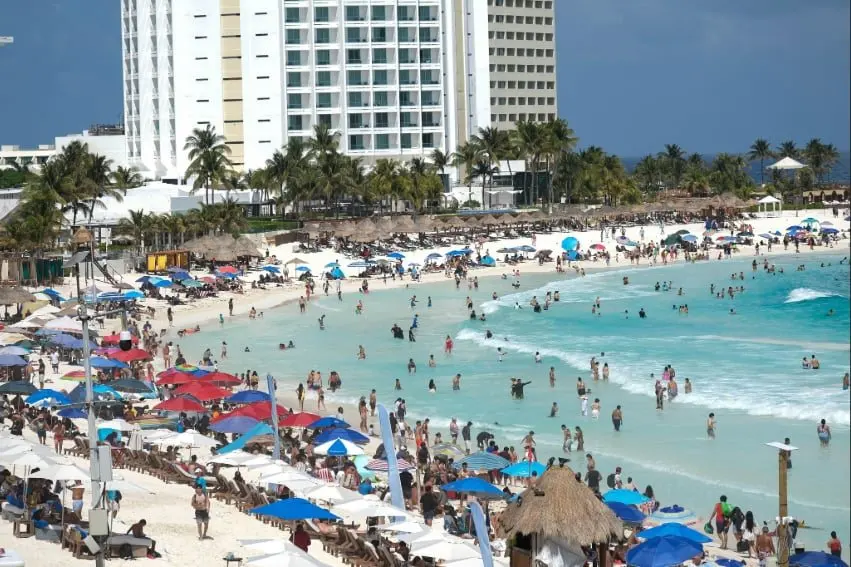
The rankings were unveiled in Cancún, a fitting stage given that the surrounding state of Quintana Roo is the engine behind the numbers. WTTC chief Gloria Guevara — a former Mexican tourism minister — credited the state's sun-and-beach product, its air connectivity, and cooperation between the state government and hoteliers for keeping the Caribbean coast ahead of the pack.
There are signs of momentum beyond the headline figures, too. Guevara noted Mexico is currently the fastest-growing tourism market in North America, outpacing both Canada and the United States, where visitor spending has actually shrunk. Compared with 2019, international visitor spending in Mexico is up 1.7% — above the global average, though sixth in the Americas behind Cuba, Chile, Colombia, the Dominican Republic and Brazil.
For context on the scale involved: the US led with US $885.8 billion, China posted US $434.8 billion, and Germany US $202.9 billion. Mexico's US $149.4 billion keeps it firmly in the world's top tier despite competing against far larger economies.
What does this mean if you're planning a trip? Practical things, mostly. The Cancún–Riviera Maya corridor — Cancún, Playa del Carmen, Tulum, and the islands of Cozumel and Isla Mujeres — is one of the best-served beach regions in the Americas, with direct flights from dozens of cities and an accommodation range that runs from hostels to über-resorts. Heavy investment and strong demand mean infrastructure is reliable, though high season crowds and prices reflect the area's popularity. If you want the same coastline with fewer people, look slightly south toward the Costa Maya or inland to the colonial towns of Yucatán.
The rankings are ultimately a business story — GDP and spending figures matter most to ministers and hotel chains — but the underlying message for travellers is straightforward: Mexico's Caribbean coast has the scale, connectivity and competition to suit nearly every budget, and it's only getting more polished.