
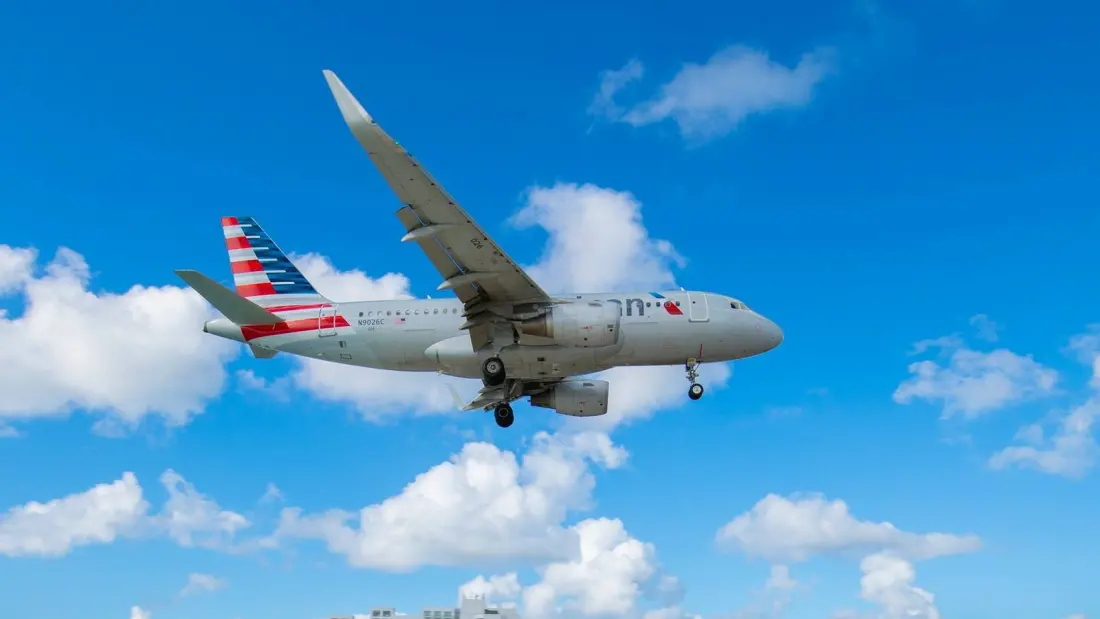
Most flights from Baltimore to Miami are uneventful. American Airlines flight AA1779 on Friday, September 11 was not. Roughly 90 minutes into a delayed evening service on an Airbus A319, a woman in seat 9D removed all her clothing and, according to reports, behaved indecently in full view of other passengers.
The cabin crew followed the book. The lead flight attendant relayed the situation to the cockpit, which sent one of the more remarkable ACARS messages you'll ever see — the data-link system airlines use for operational texts — noting that the passenger had taken off her clothes and was touching herself indecently, and that law enforcement needed to be arranged. The flight crew contacted American's Integrated Operations Center, which coordinated a police response on the ground.
Notably, the flight was never diverted. After a total airborne time of around two hours and 15 minutes, the 26-year-old A319 — a former US Airways aircraft delivered new in June 2000 and absorbed into American's fleet after the 2015 merger — touched down in Miami at 11:23 PM, about 90 minutes late. It taxied to Gate D2 in the North Terminal, where officers were waiting. The woman was taken into custody and the Miami-Dade Sheriff's Office is now investigating.
The incident is a window into how unruly-passenger situations actually get managed. Crews first try to talk a disruptive passenger down; physical restraint is authorised only as a last resort, and typically when someone becomes aggressive or makes contact with staff or other passengers. Escalation also triggers mandatory reporting up the chain — in this case to American's operations centre and safety management — and coordination with police before the wheels even stop. What restraint measures were used in the cabin on this flight hasn't been confirmed, and American hadn't commented when the report was published.
Why does this matter if you're simply booking a beach week in Miami? Unruly-passenger incidents have become a recurring feature of air travel, and they affect everyone onboard — delays, crew attention pulled from normal service, and sometimes diversions. Knowing that crews have a clear, rehearsed protocol, from verbal de-escalation through restraint to a police handover at the gate, is quietly reassuring the next time someone two rows over starts acting strangely. In this case the system worked: the flight landed safely, nobody was hurt, and the passenger was met by police within minutes of the door opening.
Full credit to Simple Flying for the original report.