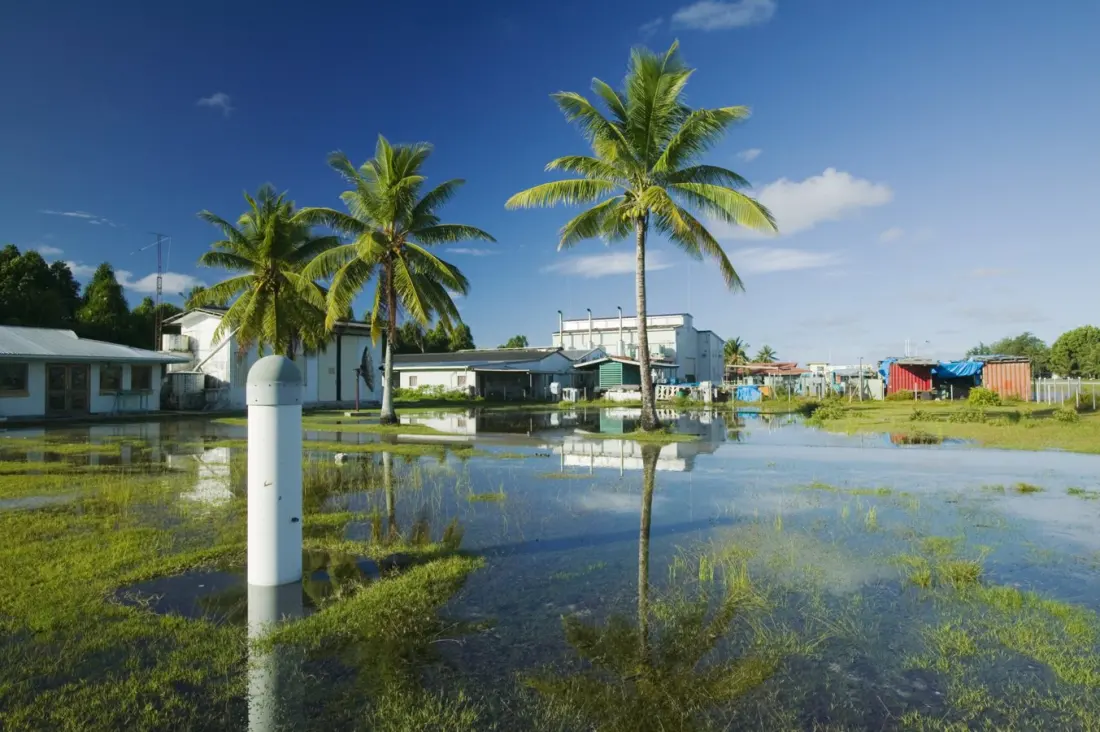
Pacific leaders are meeting in Fiji and Tuvalu ahead of November's COP31 climate summit in Türkiye, aiming to carry a unified regional message into negotiations that Australia will lead: keep global warming as close to 1.5°C as possible. For low-lying atoll nations, the stakes are existential. A recent UN Environment Programme report found the world is on track to cross 1.5°C within five years, while stressing there are no safe futures above that line — every fraction of a degree changes sea-level rise, adaptation costs and risks locked in for good.
The pre-summit gathering builds on the 5th Pacific Oceans Pacific Climate Change Conference in Honiara, Solomon Islands, where the science was presented bluntly. Sea-level rise, ocean warming and stronger cyclones are already reshaping daily life across the region. Yet the mood was one of agency rather than despair — Pacific leadership was key to getting 1.5°C into the Paris Agreement, and delegates made clear that collective voice is still active.
One recurring frustration was money. Existing climate-finance channels, including the Green Climate Fund, come with complicated access rules, minimum project sizes and co-financing requirements, so pledged funds often fail to reach frontline communities. Delegates pushed instead for Pacific-led options like the Pacific Resilience Facility, which has attracted pledges approaching US$173 million and has now been ratified by Australia and Fiji. There were also calls for funding that builds lasting career pathways for Pacific scientists and knowledge holders, rather than evaporating when a project cycle ends.
The ocean was central to everything. For Pacific peoples, climate change arrives through the sea — the same sea that provides food security, health and a sense of place. Delegates argued that resilience plans already exist in many countries but need to be connected across sectors, and that the ocean must be woven more firmly into global policy rather than falling between international processes. Speakers also highlighted the blending of satellite modelling and coastal science with oral histories and traditional knowledge — done with consent and respect for restricted knowledge — and the work of Pacific researchers documenting losses that don't show up in economic data, like damage to language, culture and intergenerational memory.
There was a pointed rejection of the usual framing, too. Emma Dunlop-Bennett of Victoria University of Wellington told delegates that Pacific peoples are peoples of extraordinary knowledge, not passive victims. Solomon Islands Prime Minister Matthew Wale challenged scientists to produce evidence that travels beyond journals, and policymakers to build pathways where that evidence changes laws and budgets. A recent International Court of Justice advisory opinion — an initiative led by Pacific Island law students — added legal weight, confirming countries have a duty to maintain ambitious climate measures.
Why should travellers care? The islands many of us dream about — Fiji, Tuvalu, the Solomons — are on the climate front line, contributing little to global emissions while facing the greatest threats.Backing Pacific-led solutions, and choosing operators that support local communities, is one practical way visitors can align their trips with the region's own priorities. Fuller source detail via Australian Geographic.