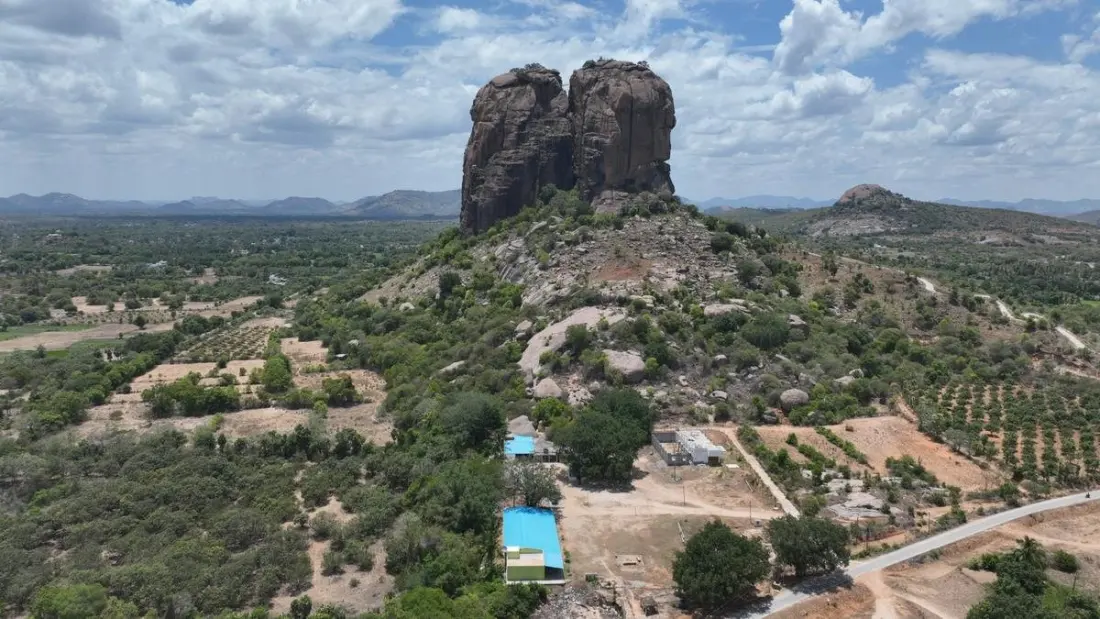
Two giant granite towers rising 1,000 feet above a small Andhra Pradesh village are about to get a serious upgrade. Puligundu, in Penumur mandal near Chittoor, is the subject of a three-phase government plan to turn its twin rock peaks into a combined adventure, eco and temple tourism hub — with the ambition of making it the district's top draw.
The appeal is easy to see. The natural rock formations already attract trekkers and climbers, and they're topped by the 300-year-old Sri Puligundeshwara Swamy temple, which gives the site a devotional pull alongside the adrenaline factor. The state has earmarked 79 acres for the project, giving planners room to build out properly.
District Collector Sumit Kumar, who has inspected the site, says the adventure side will get graded trekking trails, rock climbing and bouldering routes worked into the natural rock. More eye-catching still: officials want to explore a zip-line and rope course strung between the two peaks. Camping and night trekking would be regulated rather than free-for-all, with trained local youth working as guides.
The eco-tourism layer includes a nature park planted with native species, eco-huts and wooden cottages for stays, a butterfly garden and bird-watching zones. Viewpoints with shade and benches, rainwater harvesting, groundwater recharge pits and a plastic-free policy are all part of the blueprint.
Pilgrims and early risers aren't forgotten. Temple works cover repaired steps and pathways, safety railings and better lighting for pre-dawn and evening darshan, plus meditation spaces. Base infrastructure will include parking, accommodation blocks, a reception centre, food courts pushing local cuisine, first-aid and rescue facilities, and solar lighting — around ₹10 lakh is set aside for lighting alone. Safety gets top billing, with CCTV, warning boards, safety ropes, trained rescue teams and a police control room on the list.
Why it matters: if you've ever wished Ramanagara or Hampi's boulder country had fewer crowds, keep Puligundu on your radar. It's a rare single spot where you can climb at dawn, sit in a centuries-old hilltop temple, and sleep in an eco-hut among native trees. Expect local jobs, local food and a properly managed site once the phases roll out — the kind of low-key, off-beat Andhra destination that won't stay under wraps for long.