Ditching the car in retirement sounds liberating — until you realise how few American cities let you do it. The West Coast, for all its car culture, turns out to have a solid shortlist, ranging from big metros like Seattle and San Francisco to compact college towns such as Corvallis and Eugene, Oregon. What they share is a walkable core, decent public transit, and enough going on that you won't miss the driveway.
Seattle tops the walkability rankings among Washington cities, with downtown and Capitol Hill offering grocery stores, coffee shops and restaurants within a few blocks — locals describe each neighbourhood as having its own mini-downtown. Buses, light rail, ferries, streetcars and even a monorail stitch the city together. Portland, justly proud of its 500-plus miles of bike paths and neighbourhood greenways, earns similar praise; one recent transplant from Orlando marvelled that for the first time in their life they don't need a car. The Pearl District, home to Powell's City of Books, is among the easiest areas to navigate on foot.
The Oregon college towns are the budget-conscious wildcards. Corvallis, 80 miles south of Portland, has a centralised downtown where residents report living years without driving — and its city buses are entirely free, a rarity anywhere in the US. Eugene pairs a walkable downtown with the EmX rapid bus network and an Amtrak link to Portland in under three hours. Both offer easy access to the coast and Oregon wine country.
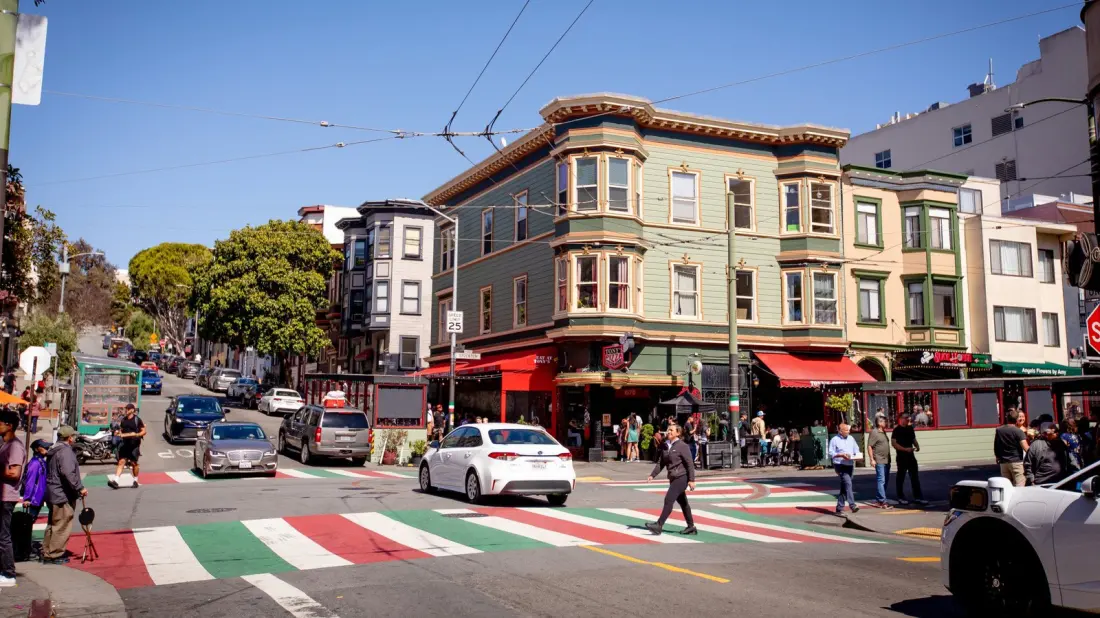
California brings the big names and the big price tags. San Francisco topped AARP's 2025 livability index, with Chinatown, North Beach and Nob Hill scoring near-perfect walkability ratings; the residential Inner Sunset gives you Golden Gate Park and a 20-minute Muni ride to Ocean Beach. Berkeley, connected to San Francisco by BART, claims the title of America's healthiest city with 250-plus sunny days. And if city costs bite, Petaluma — a river town 40 miles north in Sonoma County — offers a genuinely walkable historic downtown, farmers markets and direct bus links to San Francisco, minus the Napa crowds.
The honest caveat: this is an expensive stretch of the country, and some of these places rank among the costliest in America. The trade-off is buzz, amenities and genuine independence without car payments, insurance and parking hassles. For retirees who want culture, healthcare access and social life on foot, these ten towns make a compelling case.