
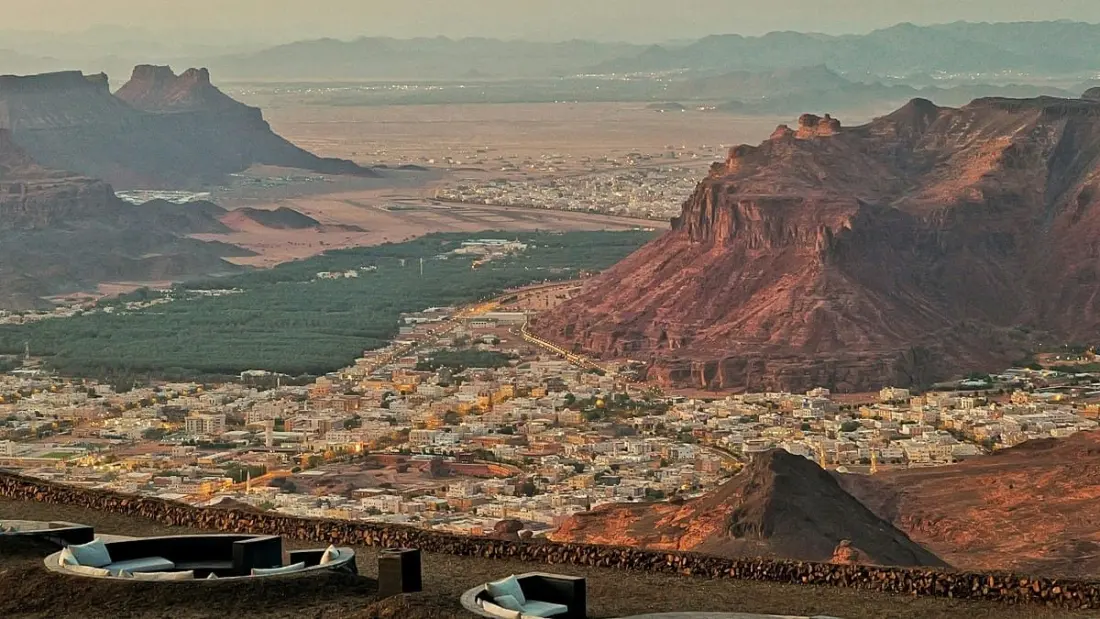
Europeans are heading to Saudi Arabia in growing numbers, and the kingdom's tourism officials expect that to accelerate sharply. New research from Tourism Economics, presented at WTM Spotlight Riyadh, forecasts at least 130% growth in European leisure arrivals between 2025 and 2030, with Germany and Italy leading the way - leisure travel from both countries is tipped to more than triple by the end of the decade.
Europe is already the kingdom's biggest long-haul source of visitors. European trips to Saudi grew 61% between 2019 and 2025, and the continent now accounts for 10% of all Saudi leisure outbound travel. Asia Pacific and North American arrivals are also expected to more than double, pushing long-haul markets to 54% of the kingdom's international leisure arrivals by 2030, up from 47% today.
The wider picture is striking. Saudi Arabia has gone from tourism afterthought to record-breaker in a matter of years. International visitor nights jumped 177% between 2019 and 2025, against global growth of just 12% - the biggest market-share gain of any destination worldwide. Total visitor nights now stand at 1.1 billion. Leisure is the fast lane: 7.6 million international overnight leisure arrivals in 2025, more than six times the 2019 figure, with leisure spending up fivefold to $12.6 billion (€10.86 billion).
Where are all these people going? Makkah and Madinah still dominate thanks to religious travel, but Riyadh and Jeddah are surging as the country courts a broader audience. AlUla - the desert region of ancient tombs and Nabataean heritage - logged around nine million visitor nights in 2025 and is forecast to grow 11% a year to 2030. Mega-projects on the Red Sea coast and the 2034 FIFA World Cup are part of the pitch to keep momentum going for a decade.
For European travellers, the practical news is that access has never been easier. Citizens of all 27 EU member states can apply online for a tourist eVisa valid for one year, with multiple entries and stays of up to 90 days. It covers leisure trips, events, family visits and Umrah - though not Hajj - and you'll need a passport with at least six months' validity from your entry date. Saudi Arabia has also signed visa facilitation deals beyond Europe with countries including China, Türkiye, Poland, Spain and Portugal.
One caveat worth noting: the same forecast expects growth in Saudi outbound travel to tilt towards Asia. UK, French and Spanish holidays will see only modest increases in Saudi visitor nights, while Thailand is set to grow 46% and Indonesia, Australia and Singapore at least 50%. Saudi travellers' tastes are diversifying - which may shape flight routes and hotel investment on both ends.
If you've been curious about AlUla, the Red Sea coast or Riyadh's rapidly changing dining and culture scene, the infrastructure, visas and flight connections are falling into place fast. Going before the 2030 crowd arrives might be smart timing.