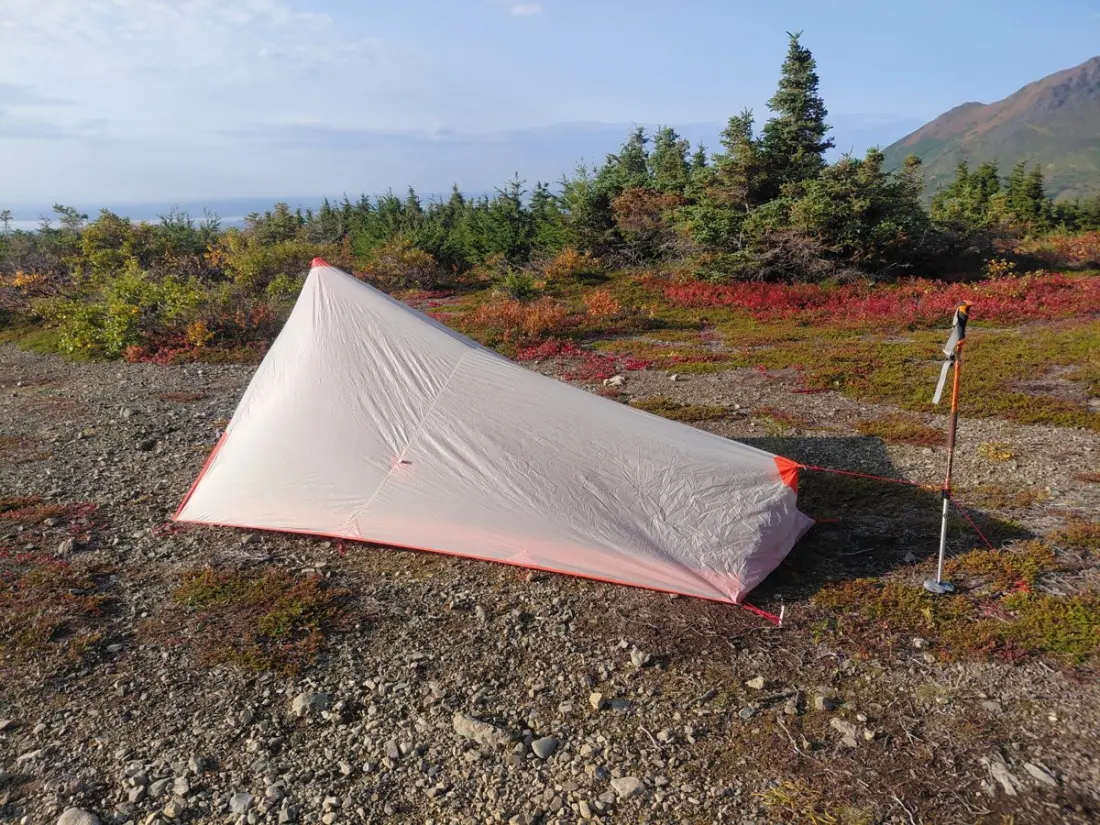
A tent you can pitch four different ways sounds like a gimmick — until you're counting grams before a summer in the mountains. The Slingfin SplitWing Shelter Bundle, tested over half a summer in Alaska's Chugach range, is the most minimal shelter in Slingfin's lineup, and its whole appeal is modularity. The bundle includes a UL tarp (11.1 oz), a mesh inner body (11.7 oz) and a detachable vestibule (2.1 oz), sold together for $400 or separately. Full setup it weighs one pound eight ounces — matching the claimed weight — and packs down to roughly the size of a one-litre water bottle.
The four configurations — tarp only, mesh only, mesh plus tarp, and everything with the vestibule — let you strip the shelter to whatever the trip demands. That flexibility is rare, and for ounce-counters it means carrying only what the forecast justifies.
Weather resistance is the other headline. In its full configuration, with up to 14 guying points deployed, the SplitWing shrugs off wind and rain impressively well. There's a catch, though: performance depends on pitching every guy line. The front wings, sides and rear all need tension, and the reviewer found setup genuinely finicky — guy lines wrapped around trekking poles slipped, corner tension required repeated re-staking with no toggles to help, and the rear guy line demands a specific double-telescoping pole. Getting in and out is awkward too, since the front guy lines run straight across the door; unclip them and the tent partially collapses.
Inside, this is a solo tent in practice. Slingfin markets it as a roomy one-person or snug two-person, but the 24.8-square-foot floor (31 by 82 inches) barely fits two pads, and the tapered foot box narrows in both width and height, which some testers found claustrophobic despite a decent 47-inch peak height. Adjusting the front trekking pole trades headroom for a lower, more aerodynamic wind profile — a nice touch in exposed terrain.
Durability held up through varied Alaskan conditions with no issues, and a separate ground cloth is available for those who want extra floor protection. Best suited to spring through fall, it could handle light shoulder-season weather, though snow loading in such a small interior would feel cramped.
Who is this for? Dedicated ultralight backpackers on solo trips — long-trail hikers, fast-and-light mountain missions, anyone happy to trade convenience and living space for a shelter that weighs less than a couple of energy bars. Casual campers will likely find the setup fiddly and the interior tight; freestanding-tent loyalists should look elsewhere. But if shaving weight is your top priority and you still want real storm protection, the SplitWing's mix of modular design and weatherworthiness makes it a serious contender at $400. Alternatives worth comparing include similar non-freestanding shelters at $375 (30.5 oz), $749 in Dyneema at just 17.8 oz, and a $395 sil-poly option at 45 oz.
Story via The Trek.