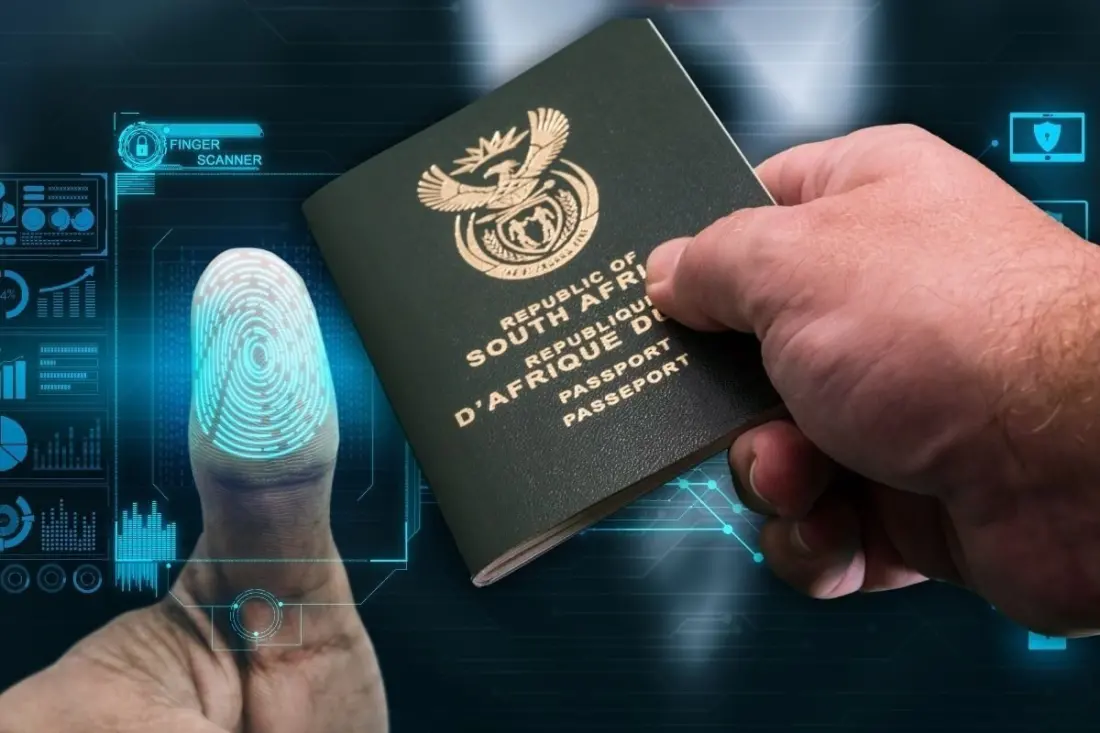
South African travellers could soon be swapping their old green book for a chip-carrying biometric e-passport. Home Affairs Minister Leon Schreiber confirmed the department is working with Government Printing Works on the new document, though there is no application date yet — a Cabinet proposal will only follow once the passport application process is fully automated and protected against fraud.
The core upgrade is a secure electronic chip holding the holder's biometric data. When scanned at a border, that chip can be checked against both the physical passport and the person carrying it. Depending on the country, e-passports typically store a high-resolution facial image and sometimes fingerprints, protected by a digital signature that flags any tampering. It's well-established tech — the EU and several African countries already issue them.
The practical payoff for travellers starts at the airport. E-passports work with automated border control gates, where a scan verifies you match your passport, letting you skip the manual inspection queue at airports with compatible e-gates. One caveat: holding an e-passport doesn't guarantee e-gate access everywhere, since each country and airport sets its own rules.
Security is only half the pitch. Schreiber also wants the more secure document to unlock visa-free travel negotiations, arguing that a passport that's genuinely hard to forge gives South Africa a stronger hand when lobbying other countries for visa exemptions. Those agreements still have to be negotiated separately — the passport alone won't open doors — but a credible e-passport is often a precondition.
Meanwhile, Home Affairs is already tightening the application process. Passport photos will be biometrically verified to shut down fraud like "photo swapping", and the department plans to expand access to passport applications through bank branches. Officials say the e-passport proposal goes to Cabinet only once human manipulation and fraud have been engineered out of the system entirely.
For anyone planning international travel in the next year or two, the message is: carry on as normal with the current passport, and watch for the Cabinet announcement. When the e-passport arrives, expect faster border crossings at major hubs and, potentially, a growing list of destinations South Africans can visit without a visa.