
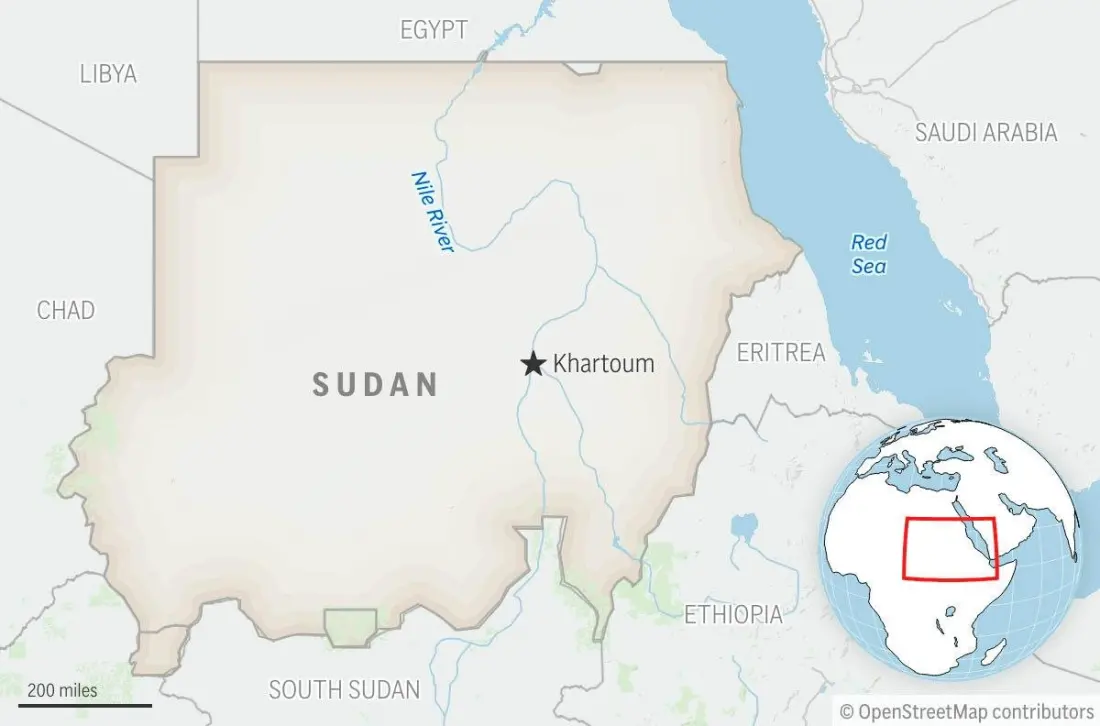
The death toll from a gold mine collapse in western Sudan has climbed to 82, with dozens more still unaccounted for, according to local officials and volunteer rescue networks. The disaster underlines how dangerous life has become in a country that has been at war with itself since April 2023.
The collapse happened at the al-Zara mine near Nuhud, a town in West Kordofan province, an area controlled by the paramilitary Rapid Support Forces (RSF), which has been fighting the Sudanese military for more than three years. Survivors told The Associated Press the collapse began in one shaft on Sunday and spread through interconnected tunnels, some deeper than 30 metres. Rescue efforts have been hampered by a near-total lack of equipment — reportedly just one privately owned forklift was available to move soil and rubble across a site stretching more than a kilometre across fragile sandy ground.
"The collapse is massive and the situation is very dire," survivor Khairal-Sayed Gabara told the AP, noting that crews had no machinery to dig for people trapped at depth. The Sudan Doctors Network said the informal mine operated with no basic safety or protective measures. The Kordofan Observatory, a monitoring group, put the number of killed or missing at 70 or more before figures rose further.
Al-Zara is one of thousands of small-scale, unregulated mines scattered across Sudan, a significant gold producer where fatal collapses are grimly routine: a 2023 collapse killed 14 miners, and one in 2021 claimed 38 lives. UN-commissioned experts say large quantities of gold have been smuggled out of the country to finance the RSF, which controls gold-producing regions in Darfur and Kordofan.
The wider context is devastating. Sudan's war has killed at least 59,000 people according to the monitoring group ACLED — a figure aid organisations believe is a serious undercount — and has pushed parts of the country into famine. Grassroots Emergency Response Rooms volunteers have been among the few providing rescue and community support, recovering bodies by hand.
For travellers, the takeaway is stark: Sudan remains under the highest level of warning from most foreign ministries and is effectively off-limits for leisure travel, with active combat, collapsed infrastructure and minimal consular support. Anyone with connections to the region or considering border-adjacent travel in neighbouring countries should monitor their government's latest advice. The story is a reminder that beyond the headlines, an entire country's ordinary economy — including its mining communities — is being pulled into the conflict. Full reporting by The Associated Press via Japan Today.