
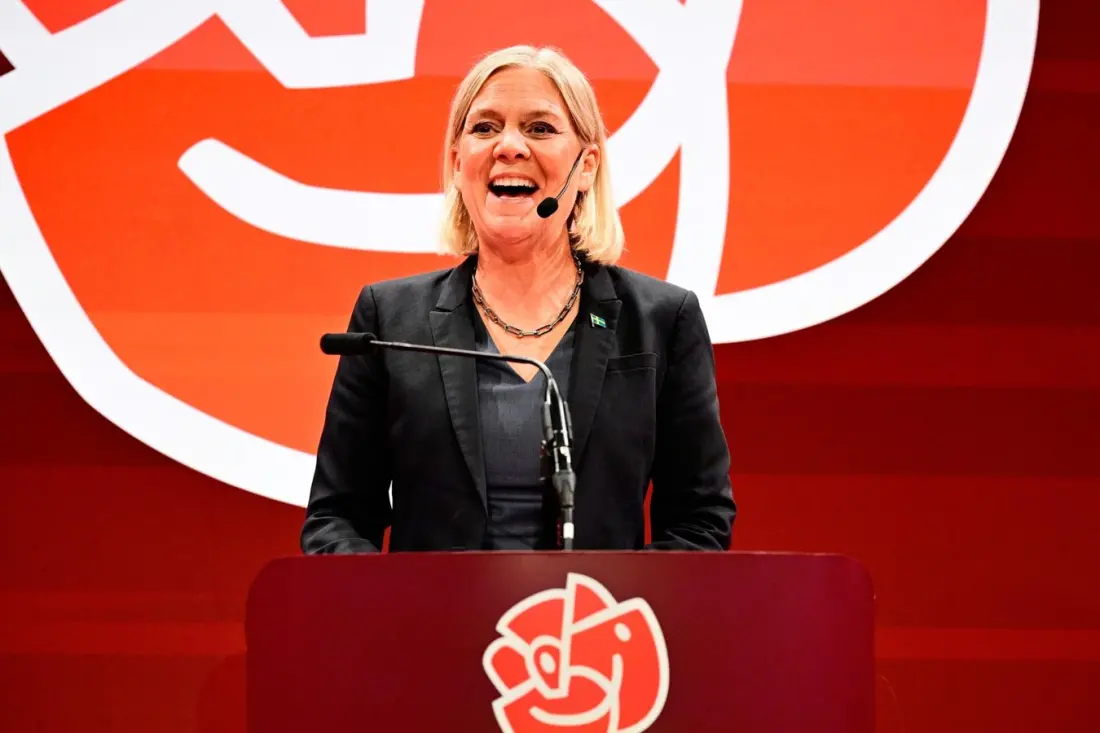
Sweden is heading for a change of government after a final vote count handed a razor-thin majority to the left-leaning opposition. The four opposition parties took 176 of 349 seats in the Riksdag, against 173 for the bloc backing Prime Minister Ulf Kristersson's centre-right coalition — a margin so slim it was only settled once late-arriving postal and overseas ballots were counted.
Kristersson confirmed within hours that he would resign, announcing the decision in a letter posted on X. The likely beneficiary is Magdalena Andersson, leader of the Social Democrats, who served as prime minister until 2022 and now hopes to win the job back. Her party finished as the largest single group with 99 seats, even though it lost eight.
Forming a government will not be straightforward. The opposition bloc spans from the Left Party to the centrist Centre Party, and the Centre Party — which sided with the left mainly to keep the anti-immigration Sweden Democrats out of power — has ruled out governing alongside the Left. The Sweden Democrats themselves had a rough night, slipping to third place on 62 seats, eleven fewer than before, despite Kristersson dangling the prospect of Cabinet posts this time around.
For anyone planning a trip to Sweden, the immediate practical picture is one of continuity. The country of roughly 10.6 million people remains in the European Union and, since 2024, NATO's 32nd member — and Andersson's bloc broadly agrees with the outgoing government on the big foreign policy questions, including support for Ukraine. Swedish elections rarely trigger the kind of upheaval that disrupts travel: transport, border rules, visas and the currency all stay on their existing footing while coalition talks play out.
The wrangling over portfolios could drag on for weeks, but that is mostly political theatre in Stockholm's corridors rather than something you'll notice at Arlanda or on an overnight train to Gothenburg. If anything, a quieter news cycle between governments can make autumn city breaks in Stockholm, Malmö or Uppsala that bit easier to plan.
Who should care about this story? Travellers with trips booked in the coming months can essentially file it under background reading: no visa changes, no border drama, and a political system famous for building consensus even when the arithmetic is this tight. It's worth keeping an eye on the outcome only if you follow Nordic politics for its own sake — Sweden's direction on issues like immigration and climate policy may shift, but the experience of visiting won't.
Full report via Japan Today.