
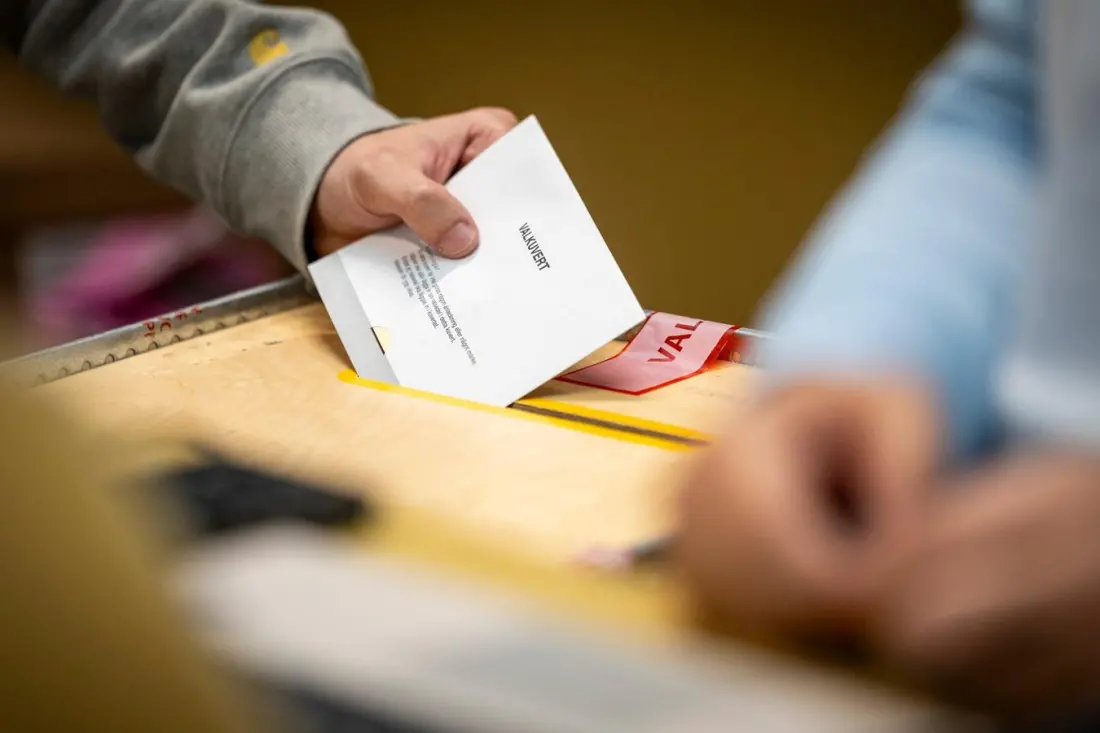
Sweden went to the polls on Sunday in a national election that, at least in the early hours of counting, looks like a photo finish. Exit polls from public broadcaster SVT initially put the left-wing opposition bloc ahead by several points, prompting celebrations at the Social Democrats' election gathering. But as two-thirds of the actual vote came in, the two sides were nearly level, and the party mood shifted to anxious waiting.
At stake is the direction of a country of about 10.6 million people, where more than 8 million were eligible to vote for the 349-seat parliament, the Riksdag. Since 2022, Prime Minister Ulf Kristersson has led a three-party centre-right coalition that depends on outside support from the Sweden Democrats to hold a majority. This time, the anti-immigration party was promised cabinet posts if the governing alliance won re-election.
On the other side sits a four-party bloc led by Magdalena Andersson's Social Democrats, the party that has dominated Swedish government since World War II. Andersson herself served as prime minister from 2021 until losing power at the last election, so a win for the left would hand her the job back. Sweden's system effectively boils down to two rival blocs of four parties each, so the real question is not which party tops the poll but which side can cobble together a majority. Any single party needs at least 4% of the vote to enter parliament.
The election debate has focused heavily on whether the hard right should enter government for the first time. The Sweden Democrats were founded in the 1980s by people from right-wing extremist circles, including neo-Nazis, and spent years on the fringe. Under leader Jimmie Åkesson, in charge since 2005, the party softened its rhetoric, expelled openly racist members and grew into a mainstream force. Andersson framed the choice starkly after casting her ballot, saying the vote would decide whether a party with neo-Nazi roots enters government or whether she leads the country instead.
For visitors, much of this matters less than it might seem day to day. Sweden has broad cross-party consensus on big foreign policy questions, including support for Ukraine and NATO membership, so the issues most likely to affect travellers — borders, security, openness to visitors — are unlikely to shift sharply whichever bloc wins. The drama is mainly domestic: the outcome will be read across Europe as another test of populist-right momentum, following the far-right AfD's first-place finish in a German regional vote in early September.
Final results may take time to settle given how tight the count is, and coalition negotiations could drag on afterwards. If you are travelling to Sweden soon, expect political talk in cafes and on the news, but business as usual on the ground — excellent trains, smooth entry for most Western passports and a country very much open for visitors.