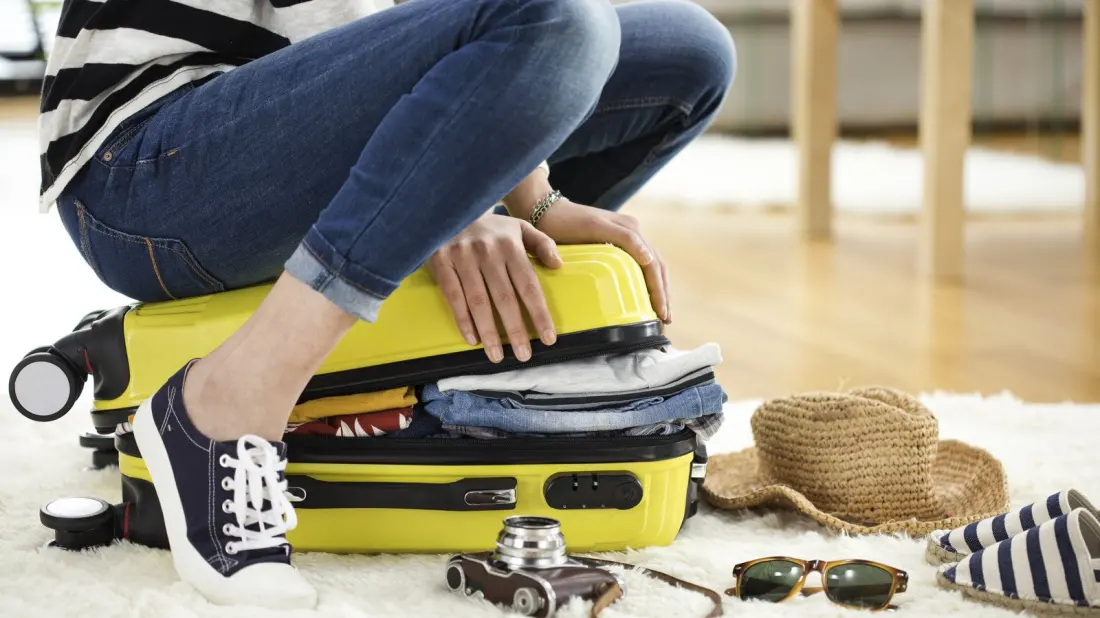
Zipping an expandable carry-on open to squeeze in a few extras feels like a clever hack. Former TSA officer Michael Delgado disagrees. Speaking to Apartment Therapy, he explained that cramming a bag to bursting makes it genuinely hard for X-ray operators to read what's inside — the machine can't identify the jumbled masses, so the bag gets sent back through, and if the image is still murky, you and your belongings get pulled aside for a full manual inspection.
That's the hidden cost of the overpacking habit: not a fine, but time and hassle. A bag that fails to scan cleanly means a second trip through the X-ray at best, and a gloved agent unpacking your neatly rolled shirts item by item at worst — often while a queue of fellow passengers watches.
There's another, more immediate snag before you even reach security. Expansion zips have limits, and once puffed up, a bag can exceed the standard carry-on dimensions most major US airlines enforce: 22 x 14 x 9 inches. Gate agents do measure, and an oversize roller gets checked at the gate, usually with a fee attached and your carefully packed 'essentials' in the hold.
The fix is mostly about honesty with yourself. Bulky items like sweaters and jackets can be packed smart — worn on the plane or compressed with packing cubes — but the simpler question Delgado-style advice raises is whether half of it needs to come along at all. A packed-to-the-brim bag is also more likely to pop a zipper or strain a seam, which is its own travel disaster.
For travellers, this is a low-effort win: keep your expandable section zipped flat, leave the mass at home, and you'll sail through the X-ray, stay within airline size rules, and skip the awkward tabletop repack in front of strangers. It matters most for anyone flying US domestic routes over busy periods, when security lines are long and every extra minute at the checkpoint counts.
Story reported by Explore.com.