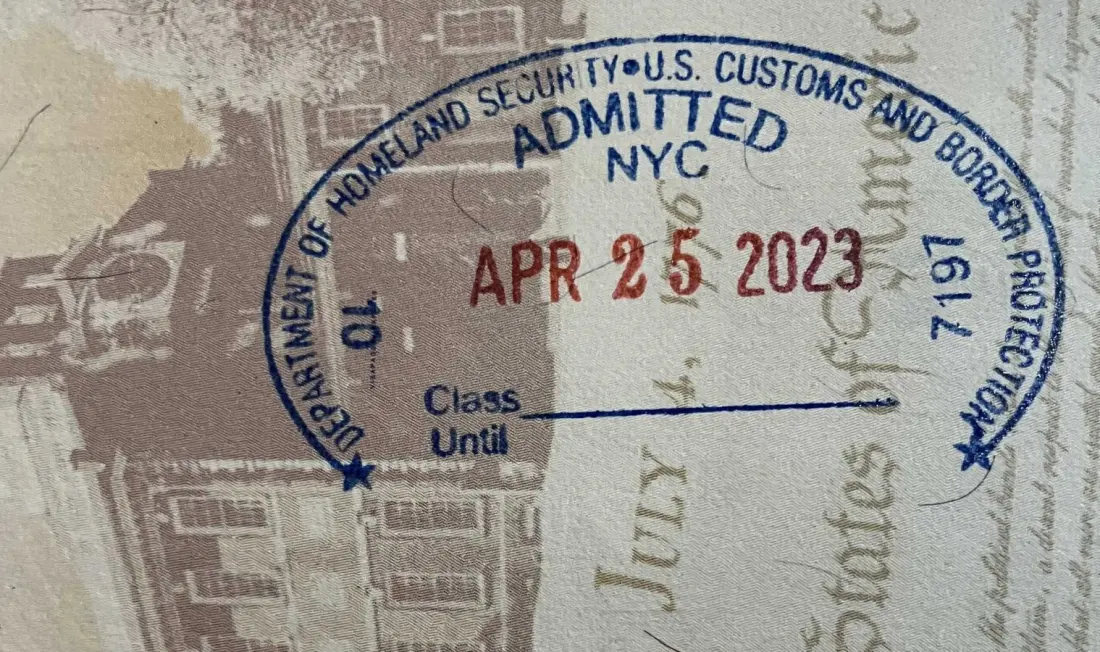
If you've been collecting entry stamps as souvenirs of your trips, bad news: the United States has joined the growing list of countries that no longer ink your passport on arrival. Customs and Border Protection announced in an October 1, 2026 bulletin that it will stop routinely stamping passports during primary inspection — the first desk you hit at immigration.
The official reasoning is speed and cost. CBP frames the change as part of a wider push to automate entry: digital forms, mobile technology and biometric facial matching have already replaced much of the paperwork, and the stamp was the last analog holdout. The agency first piloted "Stampless Entry" back in August 2022, and a 2023 memo signalled an expansion was coming. Now it's official policy.
Stamps aren't fully extinct, though. Officers can still apply one during secondary inspection, when processing immigrant visas, or if a traveller specifically asks — though there's no guarantee you'll get one just by requesting it. There's also no airport-by-airport rollout schedule, so don't be shocked if a booth stamps you one last time at some smaller port of entry.
For foreign visitors, the practical shift is bigger than a lost souvenir. The passport stamp was your paper proof of when you entered and how long you're allowed to stay. That evidence now lives online: travellers should check their I-94 record on the CBP website or via the CBP Link app after every arrival. If the record won't load or looks wrong, the advice is to contact a local CBP port of entry — ideally now, not months later when a visa overstay or record error turns into a serious problem.
That's the real trade-off here. Faster queues are genuinely welcome, and anyone holding a US passport with Global Entry hasn't seen a stamp on the way home in years. But electronic records are only as good as the data behind them, and errors do happen. Checking your I-94 the day you land takes two minutes and could save you a world of hassle at a border somewhere else — plenty of countries determine your remaining Schengen or visa-free allowance based on stamps or entry records that are now invisible in your passport.
There's also a nostalgic cost worth acknowledging. A well-stamped passport is a physical diary: extra pages sewn in, visas from countries that no longer exist, the ink smudge from a rain-soaked land border. An entry on a government database doesn't carry quite the same romance.
So the guidance for anyone heading to the US: expect a blank page at passport control, screenshot or print your I-94 record after you land, and if a stamp matters to you, politely ask — the worst that happens is a "no." And double-check the entry date and authorised stay while you're in the system, because the paper safety net is gone.
This piece was reported by Live and Let's Fly.