
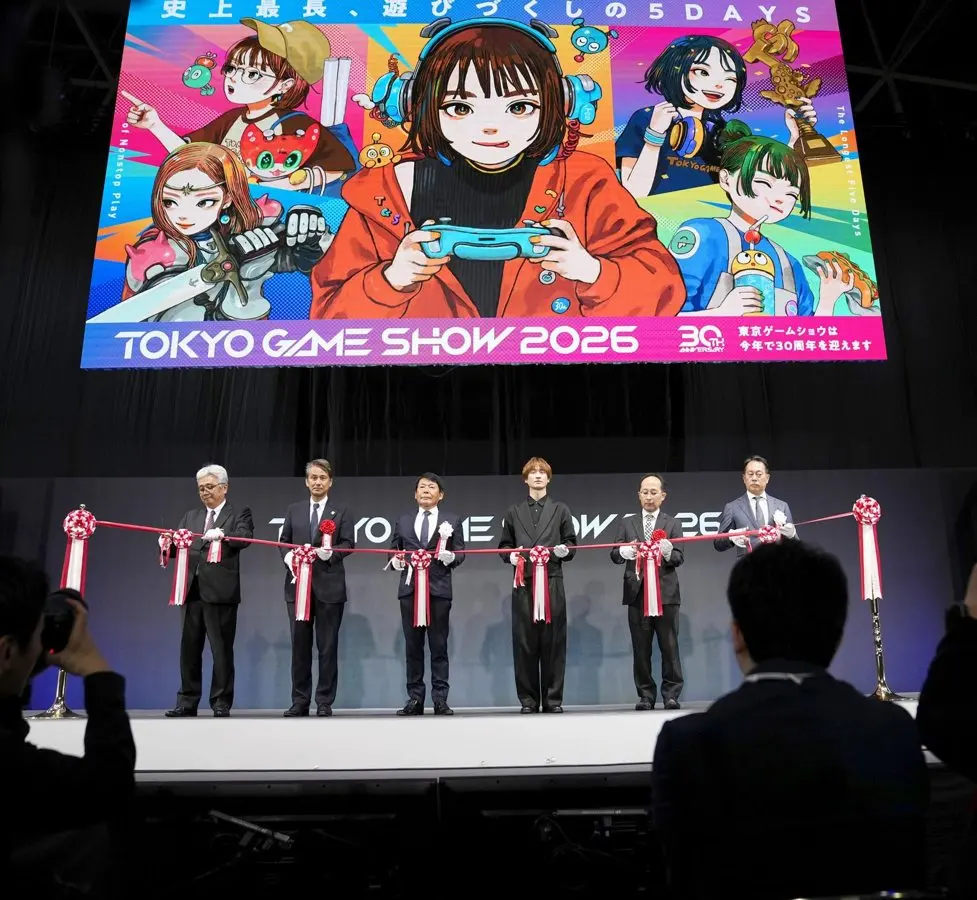
Makuhari Messe in Chiba, just east of Tokyo, is hosting the biggest Tokyo Game Show yet. The event marked its 30th anniversary on Thursday with 1,138 exhibitors from 53 countries and regions — both all-time highs — and, for the first time, a five-day schedule stretched by one extra day to handle surging demand. Organisers expect roughly 300,000 visitors through the doors.
The first two days are reserved for media and industry professionals, but the public gets access from Saturday, which is when most travellers will want to plan around. On the show floor, Capcom is letting fans get hands-on with the newest Monster Hunter title, and Square Enix has playable Final Fantasy games on offer.
This year's edition is notable for who's new. Sanrio, the company behind Hello Kitty, and Toei, the entertainment giant behind countless anime and tokusatsu franchises, are both exhibiting for the first time — a sign that gaming has pulled firmly into Japan's broader content mainstream. Ropstam Solutions, a Canadian-headquartered tech firm with operations in Pakistan and India, is also a first-timer, joining as part of a Japan International Cooperation Agency project connecting Pakistani ICT companies with Japanese partners. Its CEO Wali Hassan Jafferi said the goal is to win new clients in Japan's large games market; the studio brought quirky VR titles including a Rubik's Cube game and a soccer-golf hybrid.
The numbers behind the show explain the expansion. The global games content market hit 32.1 trillion yen (about $205 billion) in 2025, with mobile games alone accounting for 18.7 trillion yen. Japan's content industry exports have grown nearly fourfold in a decade, from 1.6 trillion yen in 2014 to 6.1 trillion yen in 2024 — and games make up 56 percent of that, the largest share.
Launched in 1996, the show now sits alongside Germany's Gamescom as one of the two biggest gaming events on the planet. For travellers, it's a rare chance to see Japan's pop-culture export machine up close, often with demos and merchandise you can't get elsewhere. Chiba's convention centre is an easy hop from central Tokyo, and the surrounding area fills up fast during show weekend — book accommodation early if a gaming pilgrimage is on your list. Even if you can't score a ticket, the buzz spills over into Akihabara and Tokyo's gaming districts, which lean into the week with their own energy.