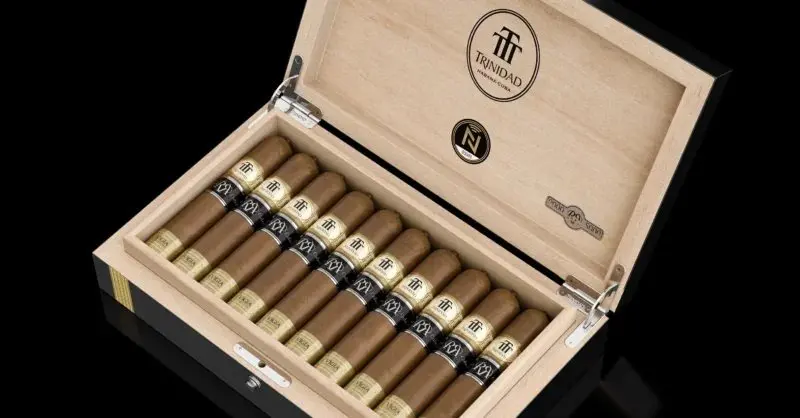
Trinidad has always been the quiet one in the Cuban cigar family. Founded in 1969 and named after the colonial city in central Cuba, the brand spent its early decades as a diplomatic gift rather than a shop-shelf product, and it never built the devoted following of Cohiba, Montecristo or Partagás. That changed, at least a little, on September 19, when Habanos unveiled the Trinidad Vigía Reserva Cosecha 2022 at the Petit Palais of the Fairmont Montreux Palace in Switzerland — the first Reserva release in the brand's entire history.
Around 300 guests attended the Swiss premiere, and the location was no accident. Switzerland is one of the world's most serious markets for premium cigars, and this is a release pitched squarely at collectors as much as smokers. Scarcity is the point: Habanos is making just 5,000 individually numbered boxes of 20, plus 5,000 three-cigar gift boxes. The three-pack carries a price tag of $660, while a full box of 20 will set you back $3,800.
What earns it the Reserva label is time. The filler, binder and wrapper leaves have all had at least three extra years of aging before rolling — the defining requirement of the Reserva designation, which only a handful of Cuban brands have ever used. According to Alberto Donar Cruz Rojas, commercial vice president of Habanos S.A., that extended maturation brings the tobacco to a level of harmony and complexity the standard release can't match.
The Vitola itself is a Vigía, measuring 54 ring gauge by 110mm — the fattest cigar Trinidad has ever produced — and rated medium in strength. Habanos estimates a smoking time of about 50 minutes. The flavour arc, as described by the brand: opening notes of cedar and toasted hazelnut, moving through cocoa, roasted coffee and sweet spice with a floral undercurrent, then finishing on aged leather, sweetness and a touch of white pepper.
There's a modern twist in the band, too. Each cigar carries an embedded NFC chip, so a tap with a compatible phone pulls up product details and — more importantly for anyone spending four figures on a box — verifies the cigar is genuine. The same technology sits in the box seal.
Why should a traveller care? If you're passing through Switzerland's cigar-friendly lounges or Miami's humidor boutiques in the coming months, spotting one of these on a shelf will be genuinely rare, and the numbered boxes are likely to appreciate among collectors the way past Reserva and Gran Reserva releases have. For everyone else, it's a reminder that Trinidad — long the connoisseur's afterthought — is pushing for a seat at the top table. And if the cigars themselves are out of reach, the brand's namesake town of Trinidad de Cuba, with its cobblestoned streets and UNESCO-listed old quarter, remains one of the Caribbean's most rewarding stops, cigar heritage included.
Reported by Elite Traveler.