
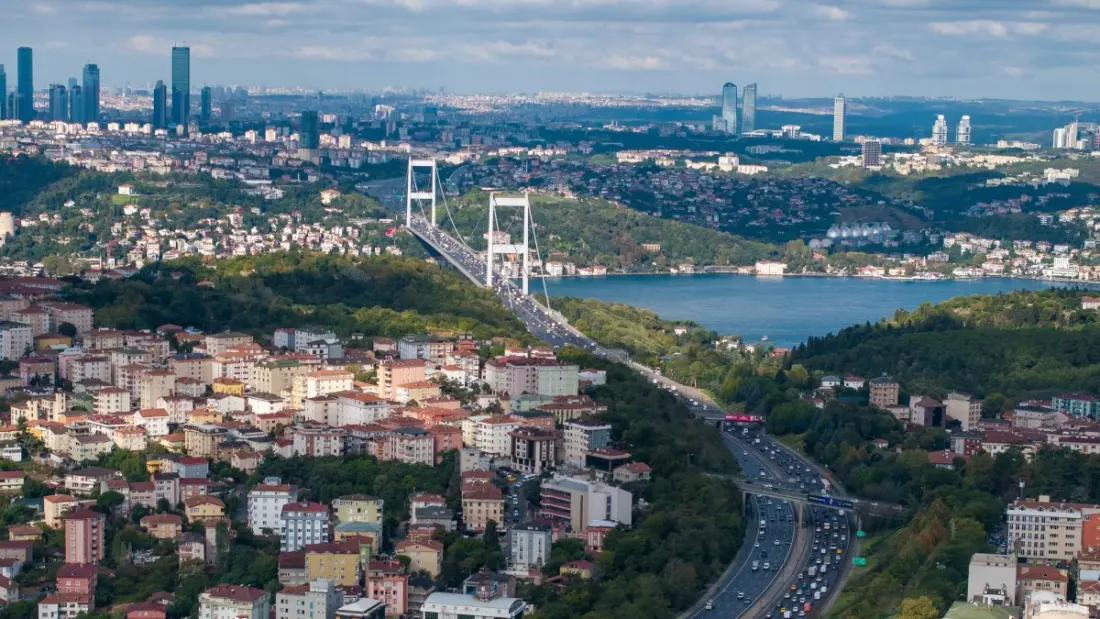
Turkish property is getting cheaper in real terms, and that has knock-on effects for anyone booking a longer stay in the country. Central bank data for August shows residential prices climbed 0.9% over the month and 23% over the year in nominal terms — but with annual inflation running at 31.51%, that's a real-terms drop of 6.5%. It marks the ninth straight month that homes have lost value once inflation is factored in.
The big three cities tell slightly different stories. Istanbul remains the laggard: prices there rose just 6.3% year-on-year, well behind inflation, though they picked up 1.9% in the month. Ankara managed 24.8% annual growth and Izmir 23.3%, roughly tracking the national picture. Nominal gains mean sellers are still asking more in lira each month — it's just that everything else is getting pricier faster.
Rents are the number more travellers will notice. The central bank's index for newly signed leases rose 2.3% month-on-month in July and 26.4% over the year, again lagging inflation in real terms by 3.9%. But geography matters here: Istanbul's annual rent growth hit 34.5%, actually outpacing inflation, with monthly jumps of 4.9%. Izmir wasn't far behind at 5.4% for the month and 25.5% annually, while Ankara sat at 28.3% for the year.
Why does this matter if you're just visiting? For a one-week hotel holiday, not much — short-stay rates are driven by tourism demand and the exchange rate, not domestic lease contracts. But for digital nomads, students and anyone renting an apartment for a month or more, these numbers are the market. Istanbul's new-lease rents rising faster than inflation suggests landlords there still have the upper hand, and negotiating a long-term deal may take some doing. In Ankara, where rent growth trails inflation more clearly, tenants have a bit more leverage.
There's also a broader signal worth reading. When property values shrink in real terms for nine consecutive months, it reflects the aggressive monetary tightening and cooling that has followed Türkiye's inflation spike. For visitors earning in dollars, euros or pounds, the lira's depreciation has often made Türkiye noticeably more affordable than Western European equivalents — even as local prices climb. The practical takeaway: prices on the ground are rising quickly in lira, but the exchange rate has frequently more than compensated. Check current rates before you budget, since that balance can shift month to month.
If you're planning an extended stay, the numbers argue for doing your homework street by street rather than assuming Istanbul is uniformly expensive or that coastal cities are uniformly cheap. Izmir's rental momentum (5.4% in a single month) suggests demand there is running hot, while Istanbul's booming rents are concentrated in desirable neighbourhoods. Anyone signing a Turkish lease should also keep an eye on the rent-cap rules that have periodically limited annual increases — a moving target that affects what landlords can legally charge on renewals.