
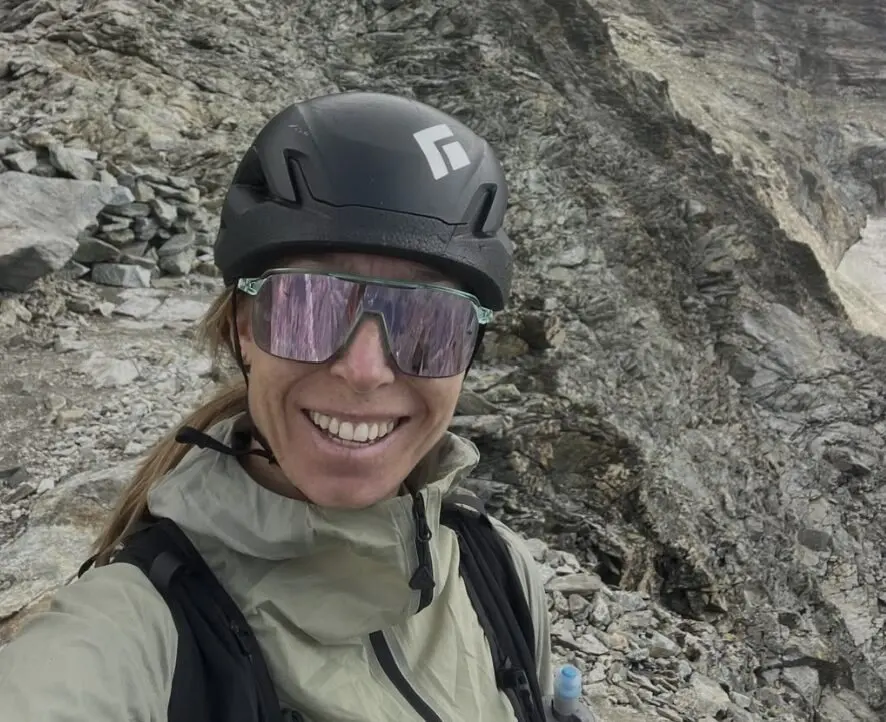
The search for Kalie McCrystal, a 38-year-old Canadian trail runner who vanished on the Matterhorn, has been called off after weeks without a trace. McCrystal was last seen on the mountain on 1 September and is now presumed dead. Her family confirmed the sad outcome in a public statement, saying that everything points to a fall during her descent.
McCrystal was an accomplished mountain athlete with prior experience on the Matterhorn itself. She had travelled to the Italian side, above Cervinia, to scout and prepare for a Fastest Known Time (FKT) attempt on the peak. Because she was training rather than running a set FKT route, nobody knows exactly how she planned to come down. She may have retraced her route up the Lion's Ridge back to Cervinia, or dropped down the shorter Hornli Ridge into Switzerland toward Zermatt. Search teams covered both sides of the mountain with repeated aerial sweeps, and local guides were asked to stay alert for any sign of her. Nothing was found.
The tragedy highlights a risk specific to FKT-style mountain running. The Matterhorn's normal routes are fixed with chains, ropes and belay points, so climbers can move up and down without roping up. Serious runners typically skip the rope entirely to save time and weight. It's faster — but it removes the margin for error. On a peak known for loose rock and frequent rockfall, even a world-class athlete can be caught out by a single unstable hold.
Conditions this summer made things worse. An exceptionally hot, dry season left the rock unstable, and mountain guides kept clients off the Matterhorn for weeks in August. McCrystal arrived on the Italian side only days after the Carrel hut reopened and guiding resumed. Earlier in the summer, she had climbed the Hornli Ridge route up and down from Zermatt.
For anyone planning high-alpine objectives, the story is a sobering reminder of how conditions and route choice change the risk equation. Even heavily travelled 'walk-up' 4,000ers in the Alps demand respect late in a hot summer: rock that is normally solid can be loose, huts and guide services may shut down without much notice, and going unroped on terrain with exposure turns any slip into a serious accident. Checking with local guides about current conditions, telling someone your planned descent route, and being willing to rope up on sketchy sections are small steps that can make a real difference.
McCrystal's family described her as exceptionally skilled and experienced in technical mountain terrain. Her death is a loss for the trail running community, and a reminder that the Alps' most famous summit is never routine — whatever your pace.
Credit: ExplorersWeb