
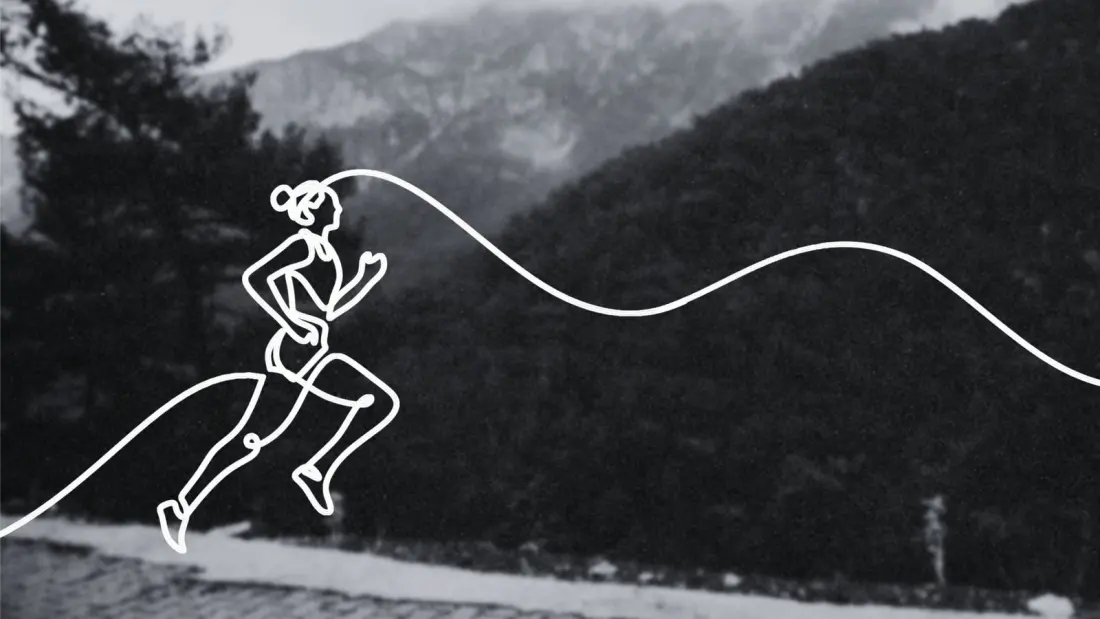
At midnight, parked at a trailhead more than 10,000 feet up in Colorado's Indian Peaks Wilderness, writer Corey Buhay couldn't sleep. A few hours later she'd be on the trail with instant coffee, a running vest, and no plan — no distance goal, no pace target, and crucially, no fitness watch. For her, that watch-free run wasn't exercise. It was the only thing that quieted her head after a brutal stretch of grief and heartbreak.
The piece is a personal essay, but the story it tells is a familiar one. Buhay learned to run alongside her father as a teenager; a decade later, she ran laps around hospital grounds while he was on life support after a heart attack, and kept running them until he died. Running became her way of processing what she couldn't sit still with — meditation and yoga never stuck, but moving her feet did.
Then Colorado nearly took that away. Surrounded by what she describes as legions of cardio superstars, she felt pressure to hit certain paces and distances. She began leaving her watch at home out of shame, then discovered the freedom of it: with no data, nobody — including her — could judge the run. Running stopped being a sport and became a practice, the thing that turned circular anxious thoughts into straight ones.
This summer, life piled on. A painful breakup, then five close friends leaving Boulder's orbit for Alaska, California, Germany, and Pennsylvania. She stopped running and stopped sleeping, doom-scrolling war headlines over tacos at the restaurant where she used to laugh with those friends. It was her therapist who asked the question that reset everything: what's one thing that makes you feel like yourself? The answer sent her into the mountains before dawn.
The essay is worth reading for the travel angle as much as the emotional one. It's a case for visiting wild places without an agenda — no summit, no Strava segment, no itinerary. Buhay's only goals that morning were to feel her legs burn and the cold wind on her face, and to be out of phone service, unplugged from news and messages. By the time she rounded a corner, the sun was coming up over the horizon.
There's a broader takeaway for anyone whose holidays have become performance: the most restorative trip might be the one you don't measure. Indian Peaks, an hour or so from Boulder, offers exactly that kind of setting — high alpine trails, thin air, and patchy signal. You don't need to be grieving to benefit. You just need a reason to be still for a while, and sometimes the way to get there is to keep moving.