
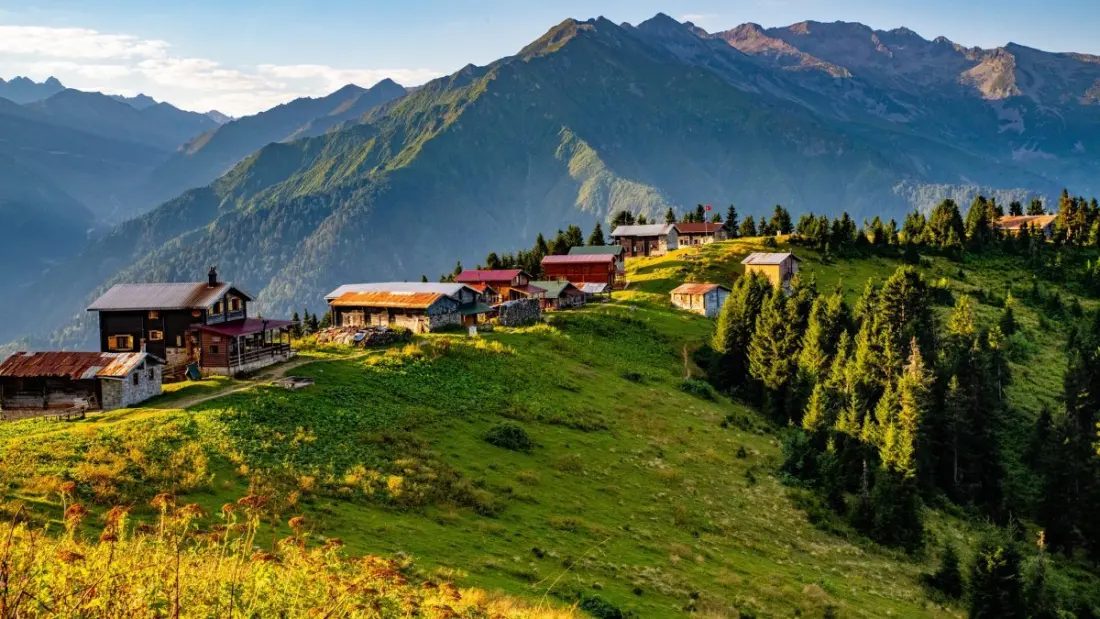
A former Turkish education minister has penned a full-throated case for rebuilding village life in Türkiye, and buried inside the policy talk is a genuinely interesting travel story: the country's countryside is being repositioned as a place to live, produce and — increasingly — visit.
Writing in Daily Sabah, Mahmut Özer, who served as minister of education and now represents Ordu in parliament, argues that post-pandemic disruption and the squeeze on urban middle classes have made village living newly attractive in Türkiye. His recipe goes well beyond farming: high-speed internet, remote work, mobile health services, renewable energy cooperatives and rural tourism are all part of turning villages into year-round communities rather than seasonal backdrops.
Some concrete threads stand out. Around Antalya and across the south, greenhouse and soilless farming now runs most of the year, and growers are exporting crops that were once unthinkable here — avocados and dragon fruit among them. Near Istanbul, wealthy investors are pouring money into organic farms and branded meat and dairy operations, while smallholders complain that their produce barely covers costs. Meanwhile, roughly 3,500 disused village schools have already been converted into Village Life Centers — hubs for adult agricultural training, vocational courses and community events, with the author calling for every empty village school to follow.
Climate pressures loom over all of it. Irregular rainfall and depleted groundwater in the main farming basins are pushing a shift toward water-efficient irrigation and rainwater harvesting, while repeated large wildfires in the Mediterranean and Aegean regions have made villagers central to forest protection and firefighting efforts.
Why should a traveller care? Because rural tourism is written into this vision. Özer explicitly flags local festivals, gastronomy tourism, heritage preservation and rural tourism projects as tools for making villages appealing — and as bait for urban entrepreneurs. If even part of this agenda lands, expect the Turkish countryside to get better infrastructure, better food experiences and more reasons to linger beyond the coast.
For now, the practical takeaways are straightforward. Türkiye's Aegean and Mediterranean villages already offer some of the country's most rewarding slow travel: olive harvests around Ayvalık and Datça, highland yayla culture on the Black Sea, and farm-to-table eating in the southwest. The Antalya region's agricultural boom means growers' markets and agri-tours are easy to add to a conventional beach trip. And with villages being wired for remote work, a working week based in a rural guesthouse is becoming a more realistic proposition than it was five years ago.
None of this is a tourism brochure — it's an opinion column with a political agenda, from a politician with a record in rural education policy. But it signals where Türkiye wants its villages to go: centers of production, culture and, yes, visitors. Watch this space.
Daily Sabah