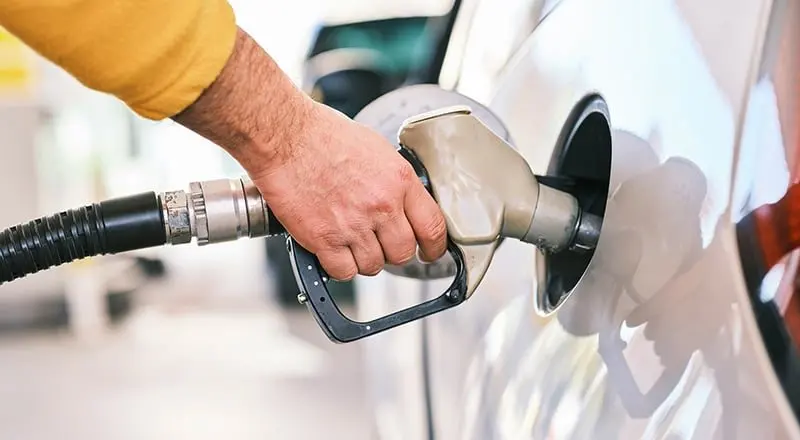
Petrol in the UAE has never been more expensive this year. The Ministry of Energy's latest monthly announcement sets October 2026 prices at their highest point of the past twelve months, and the jump from September is steep: Super 98 climbs from Dhs3.80 to Dhs4.40 per litre, Special 95 goes from Dhs3.69 to Dhs4.28, E-Plus 91 rises from Dhs3.61 to Dhs4.21, and diesel jumps from Dhs4.30 to Dhs4.80.
To put that in perspective, Super 98 started 2026 at just Dhs2.53 in January and bottomed out at Dhs2.45 in February. Prices then climbed almost continuously — Dhs3.39 in April, Dhs3.66 in May, Dhs3.95 in June — before October's Dhs4.40 sealed the year's peak. In other words, filling the same tank now costs nearly 80% more than it did at the start of the year. Last year was far calmer: Super 98 hovered between Dhs2.57 and Dhs2.77 across all of 2025.
The UAE sets fuel prices monthly, tied to average global prices — a system in place since August 2015, when government subsidies ended and pump prices began moving with international markets. Prices for the coming month are announced on the last day of the previous month, which has created a local ritual: drivers rush to fill up before month-end when a rise is coming, and hold off when prices are set to fall.
For visitors, this mostly matters if you're picking up a rental car. Even at these record levels, fuel in the UAE remains cheap by European standards — Dhs4.40 is roughly £0.94 or $1.20 per litre, well under UK prices — so a self-drive trip between Dubai, Abu Dhabi and the Northern Emirates won't break the budget. Expect a full tank in a mid-size car to cost somewhat more than earlier in 2026, but road-tripping here is still one of the more affordable ways to see the country, whether that's the Jebel Hafeet drive near Al Ain or the coastal run up to Ras Al Khaimah.
The practical takeaway: if you're arriving late in a month and renting a car, fill up before the new prices kick in on the first, and don't expect the kind of stable pump prices some subsidised markets offer. Rates can swing month to month, and 2026 has been a year of steady climbs.