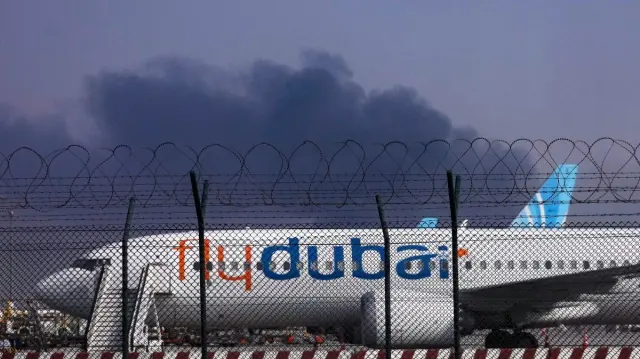
A commercial flight travelling from Dubai to Tel Aviv sent a hijacking alert code on Wednesday, 30 September 2026, and was reported to be heading for a landing in Saudi Arabia within minutes, according to Israeli media. The reports spread quickly given how rarely aircraft on this route deviate, but the story took a turn almost immediately: the Israeli prime minister's office denied the account, leaving the exact nature of the alert unclear.
Details remain thin. What is known is that a transponder signal associated with an unlawful interference emergency was transmitted by an aircraft operating between the two Gulf-region cities, prompting Israeli outlets to report an imminent diversion to Saudi territory. The official denial from Jerusalem suggests either a false alarm, a technical miscommunication, or an incident that was resolved without any actual threat — none of which has been confirmed publicly.
For anyone who has flown this corridor, the report is striking for more than the alarm itself. Direct flights between Dubai and Tel Aviv only became possible after the Abraham Accords normalised relations between the UAE and Israel in 2020, and the route has since become one of the busier short-haul links in the region, carried by carriers including flydubai, El Al and Etihad. Saudi Arabia, meanwhile, does not permit overflight of Israeli-bound commercial traffic under normal circumstances, which makes any report of an Israeli flight diverting into the kingdom particularly unusual — a detail that likely explains both the rapid news coverage and the swift official response.
There is no indication at this stage that travellers need to change plans. A single transmitted code can result from cockpit confusion, a glitch, or a precautionary signal, and the prime minister's office intervention points toward an incident that never materialised into a genuine emergency. Passengers booked on Dubai-Tel Aviv routes should simply monitor their airline's updates as usual; route-level disruption, if any, would be communicated directly by carriers.
The episode is a useful reminder of how quickly aviation alerts travel in the social media era, and how thin early reports can be. A transponder code is a signal to investigate, not a confirmed event — and in this case, the most authoritative immediate response was a denial. Travellers flying in the region are best served by waiting for airline statements and airport confirmations rather than reacting to headlines, however dramatic. If you are due to fly between the UAE and Israel in the coming days, check in online as normal, keep an eye on your departure board and airline app, and expect business as usual unless your carrier says otherwise.
Daily Sabah Travel