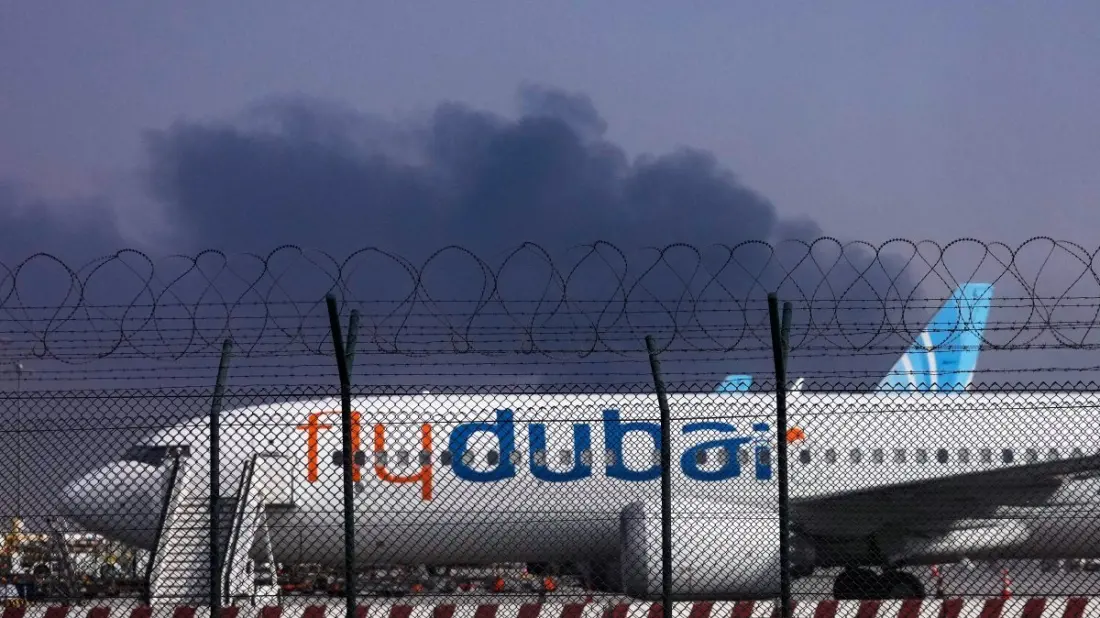
A routine Dubai–Tel Aviv flight turned into a full-blown security incident on Wednesday, 30 September, when the aircraft transmitted a transponder code associated with hijacking — sending Israeli fighter jets scrambling before the whole thing appears to have ended with a safe landing in Saudi Arabia.
Flight FZ1073, a flydubai Boeing 737 MAX 8 with roughly 174 passengers aboard, including about 27 children, left Dubai International Airport early on Wednesday for Ben Gurion Airport. Mid-flight it first sent the international general emergency code 7700, then briefly switched to 7500 — the code signalling possible unlawful interference. That single transmission is enough to set alarm bells ringing anywhere; on a flight heading into Israeli airspace, it triggered an immediate and heavy response.
Flight-tracking data showed the plane reverse course, descend sharply to around 15,000 feet and head for Tabuk in northwestern Saudi Arabia, where it landed safely. Israeli media initially reported contact with the aircraft had been lost, and the response escalated fast: the Air Force scrambled fighters, and Prime Minister Benjamin Netanyahu and Defence Minister Israel Katz held an urgent security consultation with senior officials. Departures from Ben Gurion were briefly affected while the situation was assessed.
So what actually happened? Israeli authorities quickly concluded there was no hijacking and no external security threat. One security source told Ynet the pilot had activated a distress signal, and later reports suggested a physical altercation between the two pilots may have prompted the emergency transmissions — though that account was unverified and neither flydubai nor UAE aviation authorities had confirmed details at the time of the initial coverage.
The episode is a reminder of how much rides on a few digits punched into a transponder. Code 7500 exists specifically to alert air traffic control and security agencies to a possible hijacking, but its transmission alone doesn't confirm one — and the gap between the two is where scenes like this play out. It also underlines how sensitive the UAE–Israel air corridor remains. The route is a product of the Abraham Accords, and with regional tensions elevated, Israeli security treats any anomaly on it with maximum caution.
For travellers, the practical takeaway is fairly reassuring: the system worked. An emergency code produced a military response, a precautionary diversion and a safe landing, all within a couple of hours. Disruptions on this route are possible when incidents occur — Ben Gurion departures were briefly held — but passengers on Dubai–Tel Aviv services face no change to normal operations after this event. Anyone flying the route should simply expect that security responses there will be fast and decisive, and build a little buffer into tight connections.
Story first reported by Daily Sabah Travel.