
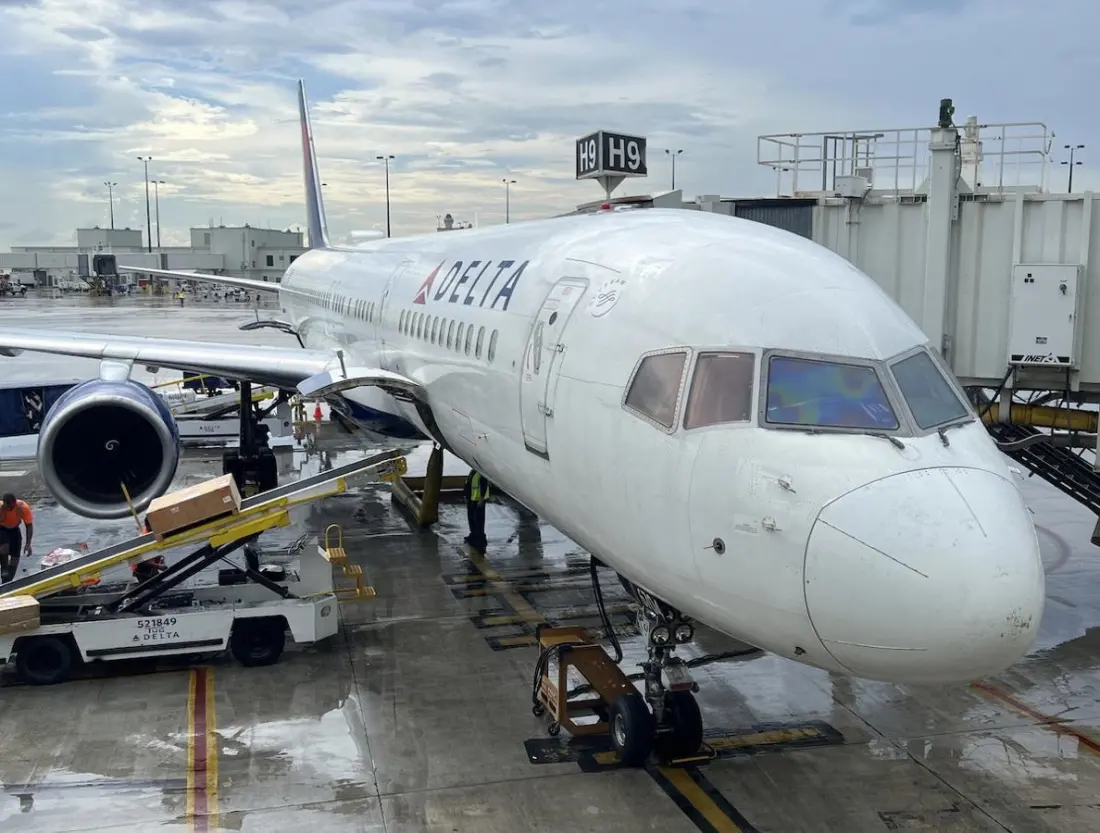
If you've spent a flight glaring at a loading spinner while trying to stream something on a Viasat-equipped plane, help is finally arriving. Viasat has switched on its Viasat-3 Flight 2 satellite over the Americas, the biggest capacity boost the network has had in years — and it directly affects passengers flying American Airlines, Delta, and JetBlue.
Here's the background. Viasat was once the gold standard for inflight internet, but two things worked against it. Expectations rose (thanks largely to Starlink), and bandwidth got stretched thin as more airlines installed the system and more passengers went online for free. The result: peak-hour speeds collapsed from impressively fast to frustratingly sluggish.
The fix is the new Viasat-3 Ka-band constellation. Flight 2 launched in November 2025 and, after regulatory sign-off, is now live covering the Americas. Flight 3, which launched in April 2026, covers Asia-Pacific. Together they add more than one terabit per second of capacity in the Americas alone — more than doubling the network. Viasat CEO Mark Dankberg called it a major milestone, highlighting the satellites' adaptive beam-forming technology, improved speeds on both upload and download links, and resilience to interference.
The key thing to understand: your maximum possible speed isn't really changing. What changes is congestion. With roughly twice the capacity, speeds should hold up better when everyone on a full flight is online at once — which is exactly when Viasat has been falling apart.
Who benefits most? American, Delta, and JetBlue are the three US carriers with the biggest Viasat fleets, and all three offer Wi-Fi free on those aircraft. American has Viasat on most of its narrowbodies (with Starlink coming to 500 aircraft from 2027), Delta has it across much of its fleet including some widebodies, and JetBlue has it on every plane it flies. United also uses Viasat on some narrowbodies but is swapping them to Starlink, so the upgrade matters less there.
Is this going to match Starlink? Honestly, no — low-earth-orbit satellite internet remains a different league. But if your next domestic US flight lands you on a Viasat plane, the days of unusable Wi-Fi at 6pm on a Friday should be numbered. For anyone who works in the air or just wants to stream without buffering, that's a genuinely welcome change, and it costs you nothing extra on the airlines that offer it free.