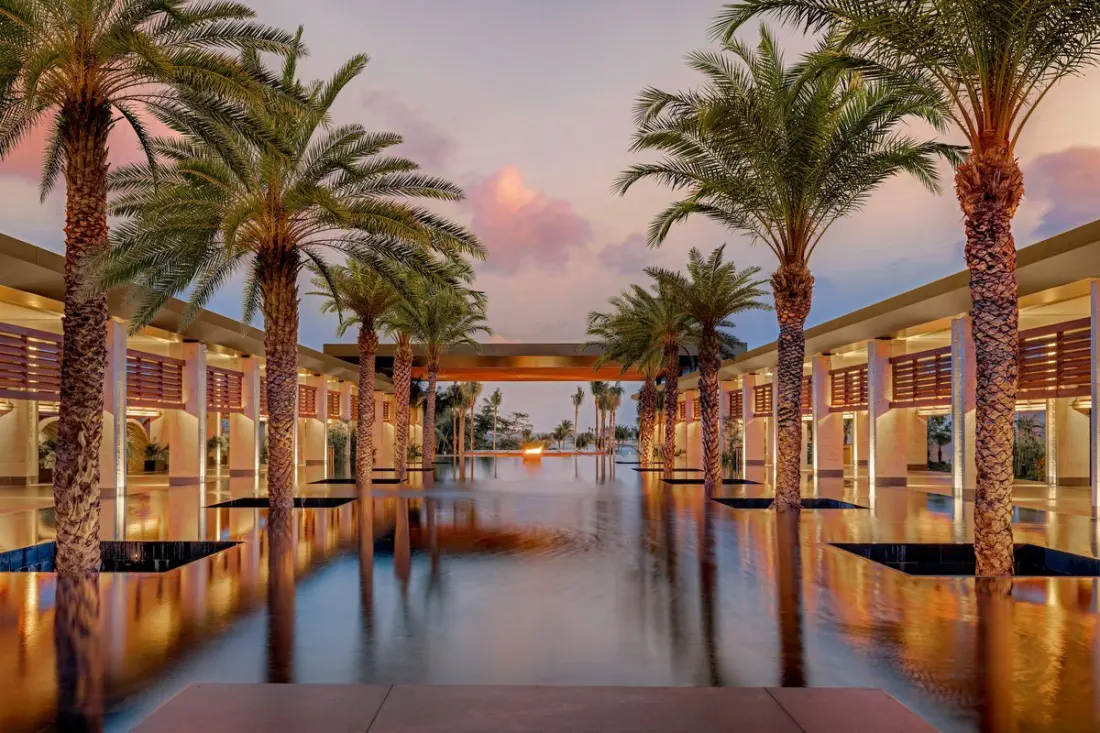
All-inclusive resorts were once considered a mid-market thing that luxury flags wouldn't touch. That era is over. Hilton converted two of its Mexican luxury resorts — the Waldorf Astoria Riviera Maya and the Conrad Tulum — to all-inclusive pricing as of October 1, 2026, and both remain part of Hilton Honors. From January 10, 2027, the Waldorf goes fully adults-only, while the Conrad adds an adults-only section called the Ceiba Club. Hilton is also opening Amàre Cancun, a 429-room adults-only resort under its Curio Collection, on October 31, 2026.
The numbers for points travellers are actually published, which is refreshingly transparent. Example rates start around $670 or 140,000 Honors points a night at the Waldorf, and $430 or 109,000 points at the Conrad. That works out to roughly 0.48 and 0.39 cents per point respectively — decent against a typical Hilton point valuation of about 0.4 cents. Because the redemption covers meals and drinks too, a peak-week award night could genuinely be a bargain, if you can find availability.
Hilton is far from alone. Marriott already operates 38 all-inclusives across nine Caribbean and Latin American markets, with a 522-room all-inclusive Marriott due in Montego Bay, Jamaica in 2028 and a 271-key Autograph Collection property coming to Zanzibar in 2027. Notably, it's converting existing hotels rather than building new: the Westin Playa Vallarta became its first Mexican all-inclusive, and the 415-room JW Marriott Costa Elena in Guanacaste, Costa Rica — formerly Dreams Las Mareas — is JW's first all-inclusive anywhere.
Hyatt is pushing the model furthest upmarket. Its Inclusive Collection is adding a 148-key Park Hyatt Riviera Maya and a 301-key Grand Hyatt Los Cabos, both expected to open in the second half of 2026. The Grand Hyatt participates in Hyatt Privé, though upgrades — usually a Privé staple — are restricted at most Hyatt Inclusives. IHG has been in the game since 2022 via its Iberostar partnership covering up to 70 resorts.
The economics explain the rush: an all-inclusive captures the entire vacation spend — rooms, food, drinks — instead of hoping guests choose the hotel's restaurants over options down the beach. Royal Caribbean's roughly $3 billion deal for half of Sandals signals the same conviction from the cruise side.
The open question for loyalty members is how points programmes treat these properties. Hilton prices awards dynamically against the cash rate, so value is visible and roughly consistent with its other hotels. Hyatt uses separate redemption charts for its Inclusives, often pricing them higher because more is bundled in. Whether Marriott will publish clear award rules for the JW Costa Elena remains to be seen. If you hoard points and like the Caribbean or Mexico, expect more of your favourite luxury brands to appear on all-inclusive shelves — and read the award fine print before you assume your points go as far as they used to.